
Power Station review – ‘If we’re going to save this life-giving world we’re squatting on, we need radical, grassroots change’

On the rooftop. Photograph: Peter Searle
The future is uncertain with not only war, but environmental chaos, looming. It’s easy to give up or become desensitised, to cocoon or simply despair. But there is another option, and there’s a couple who seemingly have the answer, which they document in their new feature-length film Power Station.
I think the most momentous thing my partner and I have done is to keep our Italian greyhound alive, and to be honest, we’re both pretty proud of that.
Yet Hilary Powell and Dan Edelstyn are taking couple goals to the next level. After clashing with the financial system, they’ve turned their artistic, trouble-making eyes to the climate emergency.
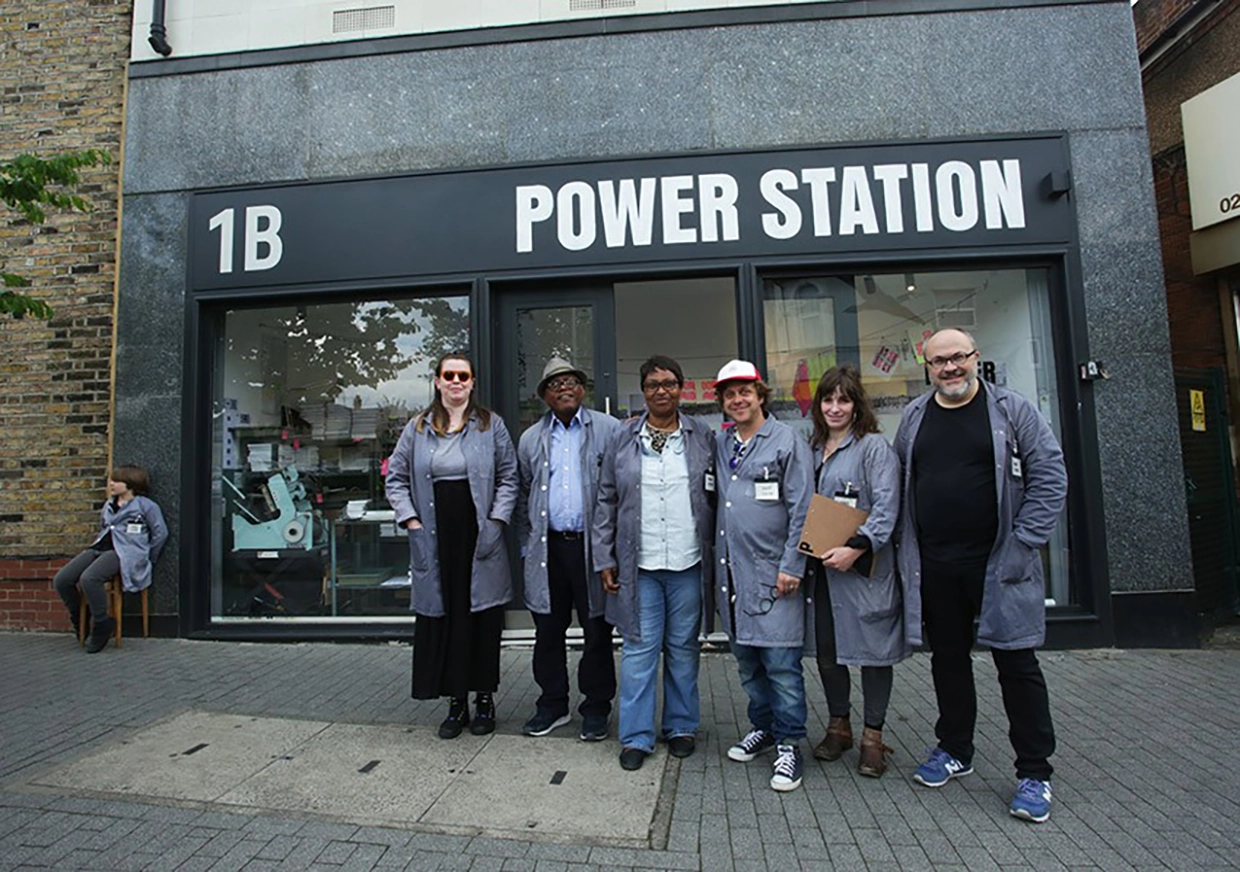
Busy at 1B. Photograph: Power Station
The setting is Lynmouth Road in leafy Walthamstow. After their celebrated documentary Bank Job, our filmmaking power couple began to appreciate the connectivity between the financial, climate and fuel crises.
The world plunging into lockdown gave them time to wonder what they could do with their particular skills by combining Powell’s artistic audio-visual epics with Edelstyn’s narrative vision and director-producer drive.
Their previous projects blended documentary and social action – such as How to Re-Establish a Vodka Empire, which created a vodka brand to revive the economy of Dan’s ancestors’ Polish village, and the blowing up of £1 million of high-interest debt in a white van for Bank Job.
But what can you do when you’re locked in your house; how can you battle for radical change?
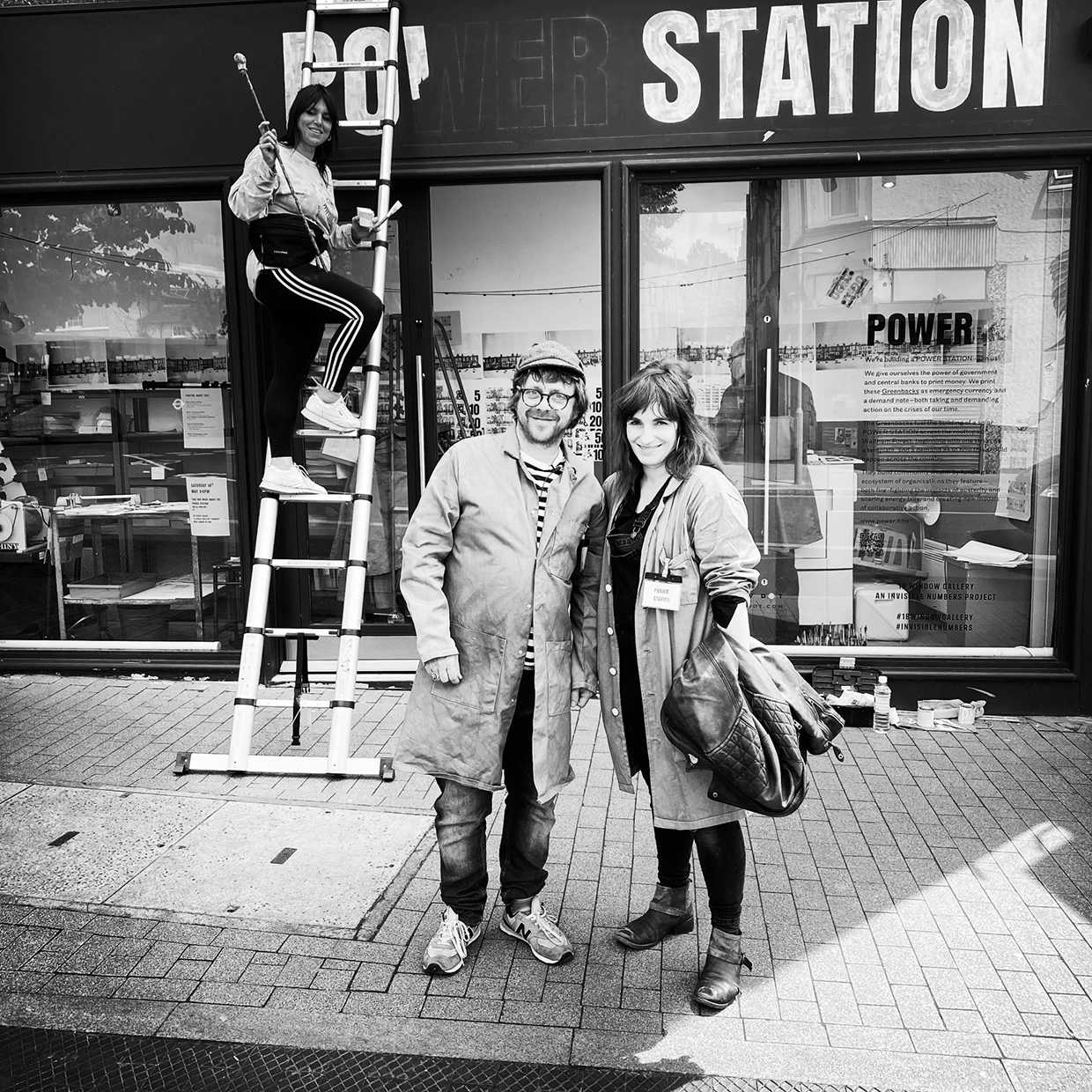
Hilary Powell and Dan Edelstyn. Photograph: Power Station
Well, what are you consuming? Power. What are we rapidly running out of? Power sources.
Power Station was started as an attempt by the couple to show that local change is possible, that the climate is saveable, and that solar power is for everyone (at least everyone who owns their house and has access to a roof).
Over the course of a few years, they filmed their project to raise money for solar panels on 13 homes on their street.
In the process, they slept on their roof for 23 nights until they hit their goal of £10,000 – soaring past it by another £13,000.
The pair planted 10,000 sunflowers and held a sunflower festival, started printing their own currency featuring local residents, and took over a shop to sell artworks to fund the project.
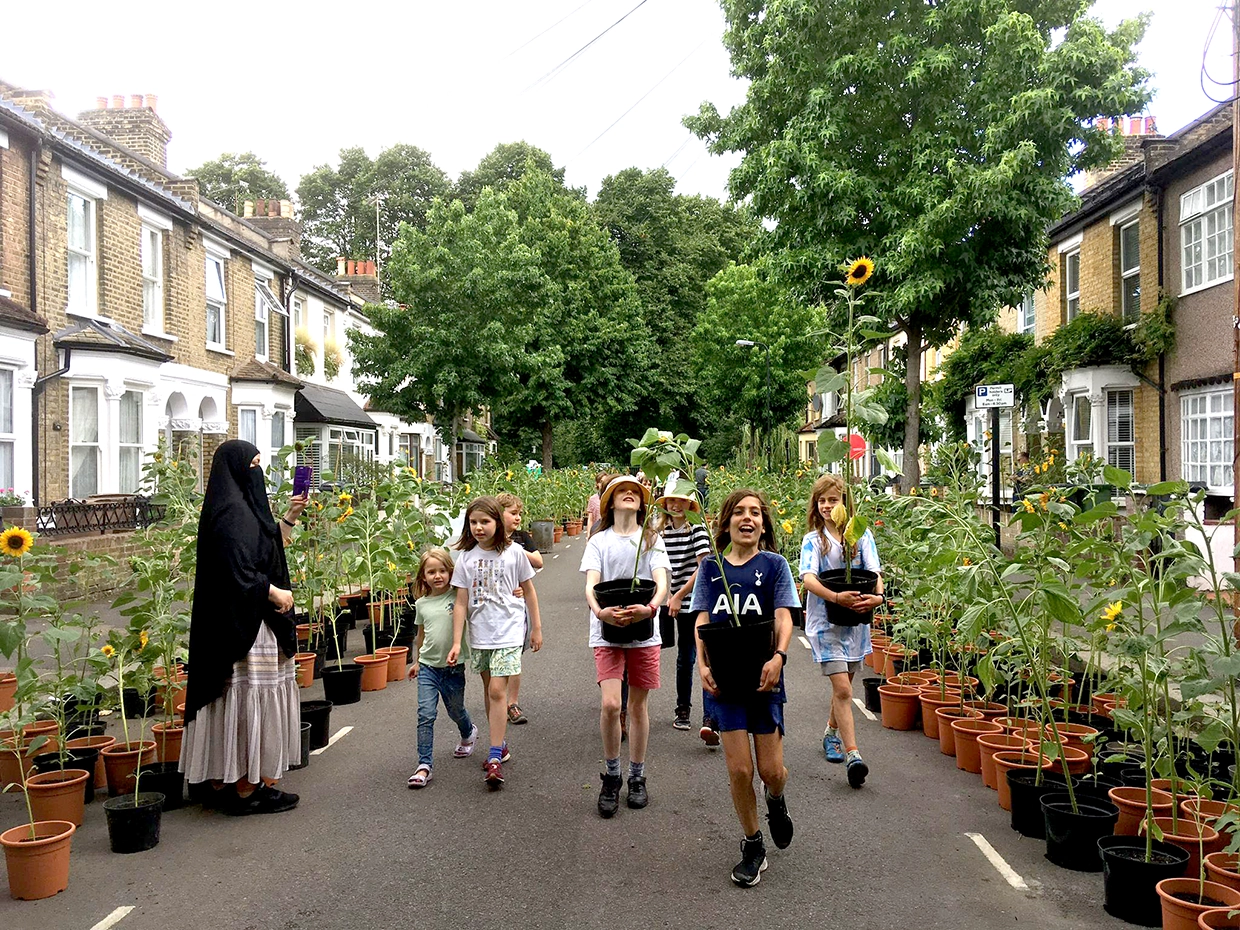
Sundance street scene. Photograph: Power Station
They even recorded a Christmas song with the local primary school and reached number 36 in the UK charts – all to clad the schools roofs with budget-saving panels.
The achievements are eye-widening, but it’s the heart of the documentary that’s truly toasty.
As energy-transmitting sunlight shafts into their comically cluttered house, they bicker and plot, plan and rage, all the while bringing up two children and a greyhound that’s almost always snoring fitfully on the sofa (so they’ve got Adrian and me beat on the pet-parent front, too).
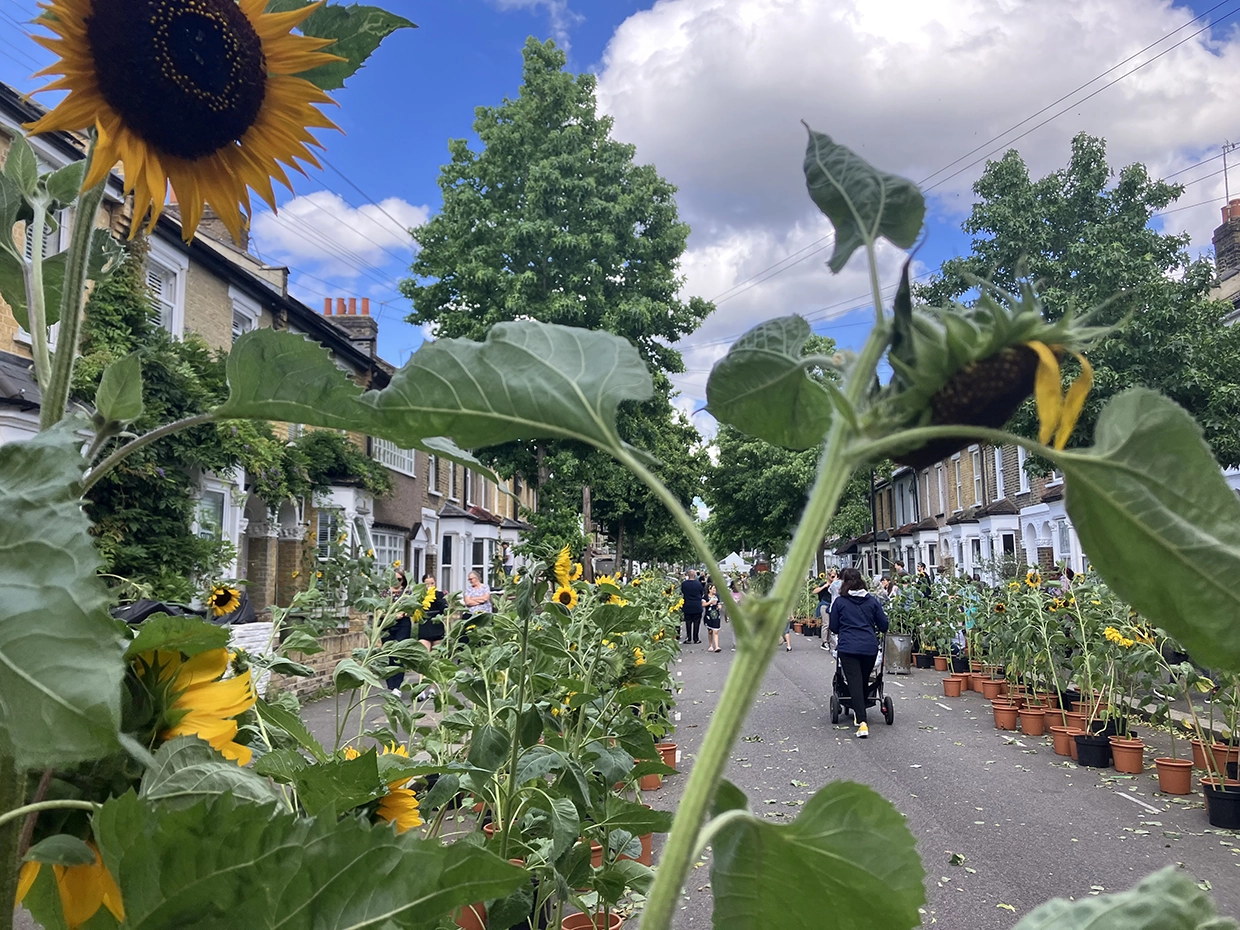
Sunflower power. Photograph; Power Station
They actually get to know their neighbours – I know, shock horror – in London, no less, weaving in these personal stories of the area, their lives, and their worries for the future.
The interviews with local teenagers are especially tough to hear, as they’re the ones who will bear the brunt of the international community’s lack of action.
This is small-scale community at its best-working hard for a common goal, a worthy and important one, but the bonds forged are almost more important.
It is a clarion call more than a repeatable process, as very few people are willing to sleep on their roofs in November.
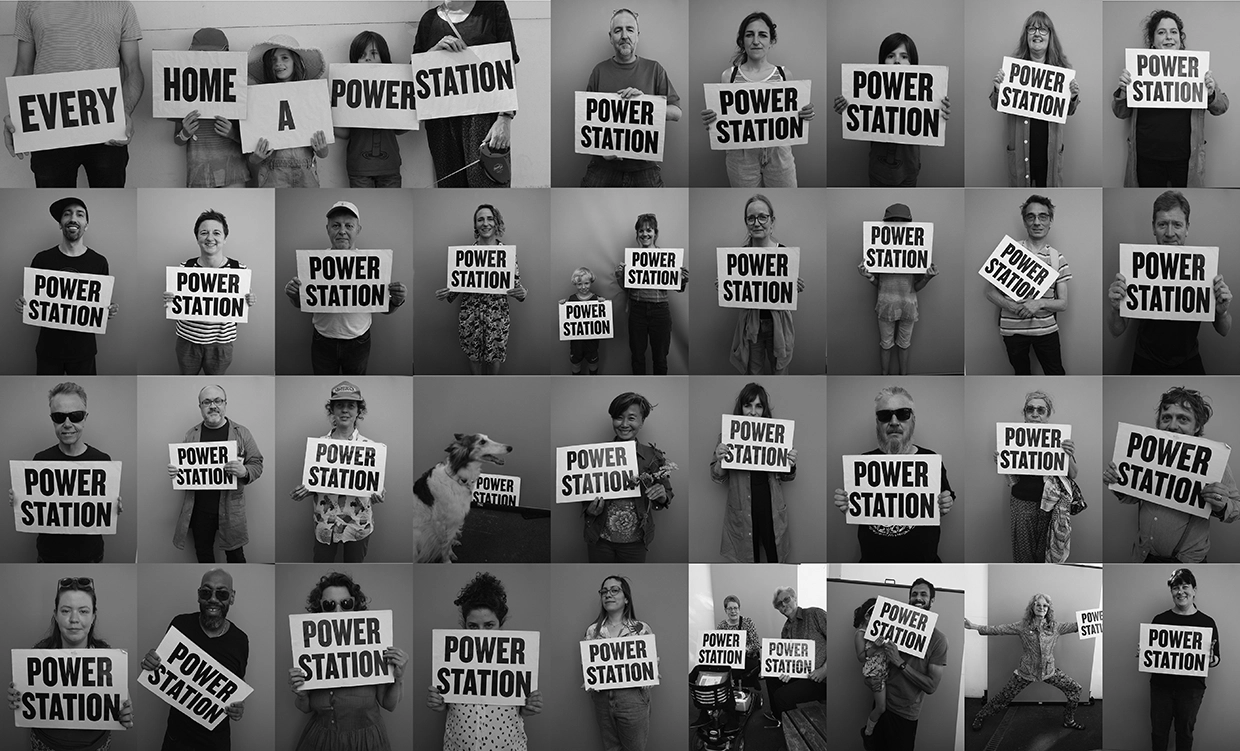
Signs of the times. Photograph: Simon Aldridge
Writing this from my third-floor rented flat with my neighbour bashing about above me, it’s also patently obvious that this example is most relevant to homeowners.
However, if we’re going to save this life-giving world we’re squatting on, we need radical, grassroots change, and Powell and Edelstyn are surging examples of its power.
This is part of a wider push in collaboration with economist Ann Pettifor and her book, The Case for the Green New Deal, to strive for a change in “imagination infrastructure”.
It doesn’t get more grassroots than 10,000 sunflowers and their bright yellow faces turned to the beaming sun-an image that will carry into the world, a burst of colour and positivity much needed as the storm clouds begin to gloom.
Power Station will be screened on Friday 21 November 2025 at St Paul’s West Hackney, N16 7UE. Doors open at 6:30pm and the film starts at 7:00pm.