
Golden Boy review – Josh O’Connor sweats through Odets’ Depression-era boxing drama
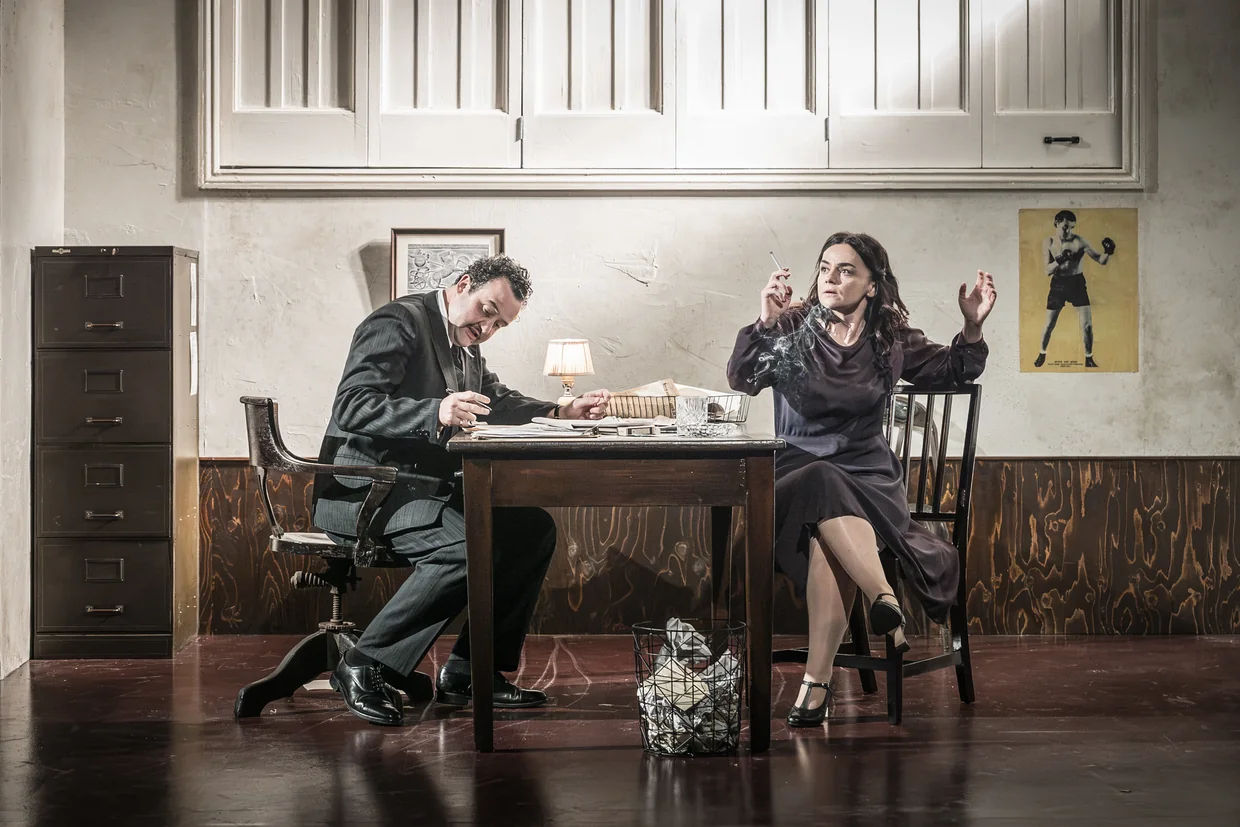
Crippling inflation, looming international conflict and a rise in fascism – so glad we left these things in the 1930s *stifles a sob*. Staging the Great Depression’s favourite playwright feels a bit on the nose, but don’t worry, that won’t be my only boxing pun.
Clifford Odets is remembered as a voice of a generation abandoned by hope and wealth, taking over from Eugene O’Neill and paving the way for Arthur Miller and Tennessee Williams. Golden Boy (1937) and its “cock-eyed wonder” protagonist Joe Bonaparte are his most lauded and potentially autobiographical creations, agonising over the contradiction of capital and personal fulfilment.

And who is our tortured prize fighter? None other than a sweating, straining, swinging Josh O’Connor, actor du jour and top in his class. Joe is a seething mesh of musical soul (violin) and pragmatist brain (bashing things in), caught in the dance of regulated capitalism and predictably chewed up, contextualised by his first-generation-immigrant father (reservoir-deep Stanley Townsend) and his unionist brother, a sprightly Richard Fleeshman. This nucleus pits the idea of hard work and honesty against the brash and brazen greed of the new American man and the surrounding hypnotic dream.
Rosanna Vize creates these two worlds well: the plain white walls of the ring/gym, where manager Tom Moody (a beleaguered Daniel Mays) and coach Tokio (soothing Jason Barnett) drill and badger, and the home, little table and steep stairs to bedrooms. Behind a giant slatted cupboard door are four string players, who, with the younger Joe (Oscar Prout), remind our lead what magical music his hands could make if they weren’t hammering people for money.

Prize fights are hard to stage, and Sam Yates favours technology and fake blood over complex choreography. Joe and opponents slam into a swaying punchbag, with a clever little camera inside projecting the battered brows and bloody noses onto the whitewashed walls behind.
Despite the piece’s heavy-handed (might be my last, but who knows?) depiction of greed, there are elements from the ’30s that dislodge an organ. Although the Hays Code (1934) only affected the flickers (which Odets also worked on), the knock-on effect is felt here: Zubin Varla is the only other villain (apart from capitalism), a slinking, skin-crawling mafioso, Eddie Fuseli, called “queer”; he’s gay-coded in the worst sense. Equally, our only lady, Hayley Squires, pours her heart and soul into the manager’s “tramp”, Lorna Moon, but her role is a sounding board for the “great men”, or to be fallen in love with. The machine-gun slang is at points unfathomable, but on the whole “a real gasser” and an eye into a decade of great hardship and change.

Yet we slug it out, from an explosion of screams to smashing silences, waste and lost potential spewing like the liberally applied blood coursing down O’Connor’s chest. Everyone is very serious, brows knitting, hands bludgeoning, but this depiction of early-20th-century masculinity and outsider status fails to floor us as it’s clearly aiming to do. Clearly more has changed in 89 years than first thought!
Golden Boy
Tue 8 September – Sat 31 October 2026
Almeida Theatre
Almeida Street
N1 1TA
While The Hayes Code censored Hollywood film content, New York City had a theater equivalent from (approx.) 1928 to 1968 in the Wales-Padlock law. Under this law passed by the NY City Council after Mae West went “too far” with her play “Sex,” plays in the legitimate theater could not depict, among other things, sexual perversion, which of course included homosexuality. If the law was invoked, the theater would be padlocked and the producers (!) jailed. Hence all the coding and offstage suicides or onstage conversions for so many years. Oh, and please bring this production to New York!