
Mayor Garbett urges minister to bin single-sex rules as campaigners round on her
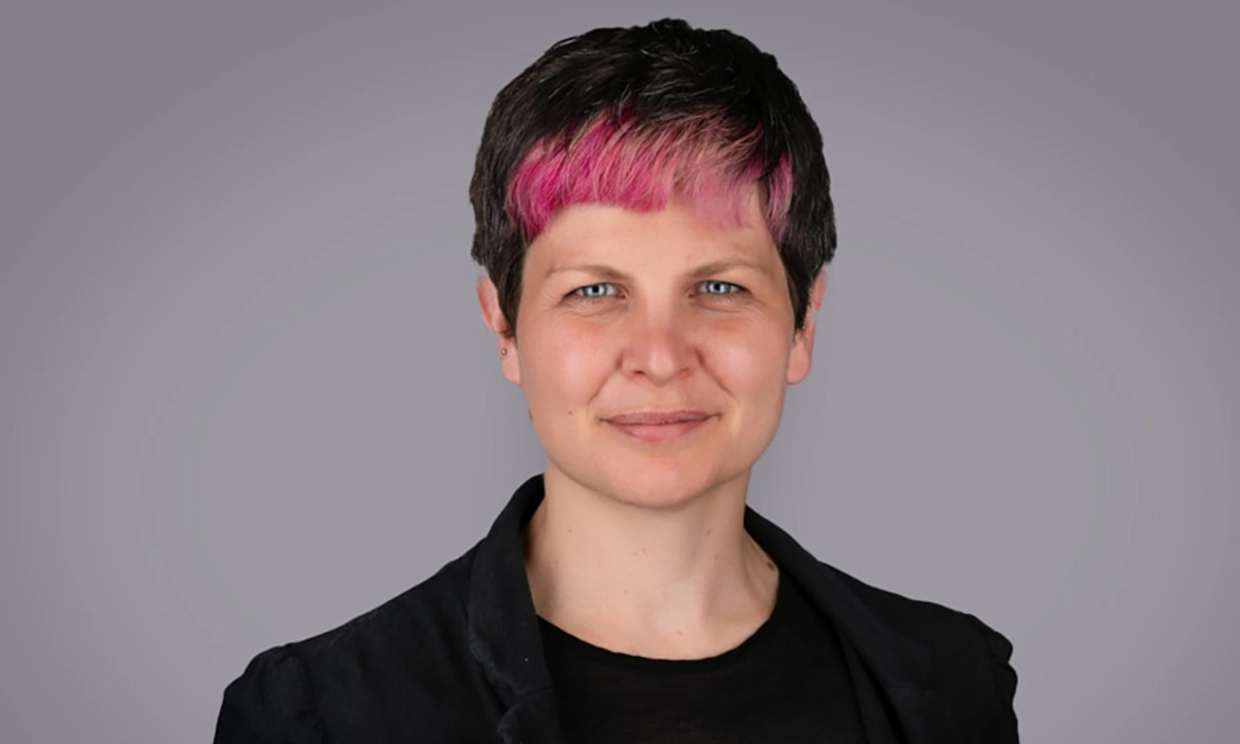
Hackney’s mayor has called on the government to reject new guidance on single-sex spaces, warning it puts transgender residents at risk and is “unjust, unworkable and untenable” — drawing sharp criticism from a local campaign group who accuse her of stoking division.
In a letter dated 6 July, jointly signed by Zoë Garbett and cabinet member for healthy communities and adult social care Cllr Sally Zlotowitz, the pair urged the secretary of state to reject guidance produced by the Equality and Human Rights Commission (EHRC), which states that single-sex spaces such as changing rooms and toilets must be used on the basis of biological sex.
The rule means an organisation offering a women’s changing room could lawfully exclude a trans woman — a biological male who identifies as a woman — under the code of practice.
The Code says establishments should instead offer a third, gender-neutral space, and that failing to do so is unlikely to be proportionate and could be discriminatory.
Laid before Parliament on 21 May, the guidance reflects what the EHRC calls more than a decade of developments in law and case law, including the 2025 supreme court ruling that found the terms “man”, “woman” and “sex” in the Equality Act 2010 refer strictly to biological sex.
The 40-day parliamentary stage closed on 9 July without debate or vote, leaving the Code legally clear to be brought into force.
EHRC chair Dr Mary-Ann Stephenson said the commission’s job was to clarify how duty-bearers could meet their obligations under the Equality Act “while respecting everyone’s rights”, acknowledging strongly held views across society about how the law should balance competing interests.
‘A form of segregation’
The letter warns that the Code “functions to consolidate a system of public segregation that is unjust, unworkable and untenable”.
It cites the government’s own equality impact assessment, published in May by the Office for Equality and Opportunity, which lists among its safeguarding concerns that excluding trans women from women’s services could push them into men’s spaces, where the assessment says they could face a disproportionate risk of violence and sexual assault — though it notes this depends on the service.
The assessment also warns of “double exclusion”, where a trans person is barred from both the space matching their gender and the one matching their birth sex, and that new guidance on asking about sex at birth may force trans people to “out” themselves.
Directing trans residents or staff to facilities matching their sex at birth, or to separate “third spaces”, the mayor and Cllr Zlotowitz write, would in practice lead to “distress, stigma, harassment, and discrimination”.
The pair also argue the guidance ignores operational reality: in healthcare, social care, education and local government, the assumption that bodies can readily provide self-contained “third spaces” is unrealistic when budgets are already under strain.
Front-line staff, they warn, would be left making judgements “based on appearance, perceived biological characteristics, or assumptions about an individual’s sex” — an approach they call unworkable and potentially incompatible with the Equality Act itself.
Should the Code proceed unamended, the letter states, “the clearest way we could uphold our various responsibilities would be to convert all public body and service provider facilities to have universal gender neutral facilities, such as single lockable rooms.
The government should be telling us how it expects us to fund and deliver such a vast series of architectural changes.” The remark is framed as a challenge to ministers over funding rather than a stated plan to abolish single-sex provision.
Describing Hackney as “a borough built on diversity, resistance and community”, the pair demand an urgent response setting out how government will protect trans people “in principle and practice”.
In a public statement accompanying the letter, Garbett went further, calling the guidance “not only unfeasible but cruel”.
‘Commodified for political gain’
The local campaign group Hackney Sex Realists criticised the mayor’s suggestion that converting facilities to universal gender-neutral provision would be the simplest way forward if the Code is approved as drafted.
The group said that while separate male, female and gender-neutral spaces would be ideal, protected spaces are needed only for women. Where space is short, everything else can be mixed, and women content to share with biological males can do so alongside trans people.
“It’s disappointing that elected politicians who have a duty to consider women’s rights, like Mayor Garbett, herself a woman, are still acting as if women can be sacrificed on the altar of an ideology that is rapidly losing credibility across the world,” a spokesperson said. “Mayor Garbett is using this issue to stoke division.”
The group added that many women — “but particularly lesbians, ultra-orthodox Jewish, Muslim and other religious communities” — need spaces where they can be certain no men are present, for privacy during periods or washing routines.
“It should be a non-issue but instead, women’s issues are being shamefully commodified for political gain.”
Garbett has been approached for a response to the group’s criticism.
What the impact assessment actually says
Both the mayor and Hackney Sex Realists cite the government’s equality impact assessment, published in May by the Office for Equality and Opportunity.
It does not come down on one side. Overall, it judges most of the Code’s changes to have a positive impact across protected characteristics, with gender reassignment the main exception, where impacts are assessed as negative. On that characteristic it flags “double exclusion” (a trans person shut out of both the space matching their gender and the one matching their birth sex), the prospect of trans people being made to “out” themselves, and a safeguarding risk that trans women pushed into men’s spaces could face a disproportionate risk of violence — while noting this depends on the service.
But a separate annex, commissioned by the Minister for Women and Equalities, sets out the other side: it finds the Code particularly supports women who have experienced domestic abuse and feel unable to use services open to those who are not biologically female, including refuges, and helps women who for cultural or religious reasons cannot share spaces with men. The same document also warns that women who are considered masculine may face greater scrutiny over their sex as a result of the changes.
In short, the assessment lends support to both the mayor’s warnings and those of her critics.
What the impact assessment actually says
Both the mayor and Hackney Sex Realists cite the government’s equality impact assessment, published in May by the Office for Equality and Opportunity — so it is worth setting out what the document concludes.
It does not come down on one side. Overall it judges most of the Code’s changes to have a positive impact across protected characteristics, with gender reassignment the main exception, where impacts are assessed as negative. On that characteristic it flags “double exclusion” (a trans person shut out of both the space matching their gender and the one matching their birth sex), the prospect of trans people being made to “out” themselves, and a safeguarding risk that trans women pushed into men’s spaces could face a disproportionate risk of violence — while noting this depends on the service.
But a separate annex, commissioned by the Minister for Women and Equalities, sets out the other side: it finds the Code particularly supports women who have experienced domestic abuse and feel unable to use services open to those who are not biologically female, including refuges, and helps women who for cultural or religious reasons cannot share spaces with men. The same document also warns that women who are considered masculine may face greater scrutiny over their sex as a result of the changes.
In short, the assessment lends support to both the mayor’s warnings and her critics’ — a nuance largely absent from the letter and the campaigners’ response alike.
Zöe Garbett and Sally Zlotowitz say that EHRC guidance on keeping facilities single sex is unjust, unworkable and untenable”
I strongly disagree.
Why is women having our own safe space unjust? Why are they not concerned about women’s safety or cruelty to women in this context but only concerned about trans?
I attend a local new age games class ( exercise classes)and when I tell some of the women there that hackney are moving towards predominantly unisex changing ( changing villages) rooms they are horrified.
There is a silent majority who wish to keep facilities and service as single sex.
I believe that trans rights need to be protected and they need to be respected but not at the expense of women’s rights.
Also many trans are not predators but there is no way to tell the difference between a dangerous man and one that is not.
88% of sexual crimes committed in changing/locker rooms happen in those that are unisex.
A leaked Swim England reports
There has been a “significant increase” in incidents of female swimmers having indecent images taken of them in changing rooms during competitions. In one year it was recorded as 84 incidents.
The swimmers were very distressed one woman reporting “I feel like leaving swimming altogether now. I can’t believe someone has done this to me. I’m so embarrassed.”
A WRN report found out of 134 sexual assaults in leisure centres, 120 were in mixed changing rooms.
What is just or equal or kind about that?
I suggest they stop saying how complicated and unworkable the law is and move to implement the law making it fair and equal for all.
For reasons of privacy, dignity and safety, men – no matter how they identify – should not be in women’s single sex spaces.
The law needs to be followed. Our elected representatives need to get on with implementing it and focus on tackling the many challenges Hackney residents face.
Follow the law, the guidance is just that, a guide to the law as it has always been.
There are vocal people who want the law followed regarding single sex spaces and quiet people who want the law followed regarding single sex spaces. Then there are a handful of people with shady principles who want men in women’s and girls spaces.
I know whose side I would support if I were a decent councillor.
Glad the Hackney mayor is fighting for trans people. Those horrified by unisex facilities should know that trans women have always been using women’s facilities, so wanting to “keep facilities and service as single sex” are mistaken if they think that trans women were not present in our facilities before this. Unisex facilities don’t mean that those who want private spaces where no men will watch them change can’t have them, it just means that these will be in private cubicles that are and have always been available (and incidentally, perfectly compatible with the EHRC as well). The cubicles aren’t single-sex but are single-use, so you get the private space you want without *anyone* watching, regardless of sex.
The idea that segregation of trans women is what will keep anyone safe from harassment is laughable, I’ve been abused and harassed by cis women in women’s facilities, as a cis woman myself. Oppressing trans women is the first step to oppressing all women, and those who claim to be fighting for women’s rights ought to read the histories of how fascism has always begun through all of history.