
Inside Hackney’s green economy six years after council declared climate emergency
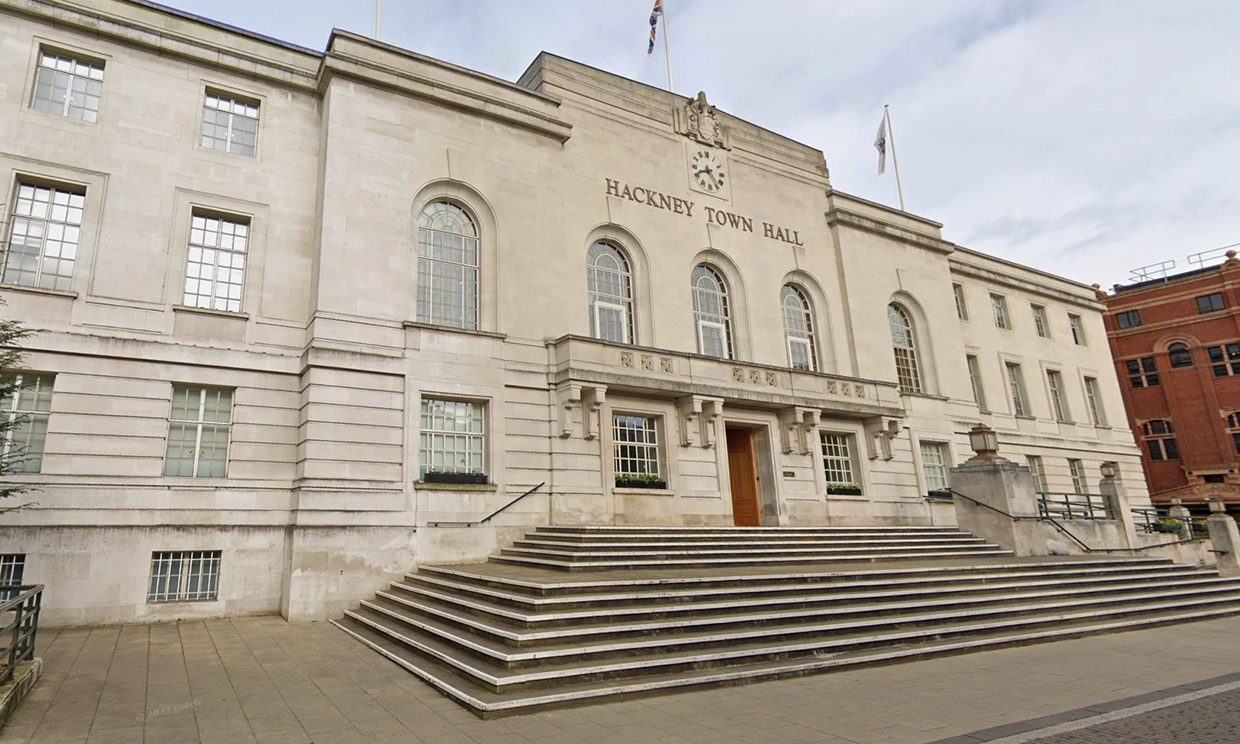
Hackney Council declared a climate emergency in 2019. Photograph: Google
In 2019, Hackney Council declared a climate emergency and recognised the inadequacy of global and national measures to address the ongoing crisis. The pledge, “Rebuilding a Greener Hackney”, saw the council resolve to take matters into their own hands.
This included establishing a net zero target of 2040 – outpacing the national target by 10 years – and committing to equipping local businesses and households with the tools needed to transition to a zero-carbon world.
In 2021, the Citizen reported on some of the measures that the council had taken since the resolution. These included divesting from fossil fuels, planting thousands of trees in green spaces, and promoting community-based projects such as the Library of Things, where users can borrow items rather than books, in Dalston and Hackney Wick.
Since then the council has continued to take an active interest in promoting the development of the borough’s green economy. In 2023, it commissioned a report by economic forecast and consultancy firm Oxford Economics, which provided a detailed analysis of the size and prosperity of green businesses in Hackney as well as recommendations for further actions.
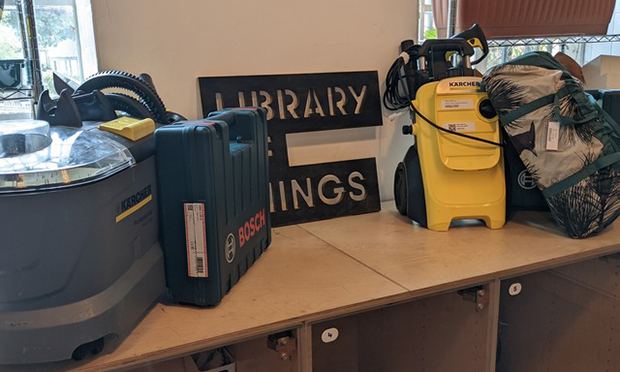
Eco-conscious Hackney residents are able to borrow items from the Library of Things. Photograph: Julia Gregory
The report defines green businesses as firms that “deliver goods and services which actively enable a shift towards a greener overall economy.” A distinction was also made between “dark green businesses,” which entirely or almost entirely enable a shift towards a greener economy and, “light green businesses,” which are moving towards or could perhaps enable a shift towards a greener economy.
One researcher behind the report was keen to emphasise that the size of any green sector can change significantly depending on how “green business” is defined. Moreover, businesses often rebrand and reposition their activities to fit whatever definition is prescribed, so quantifying growth in a green sector can be imprecise.
The report nevertheless described Hackney’s green economy as ‘an asset to be nurtured’ and identified 301 green economy businesses in the borough. Of these, 251 were classified as dark green and 50 light green.
The plan cited figures from the 2023 report, claiming: “Tackling climate change also offers opportunities for growth, with over 300 green economy businesses already in Hackney, and the highest number of circular economy jobs in London.”
The borough’s green economy currently supports around 880 jobs, split across three sub-sectors: the reduce, reuse, recycle, and repair sub-sector, climate change strategy, and power.
The report emphasises that Hackney is an attractive place for green businesses to locate, thanks in part to the abundance of green space, the proximity of customers to premises, and the general “buzz” of the borough.
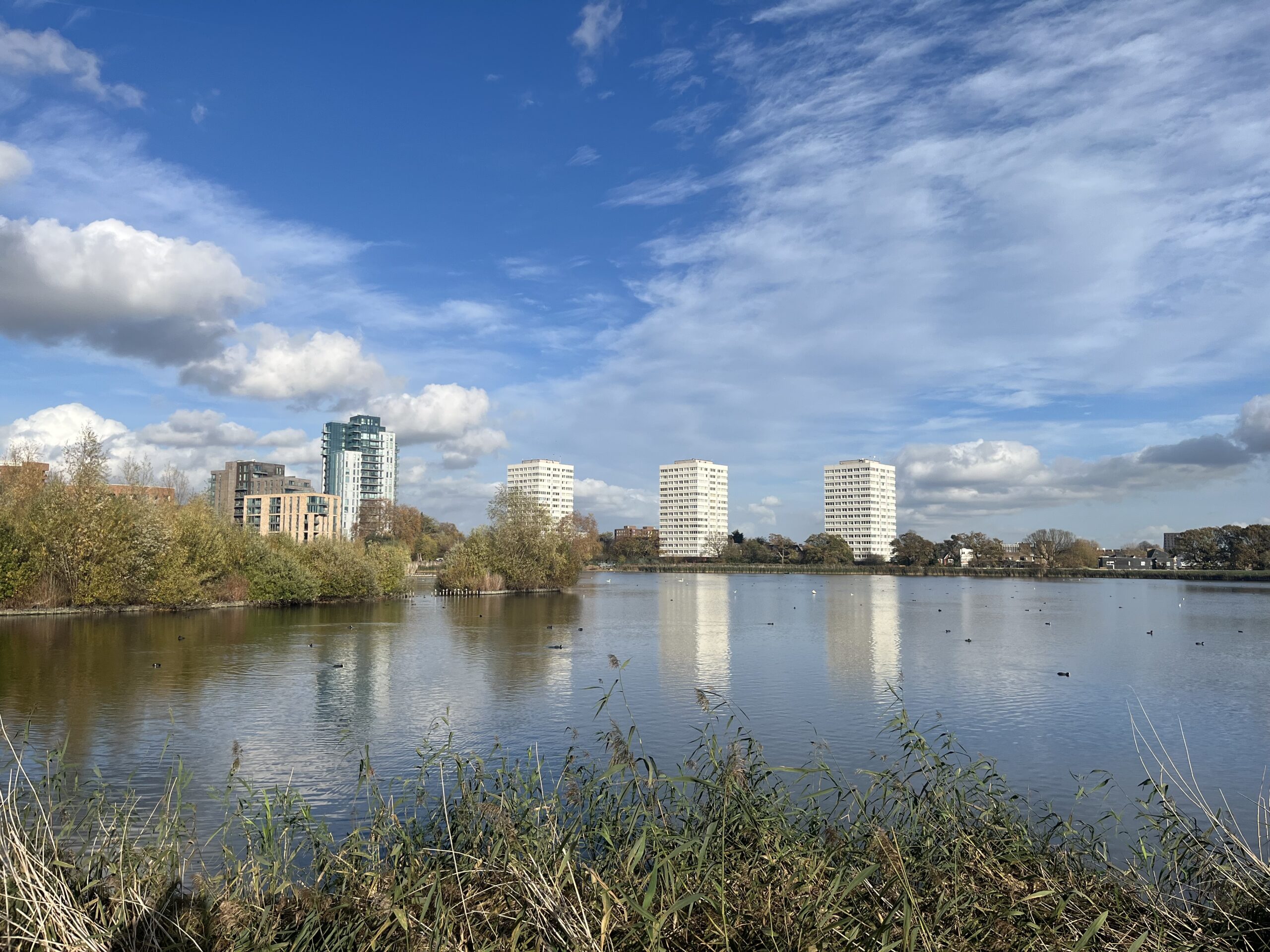
Hackney’s green spaces are a major draw for eco-conscious business owners. Photograph: Sam Foxell
However, the most prominent draw appears to be that Hackney has cultivated a network of green businesses that successfully collaborate. Half of all green businesses buy from or sell from one another, and most have some link with other Hackney or London-based green firms.
Logistics providers such as Zhero and Zedify and goods suppliers such as Growing Communities and Yodomo have created significant bridges between businesses in Hackney’s green network through intermediate services.
Such a network is made possible by proximity, and thus Hackney has successfully cultivated a grassroots network that promotes sustainability and the circular economy.
However, some parts of the borough are being left behind. More than 40 per cent of Hackney’s green businesses are in Hoxton West alone, with another 33 per cent in Hoxton East and Shoreditch and three per cent in Hackney Wick.
In addition, while businesses were generally positive about their Hackney location, around half said they might consider relocating out of the borough within the next three years. This was often due to congestion and traffic in the area, affordability and not having suitable premises.
It seems Hackney Council have broadly accepted the report’s findings. This year, it released a draft Economic Development Plan for public consultation which is now back under review and awaiting cabinet approval. One of four key missions laid out was to make Hackney’s economy climate resilient and sustainable.
The progress is encouraging, but concrete policies will need to be put into place to encourage the development of this green network. Key policy recommendations of the 2023 report include facilitating green businesses in finding affordable premises, investing in green infrastructure, including new parts of the borough in the green economy, and making procurement opportunities accessible to green firms.
The draft plan has taken on some of these recommendations, pledging to support “landlords and businesses to green their operations” and to promote “mainstreaming circular practices” over a linear economy. Investment in further schemes similar to the Library of Things (a borrowing library for household goods) would be a welcome step to this end.
While the 2023 report praises the council for positive engagement with local business, it also acknowledges that green networks are generally built from the ground up and driven by a community ethos. To encourage this, the report suggests the council go further in engaging with local green procurement and working with the green economy. Not only is it not a cost to the council, but as the green sector grows nationally it will be a great benefit.
Sadly, Hackney actually has more money invested in fossil fuels than it did in 2021.