
Greens reject Labour bid to spare Woodberry Down tenants second move
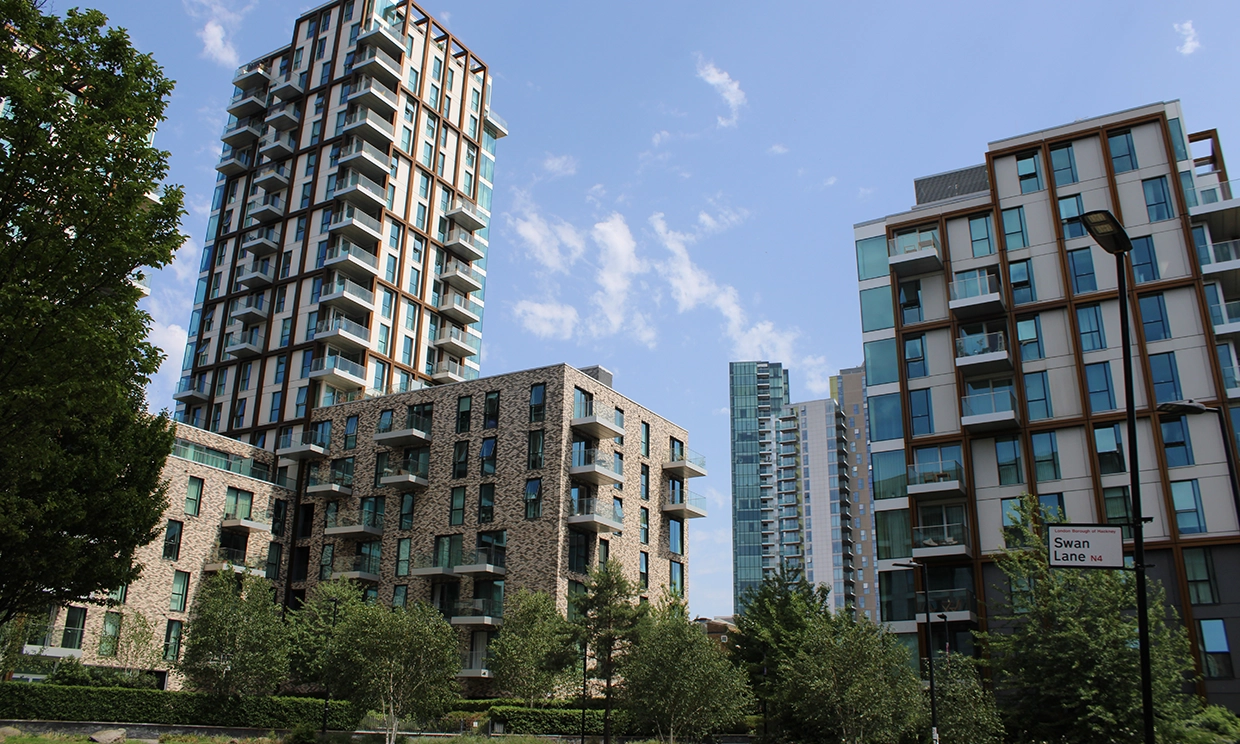
Tenants on the Woodberry Down estate face having to move home twice after the Green-run council voted down a Labour bid to stop so-called double decanting.
The motion, proposed by Woodberry Down ward councillor Sarah Young, was defeated at full council on Wednesday night.
It called on the Green administration to come back within three months with a fully costed plan to spare secure tenants from moving into an interim home before moving again into their new one. The motion itself did not say how this would be paid for.

Cllr Young accused the Greens of backing phases 4 and 5 of the scheme despite having previously criticised it over broken promises by the developer, Berkeley Homes, and the potential impact of double decanting on the community.
Speaking to the Citizen before the meeting, Cllr Young said: “We will continue to support residents who live in Woodberry Down – people who are elderly and frail and might not cope with being moved twice, people who have just been placed in temporary accommodation in Woodberry Down with their families and were expecting to be able to stay here until they could find a permanent home, but will now be uprooted again, people who have complex illnesses and disabilities.”
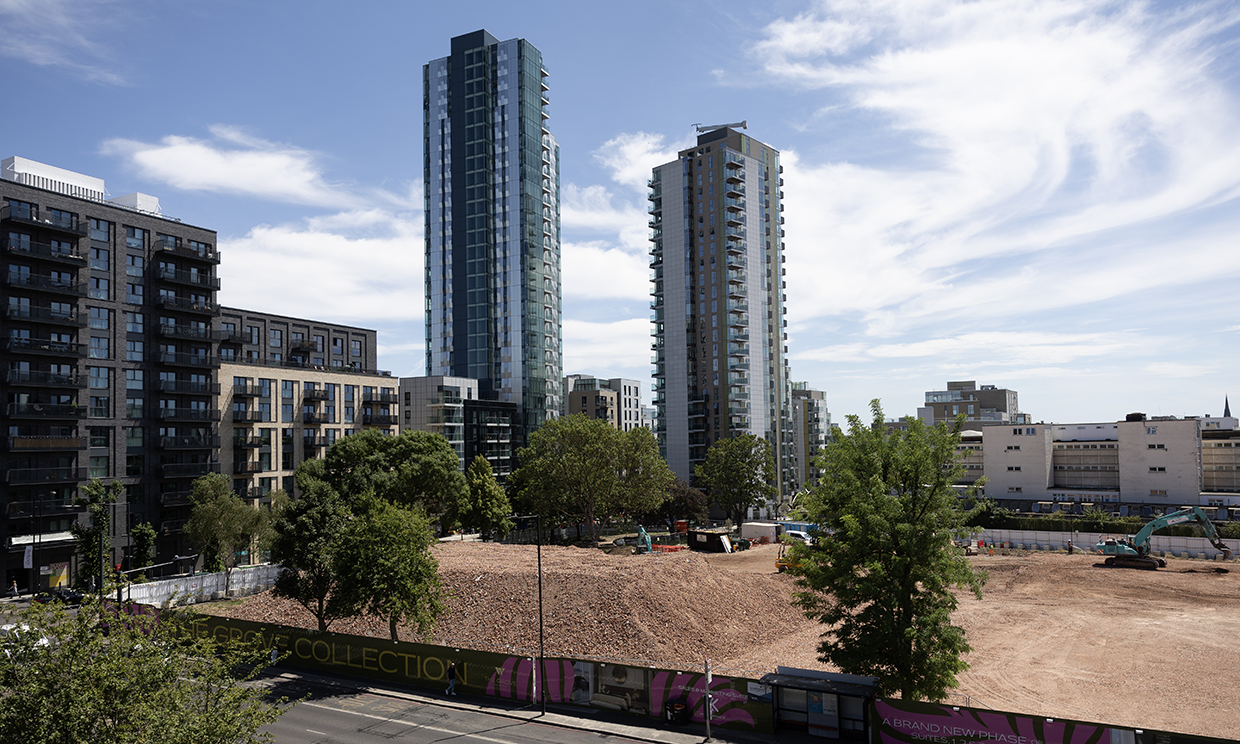
Members of the Woodberry Down Community Organisation (WDCO) watched from the public gallery as the motion was debated, the final agenda item of the evening. It was not the first time the organisation had raised the issue with the council. In 2010, its then chair warned the then Labour cabinet that residents promised a single move were facing two.
Straight moves
Opening the debate, Cllr Young told the chamber that more than 650 social rent homes had already been built on the estate, and that the scheme had so far kept its central promise: “If you are a secure tenant on Woodberry Down Estate, you move straight from your old home into your permanent new home.”
The developer had warned that failing to start the phase 5 demolition before the new homes were ready would cost the project £13.2 million, she said. Developers are allowed a 20 per cent profit, she added: “I can assure you that Berkeley Homes are planning to make a lot more than £13.2 million profit on this project.”
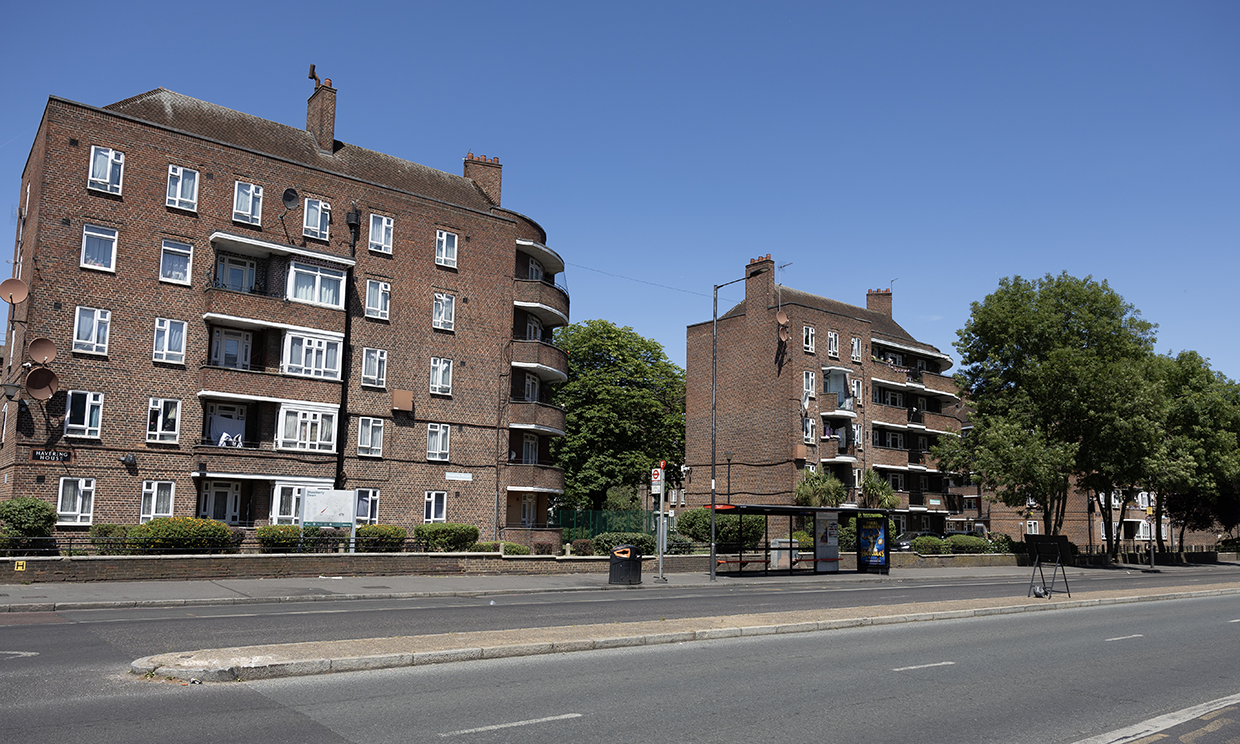
Around 130 families in temporary accommodation live in phase 5 alone, she said. Council tenants decanted into empty flats elsewhere on the estate, across Seven Sisters Road, would take up homes that would otherwise go to temporary accommodation households from around Hackney.
Seconding the motion in her first speech to the council, Victoria ward councillor Joanna Sumner said the complexity of a scheme of this scale “doesn’t remove the need for clear promises. It makes them even more important.”
Costing row
Cllr Alastair Binnie-Lubbock, the Green cabinet member for regeneration, planning and inclusive neighbourhoods, said the motion was unfeasible, and accused the previous Labour administration of failing to raise the issue sooner.
“This unfortunately is not a very serious motion. It’s one that could further risk the council’s finances very significantly and the wider project delivery.”

Cllr Binnie-Lubbock blamed the delays on building safety changes made after the Grenfell disaster, which are still waiting for approval by the Building Safety Regulator. Sale values were falling while costs rose, he said: “We’re very happy to hold developers to account and hold their feet to the fire. But we’re not naive enough to jeopardise a project on this scale.”
He said he had seen emails suggesting double decanting was on the cards as long ago as February, and that his predecessor had put it on the cabinet forward plan in March – something Labour councillor Anntoinette Bramble would have known about: “Between them, what plans or mitigations did they suggest? I cannot find a record of any.
“Why so quiet pre-election? The previous administration gave us no contractual or legal leg to stand on.
“This is a fanciful motion based on the illusion of a promise that never existed, a clear attempt from the opposition to wash their hands of the mess they failed to get a handle on or be straight with the public about.”
Precedent fears
In her right of reply, Cllr Young said she had raised the issue at every monthly meeting with council officers since learning of the developer’s proposal at the start of the year.
“I frankly could not care less what you think of me or whether you, you know, think that we’re playing politics. I am not playing politics. I do not want these people moved twice. I don’t want them moved twice because I think people will die. I think people will suffer. I think families will be broken up.”
She warned: “So if you make it easy for Berkeley Homes to do this now, they’re going to do it again next time because they’ve got a precedent.”
The Greens took control of Hackney Council in May, promising to keep a closer eye on private developers.
Conservative councillor Simche Steinberger (Springfield ward), told the chamber that the scheme had no flats larger than three bedrooms. That meant it could not house large Jewish families from the neighbouring community, he said, adding that “not even one” had been given a home there.
Cllr Steinberger said: “This motion is a joke to be honest.”
Charter promise
Woodberry Down is one of the largest estate regeneration schemes in Europe. Work began on site in 2009.
In June, the new Green cabinet approved the next two phases. It also started the process of moving phase 5 residents out of their homes.
The Woodberry Down Residents’ Charter, agreed by the council’s cabinet in 2007 and drawn up by its regeneration team with residents, stated that all existing residents should be offered new homes on the estate, according to academics Suzy Nelson and Jane Lewis. In their study, Resident engagement in the regeneration of social housing: the case of Woodberry Down, London, they found residents felt their demands had been watered down to mere aspirations.
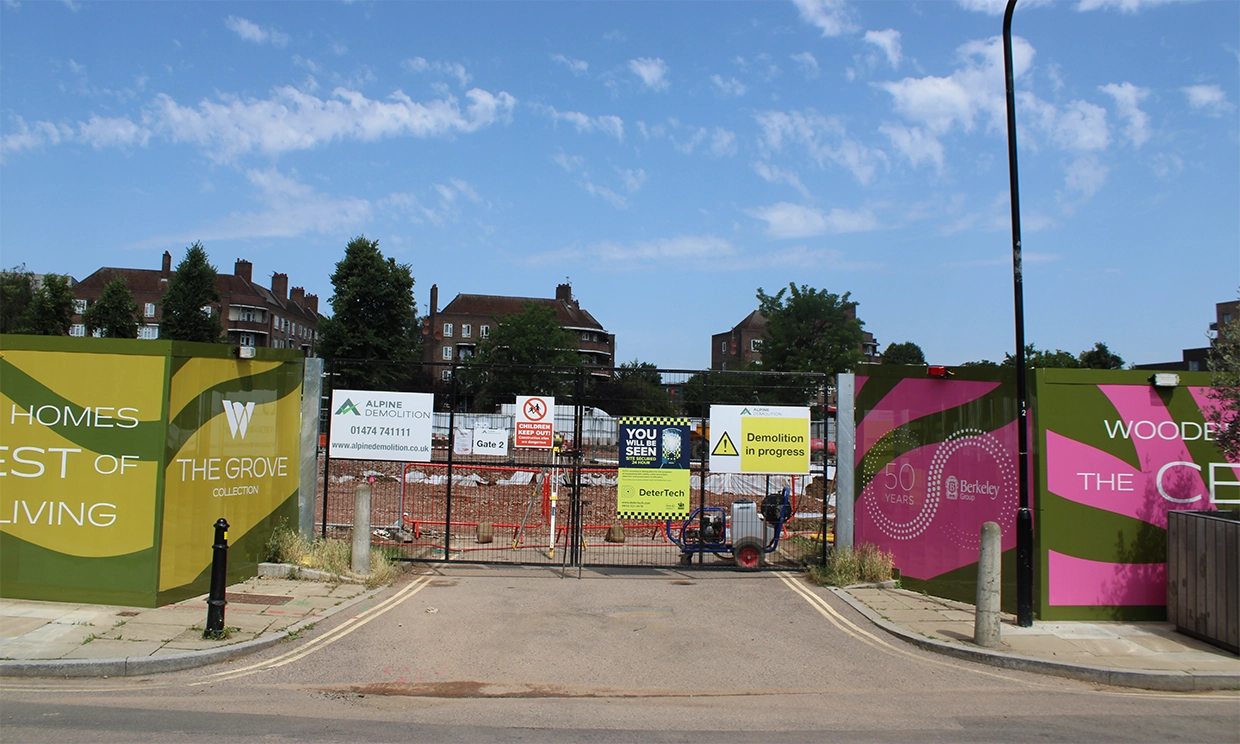
The June 2026 cabinet report puts the council’s commitment differently. It says every secure council tenant on the estate has “the right to a brand-new, high-quality home at social rent in Woodberry Down” – with no mention of a single move.
Council officers noted that intermediate moves are permitted under the development agreement between the council, Berkeley Homes and housing association Notting Hill Genesis, but should be kept to a minimum. The June report warned that such moves may be required.
2010 deal
When the then Labour-run council agreed to sign that development agreement in January 2010, its cabinet was given “broad principles” for rehousing tenants. These said double decants might be required “in accordance with the Residents’ Charter” if Berkeley could not deliver enough new homes in phase 1. Otherwise, they were to be kept to “an absolute minimum subject to unavoidable requirements of the development programme”.
The principles also said that if Berkeley’s replacement homes were not delivered on time, “a revised possession timetable will have to be agreed” – the option of delaying phase 5 that officers rejected this year.
The report’s risk register foresaw double decant costs only in phase 1. The agreement allowed Berkeley to extend its timetable by up to 18 months per plot, and set the 20 per cent developer return cited by Cllr Young, made up of 5 per cent overheads and 15 per cent profit. It expected phase 5 to be built by April 2027.
Cllr Young’s motion stated that under the then Labour administration, promises to avoid double decants “were kept”.
But the same 2010 report planned double decants in phase 2. With Peak, Petherton, Nicholl and Needwood Houses in severe disrepair, council officers wrote that “most residents will need to be double decanted using voids on Woodberry Down”.
They warned that nine phase 2 tenants who had already been moved once could face a “triple decant”. Updates from the area’s ward councillors at the time show the decant of Peak and Petherton Houses was completed by June 2011.
According to the minutes of the cabinet meeting of 25 January 2010, Peter Naughton, then chair of WDCO, told councillors that some residents would now suffer double decants when they had previously been assured the council was committed to a single decant for all tenants.
Viability test
Council officers said in the June report that they had considered delaying the demolition of phase 5 instead, but rejected the idea because it could increase development costs by at least £13.5 million, calculated as of November 2025.
They warned this could make phase 5 unviable and damage the viability of phases 6 and 7, which rely on surplus money generated by earlier phases.
Phase 5 must still pass a viability test under the development agreement. If it failed and no solution could be agreed, officers said, the phase could be paused or scrapped entirely.
Council officers also said the timetable avoids a gap between building phase 4 and starting demolition on phase 5, allowing construction teams to move straight from one phase to the next. Any slippage would add interest on construction loans and slow down later phases, they said.
Safety delays
Secure tenants in phase 5 were expected to move straight into completed phase 4 buildings, but will now have to move somewhere else first.
Phase 4 had to be redesigned because of the 2022 Building Safety Act, followed by a lengthy wait for approval from the Building Safety Regulator. Its new social rent homes are not now expected to be ready until summer 2030.
Phase 5, meanwhile, must be emptied by December 2028 under the development agreement, leaving a gap of around 18 months.
Council officers said the dates could still change, though phase 4 finishing early is “unlikely”. In the meantime, affected tenants will be moved into existing homes elsewhere on the estate.
In June, council officers said 21 secure tenant households were likely to move into phase 4, after others chose to move into phase 3, to a council home elsewhere in the borough or into sheltered housing.
By September, they said 11 households were confirmed as potentially needing a double decant, with decisions yet to be made on six more. Twelve of the 29 secure tenant households have said they want to be permanently rehoused away from Woodberry Down.
Compensation
Affected tenants will receive statutory home loss and disturbance payments, which cover all reasonable moving costs, and a second home loss payment if an interim move lasts more than 12 months, according to council officers..
Each household will be given a dedicated case officer and a housing needs assessment. Around £500,000 will be spent doing up empty homes for interim moves – a cost the council says it can recover in full from Berkeley Homes.
The 132 households living in temporary accommodation in phase 5 are not guaranteed a new home on Woodberry Down, according to the June report.
They may be offered other temporary accommodation or settled housing, which could include private rented homes. The Labour motion’s central pledge applied only to secure tenants.
Cllr Young said: “£13.2 million is a vast amount of money for you and me, but in the grand scheme of a 30-year regeneration building over 5,500 homes, it’s part of keeping to the fundamental promises made to residents.”
The motion was defeated, leaving double decanting looking all but inevitable for phase 5 residents.