
‘More like 20 years’: Zoë Garbett on 100 days in office
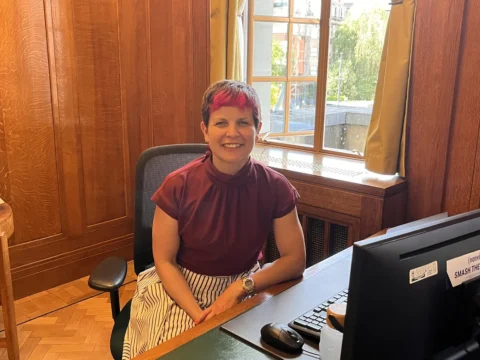
Zoë Garbett has settled into her new art deco Town Hall office by reorganising. At first glance, the wood-panelled walls are much barer. The main change has been shifting the Mayor’s executive desk from behind the expansive mahogany table, which she found too awkward and “overpowering”.
It might sound like the old cliché about politicians simply rearranging the furniture, but the attention to detail shows Garbett’s mindfulness of her newfound authority. It’s been a little more than 100 days since she led the Hackney Greens to victory at May’s council elections – overturning Labour’s commanding majority and winning 39 more seats in the chamber.
For the borough’s first-ever Green mayor, the relentless “24/7” nature of the job has made the first few months feel “more like 20 years”, as she finds her now fully public diary packed with constant meetings – from faith roundtables to child poverty groups, unions and many others (she has managed to find some respite in a brief hiking trip).
A former NHS commissioner with four mayoral runs under her belt (three in Hackney, one against Sadiq Khan), Garbett sent Labour packing after two decades of uninterrupted control in Hackney as the Greens rode the wave of disenchantment with Labour – both nationally and locally – with their manifesto titled ‘Hope for Hackney’.
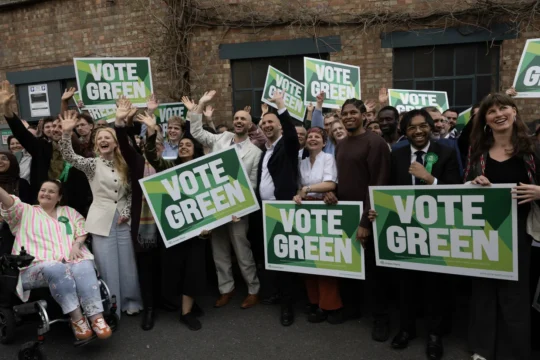
Now the staunch progressive outsider who ran a people-powered campaign to “change the system”, who entered office promising to “start the fightback”, is calling the shots. Naturally, this has involved getting to grips with the “huge” amount of power she has, and looking at how she can “do things differently”.
The council, she says, has welcomed her in this and been supportive, with some teething problems aside.
“Obviously, there have been some huge eye-opening issues,” she says. “I knew the extent of the financial challenge faced by the council. I worked in the public sector 10 years ago when austerity was beginning. But being up close to facing our financial gap of £53m over the next three years, the cuts that will have to be made this year, is a huge challenge.”
Balancing the budget
A frequent Green attack line deployed against Labour, as of late, has been the latter’s cautious fiscal approach in government. After years of “Tory austerity”, insufficient cash injections from Westminster since 2024 have continued to starve councils already on the brink, as responsibilities mount and demand for services grows.
A recent BBC investigation found that Hackney Council alone plans to cut spending by £127 per resident amid a wider savings package of £424m.
Now that many councils are under their control, Green administrations that swept to power off the back of challenging what they saw as continued austerity are confronted by a stark choice: accept the need for cuts, or find ways to resist – such as by collectively setting a “no-cuts” budget, as the New Statesman reported on Monday (17 August).
Though she is leading an upcoming anti-austerity summit at Hackney Town Hall, where such options are likely to be discussed, Garbett is clear that she is not taking the borough down this route.
“We are committed to setting a balanced budget,” she says, if only because failing to do so risks letting government commissioners in to sell off assets – jeopardising her flagship ‘Who Owns Hackney’ campaign to audit the borough’s land and properties with the aim of bringing buildings into community ownership.
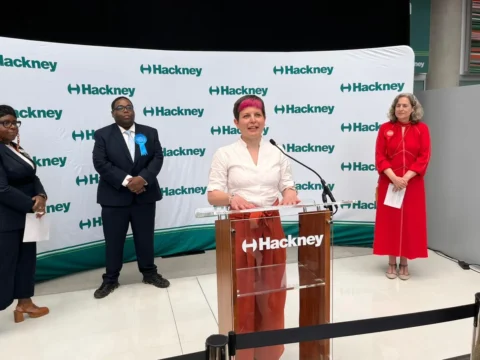
The scheme includes finding out how many of the borough’s buildings are owned by offshore landlords – though it is unclear what the council could ultimately do about this. Garbett mentions Compulsory Purchase Orders, though “obviously that costs money”. The first order of business is to gather as much intel as possible.
But she is clear about her “red lines” and the importance of not simply cutting one service to fund another. This means looking at new ways of raising revenue, though she is not ready to divulge the details on this. It will also follow a “large engagement process” to gather resident feedback to ensure the council is “as transparent as possible”.
The most frequent criticism of the Greens is that they are too untested at wielding power and too keen on identity politics and “gestures” to govern effectively. Having openly condemned police racism, the new guidance on single-sex spaces and the government’s foreign policy before winning power, Garbett has not softened her focus on the big issues since taking office.
She has drawn criticism for pursuing an end to the borough’s twinning with an Israeli city and for openly rejecting the Equality and Human Rights Commission guidance, which she finds “horrifying”.
“Trans women are women, and trans men are men. I want trans people to know that they are able to navigate public life,” she says, citing the inequalities the community faces, such as over health.
“If you start to police and exclude and make decisions about where people can and cannot go, you are questioning their identity at its core, and that’s what I am rejecting.”
No single-sex spaces
This means that on her watch, there will be no single-sex spaces installed in council buildings, even if that means the council ends up in court.
“We’re working really closely with directors, the legal team to make sure that everything we’re proposing from this principle of maximum trans inclusion is robust,” she says.
But to dismiss Garbett as a utopian idealist is to miss the mark.
“I’m a governance obsessive,” she says, to the point that it’s become an office joke. She harks back to her decade as an NHS commissioner, which in her eyes has moulded her into “the perfect blend” of passionate campaigner and boring managerialist.
“I have this huge amount of respect for governance and legal systems, and it’s really important that we’re clear on how decisions are made,” Garbett adds.
She now follows her Labour predecessor, Caroline Woodley, and council leaders across the country in having to do more with less.
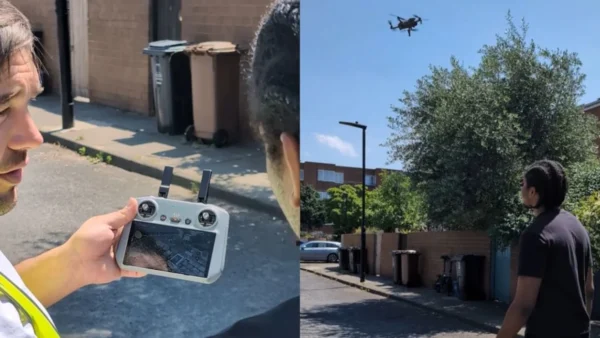
Garbett’s pledge during the election was to “get the basics right”, and she points to ways she is shaking things up, such as by deploying drones instead of scaffolding to inspect council buildings.
But she faces the wider structural problems that plague the borough – an 8,500-strong housing waitlist, 4,000 children in temporary accommodation and the sluggish rate of housebuilding. Has this left her more sympathetic to her predecessor?
“I’ve always had huge respect for anyone in these elected roles, who works at this level of public office [with] the pressure and scrutiny we’re under. But what we’re trying to do is look at ways of doing things differently.”
As Hackney residents are again asked to wait and see what new revenue sources and approaches are in store, the key difference for now has been “setting a new tone”.
“It’s about listening to residents, creating those spaces where community groups are able to tell us what they think,” Garbett adds.
Labour often drew flak from the opposition over its consultations on closing childcare centres or rolling out Low Traffic Neighbourhoods. Does this mean the Green Mayor, to whom climate is “everything”, would back down in the face of clear opposition to these anti-pollution measures?
“Our criticism has always been about who has the power in that situation. At what point are you speaking to people, at what point do you go out to consultation? I want to listen to people and respond to the strength of feeling, and we’ll reflect on our plans when we hear that.”
Few can doubt the Mayor’s ambition. She retains the same bright-eyed fervour and affability that has defined her as a politician so far.
“There’s lots in the pipeline that will come to fruition over the next three to six months I’m really excited about,” she says.
The people of Hackney will have to wait a little longer to find out if her new tone can usher in true change.