
Watchdog downgrades Hackney mental health crisis care over safety failures
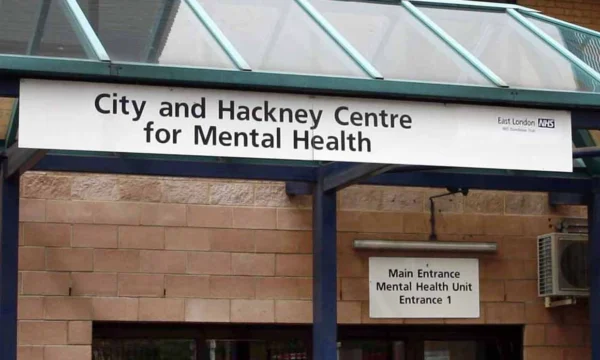
An east London hospital trust’s mental health services have been downgraded by the Care Quality Commission (CQC) after an inspection exposed multiple failures around staffing, training and safety.
Following a routine CQC inspection in November 2025, the East London NHS Foundation Trust was moved down on July 28 from ‘Good’ to ‘Requires Improvement’ for its emergency mental health support, after inspectors found multiple regulation breaches including patients not being given enough direct access to fresh air. The trust provides services across the City of London and Hackney, as well as Newham and Tower Hamlets.
NHS trusts provide two tracks of mental health support: rapid, 24/7 urgent ‘crisis’ services and emergency clinical detention units, also known as health-based places of safety (HBPoS), where individuals in acute mental health crises can be assessed for up to 24 hours.
The trust has retained its overall CQC rating of ‘Outstanding’, but must now present the regulator with its action plan for addressing the deficiencies found in its mental health services across all but one of the commission’s five ‘core quality’ questions: Safe, Effective, Caring, Responsive and Well-led.
Supervision gaps
In City and Hackney, the regulator found far too little supervision of staff who were dealing with patients in acute psychiatric crises, with more than two-thirds (68 per cent) missing mandatory supervision sessions – one-to-one sessions designed to support staff and allow them to discuss concerns.
Though this was similar in other boroughs, here the CQC found compliance did not improve post-inspection at City and Hackney’s HBPoS. Inspectors also discovered that one room at this setting had a CCTV blind spot in the bathroom, which staff said had not been resolved for two years.
Patients at City and Hackney also more commonly faced physical or chemical restraint compared with the other services in the trust, with roughly half of all seclusions, holding restraints and rapid tranquilisations occurring at the HBPoS.
To stop patients being unlawfully detained beyond the 24-hour legal limit under the Mental Health Act, City and Hackney staff had used a loophole in admitting patients to so-called “swing beds” – temporary settings where they can be detained. As a result, around a third (30 per cent) of patients remained in this emergency suite for longer than 72 hours, with an average stay of 70 hours.
Training shortfalls
Safety training was also found to be deficient across the board. Only half of staff were compliant with adult basic life support training, placing both clinicians and vulnerable patients at risk. Staffing levels were dangerously low – a systemic issue across the health service – with more than one in 10 temporary shifts left unfilled.
However, on ‘Caring’ these services maintained their ‘Good’ rating, scoring 70 out of 100. Inspectors noted that staff were respectful and did not hurry or rush patients. Clinical staff showed “kindness, empathy and compassion” and used the “least restrictive options” to help calm those in distress, preventing the need for physical or chemical restraint.
But the score was capped because of inconsistent safety and monitoring measures for staff working alone in the community.
The trust also recorded that suicides among people under its mental health care were significantly below the national average.
Luton delays
Supervision and understaffing issues were commonplace within the wider trust, which is spread across Bedfordshire and Luton, City and Hackney, Newham and Tower Hamlets, the latter three among the most deprived local authorities in the capital.
At Luton’s HBPoS, 29 patients who were detained under emergency police powers were kept beyond the legal 24-hour limit, with one patient waiting more than 72 hours to be released.
Tower Hamlets, meanwhile, has seen its services hit by a severe staffing crisis due to sickness absences rising far beyond other localities, peaking at 15.1 per cent for its specialist home treatment workers.
In a statement to the Local Democracy Reporting Service (LDRS), chief nurse and lead for peer support and allied health professionals Claire McKenna said: “Our colleagues do extraordinary work every day, often supporting people through some of the most challenging moments of their lives. The feedback we received from the CQC report relating to some of our crisis teams recognises the commitment, kindness and expertise of our colleagues.
“It also, quite rightly, reflects the reality of the challenges of delivering high-quality care in an increasingly complex environment. Many of the themes identified by the CQC are not new to us, and we have already been making changes. We are committed to making improvements to strengthen the quality, safety and experience of care for all who use our services,” she said.
Savings drive
Last week, ELFT announced it was seeking to make £24.1m in savings this year, amounting to roughly two per cent of its budget.
The trust has confirmed it is planning to restructure nine front-line services, including adult mental health crisis care. Up to 330 posts from its 6,000-strong workforce across these services could be affected, prompting a backlash from unions, which have said they plan to ballot members on strike action.