
The end of ‘the verbal cane’ – Mossbourne’s quiet U-turn on shouting
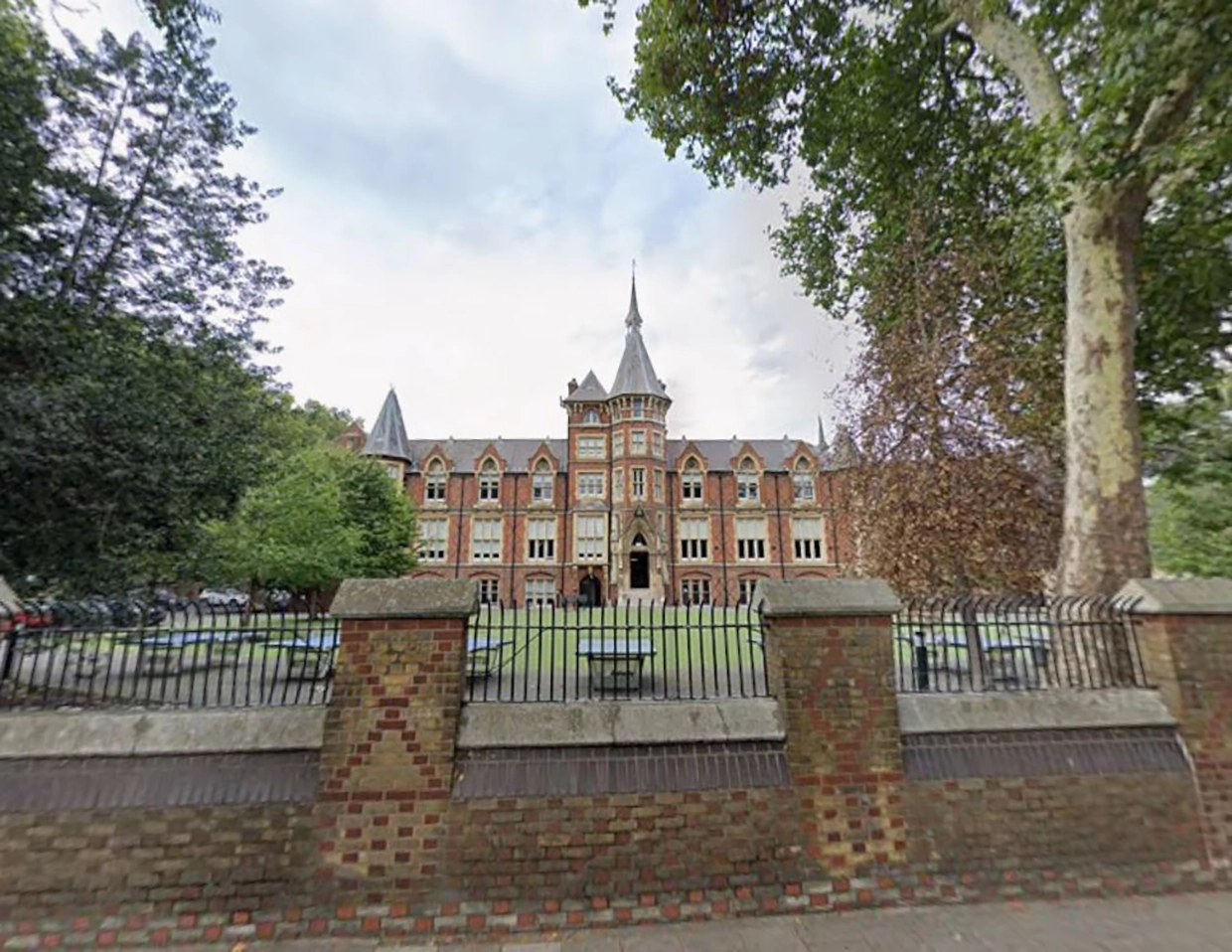
The removal of shouting from a school completely, the chair of the Mossbourne Federation told Hackney councillors last month, would be “a very, very big ask”. Two documents, fifteen years apart, indicate the scale of the ask.
The evidence suggests the practice was neither incidental nor recent — and that, at the founding school, it was deliberately kept down while visitors were in the building.
Sir Alan Wood’s review of Mossbourne Victoria Park Academy (MVPA), published in December last year, gave shouting its own section and an unusually plain conclusion.
Shouting at pupils was, he found, “a routine, not exceptional, practice”, used in a manner that humiliated and intimidated them — “a cultural problem rather than rare individual lapses”.
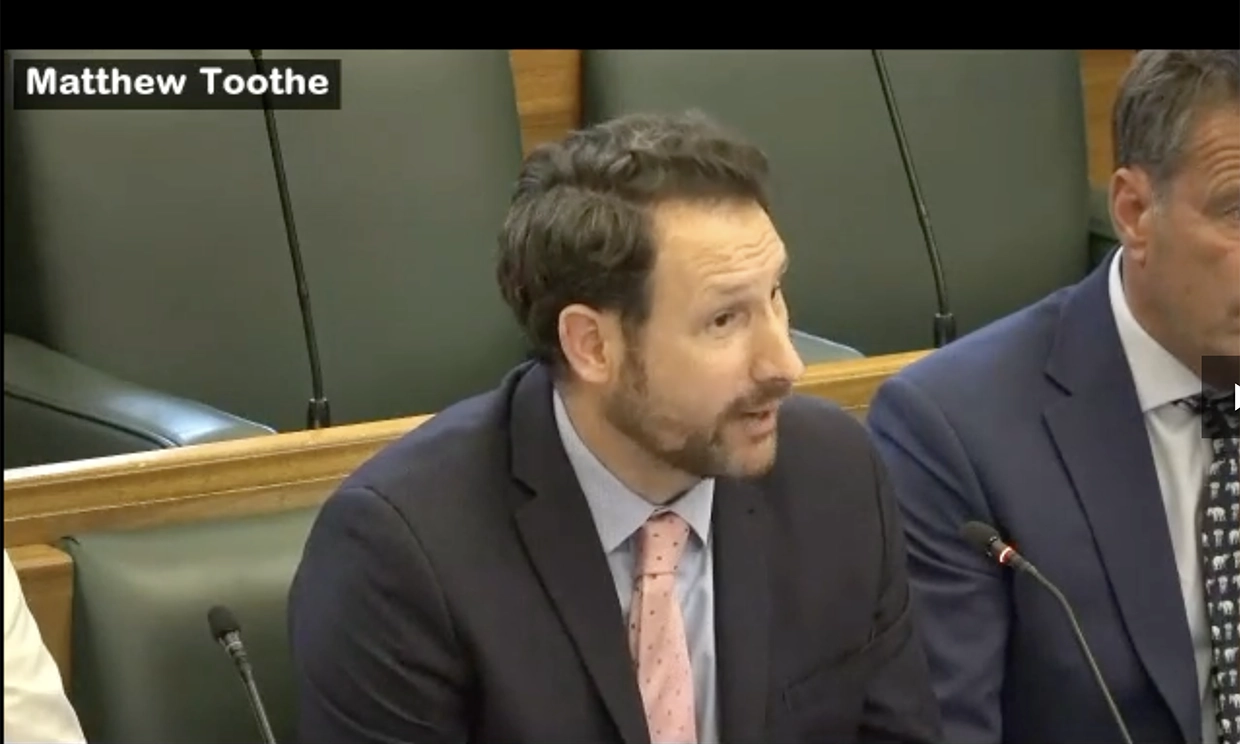
Working within a five-year window and a one-academy remit, the review could not establish how long this had been going on. A 2013 Goldsmiths doctoral thesis goes some way to answering that.
Christy Kulz spent 2010 and 2011 on fieldwork inside Mossbourne Community Academy, the founding school, where she had already worked for six years — first teaching drama, later as a learning mentor.
Her thesis, ‘Structure Liberates?’, names the school outright, and devotes a section to a phrase that would later echo in a parent’s submission to Wood’s review: the verbal cane.
On her own account, the continual shouting struck her at first as frighteningly draconian. Notwithstanding, she set her reservations aside and did it herself, to perform the role with conviction.
Fifteen years later, a teacher at Mossbourne Victoria Park Academy told Wood’s review: “I do not shout. [However,] it was frequently made clear to teachers by the SLT [Senior Leadership Team] that empathy was considered a weakness, and that raising your voice was a requirement”.
Two schools in the same federation, fifteen years apart — the founding academy in Hackney Downs under its first head, the Victoria Park school since 2021 — and in both, shouting (or raising one’s voice) is described not as a failure of temper but as an expectation attached to the job.
A requirement
At the founding school, Mossbourne Community Academy, Kulz records a new teacher advised by an experienced colleague to make sure she was seen shouting at a child in the playground, because it would reflect well on her with senior management.
She analyses the playground as a stage on which staff visibly demonstrate commitment to the ethos.
Drawing on a survey of MVPA staff, the review records leaders “instructed to ‘make their presence known’” by publicly reprimanding pupils — a practice described as contrived to occur in the most public settings possible; a staff development session at which pupils were said to require a “healthy fear” of teachers; and an allegation that a former leader filtered out applicants who would not shout at children.
A senior leader confirmed they might shout in public when a pupil misbehaves, to signal to peers that the behaviour would not be tolerated — shouting, in the review’s characterisation, as “a public performance”.
Wood found it hard to accept the practice was confined to one individual.
The federation’s chief executive, Peter Hughes, told the review he does not personally shout but sees nothing inherently wrong with it provided it is not used to belittle or coerce.
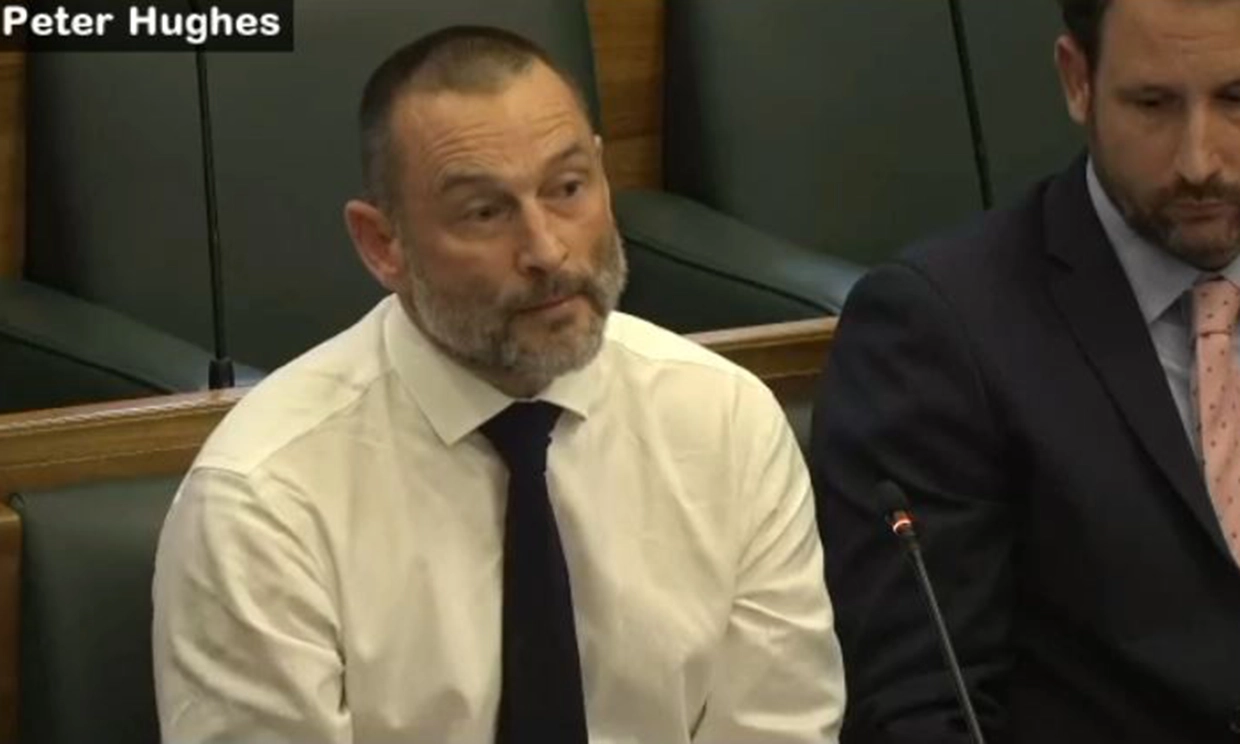
Wood concludes shouting at MVPA was “not institutionally encouraged” but “not explicitly banned”, the leadership divided.
One recorded concern was that Hughes tolerates inappropriate shouting from colleagues — a risk that it becomes a model for younger teachers — though he told the review he had not observed, or sanctioned, public shouting episodes.
“Both pupils and staff”
The practice was not reserved just for children. The teacher who told Wood that raising your voice was a requirement went on: “I don’t think I was ever spoken to in anything other than a raised voice by the SLT, but this wasn’t just me – many teachers were regularly shouted at”.
Wood’s summary of the accounts records concerns about a toxic environment for “both pupils and staff” — teachers pressured to adopt harsh methods, claims of bullying and unreasonable expectations. Another teacher put it starkly: “It felt brutal – everything was based on threats, both for students and teachers”.
The safeguarding partnership’s survey gathered reports of shouting creating a tense environment for staff themselves — shouted at to the point of crying, ridiculed, or personally insulted.
Testimony gathered by Wood traces the pressure to the top: senior leaders framing empathy as a weakness, tracking staff on sanction rates, and cultivating a climate of fear through methods taught in training.
The staff-directed evidence rests on a narrow base: only thirteen of MVPA’s workforce answered the survey, eight of them in leadership roles, and Wood records no firm explanation for the thin response from junior staff.
The review offers a candidate explanation elsewhere — many of those raising concerns, teachers among them, feared rebuke or worse — and its twelfth recommendation requires mechanisms protecting staff who question the behaviour policy from any fear of retribution.
The quiet before the visitors
The most striking detail in Kulz’s record concerns what happened when someone official was due.
Emails reminding staff to keep shouting down in learning areas went round periodically before VIP visits, Kulz records, and two long-serving colleagues were puzzled: if shouting was part and parcel of how the results were produced, they suggested, it should not stop for Ofsted or for guests.
Kulz interprets the curtailment as evidence of an institutional awareness that verbal aggression was indefensible in public.
What the school knew, and recorded
Of the 73 accounts about MVPA within Wood’s terms of reference, 40 involved a complaint actually made to the school. Shouting at pupils featured in 30 of them.
Over the same period — since September 2021 — MVPA logged sixteen low-level concerns about staff conduct in total, the review records. Two related to shouting or raised voices.
Wood found no evidence that low-level concerns featured in any minutes or report to the central board or local governing body.
The governance response, when tested, was inconsistent. The chair of MVPA governors conceded two or three staff were known to be “shouty” while maintaining the behaviour was neither systemic nor planned.
The central board’s safeguarding lead had repeatedly escalated concerns about children being screamed at in public areas, seeking assurance they were being addressed.
Wood concluded that governance was not meeting the Department for Education’s standard for behavioural oversight.
The central board was chaired throughout by Henry Colthurst, in post since December 2016 — the whole of the period the review examined. His directorship terminated on 2 March 2026, twelve weeks after the review was published.
Neither the federation nor Hackney Council has commented on his departure.
“A very, very big ask”
His successor, Toby Campbell-Gray, appeared before the council’s children and young people scrutiny commission on 8 July, where the federation declined three times to apologise to the children Wood found had been harmed (see story, page 5).
On shouting, he told members that “reputations are easily made”, but acknowledged the federation’s past: the code of conduct was being revised, with an ambition of reducing shouting to zero.
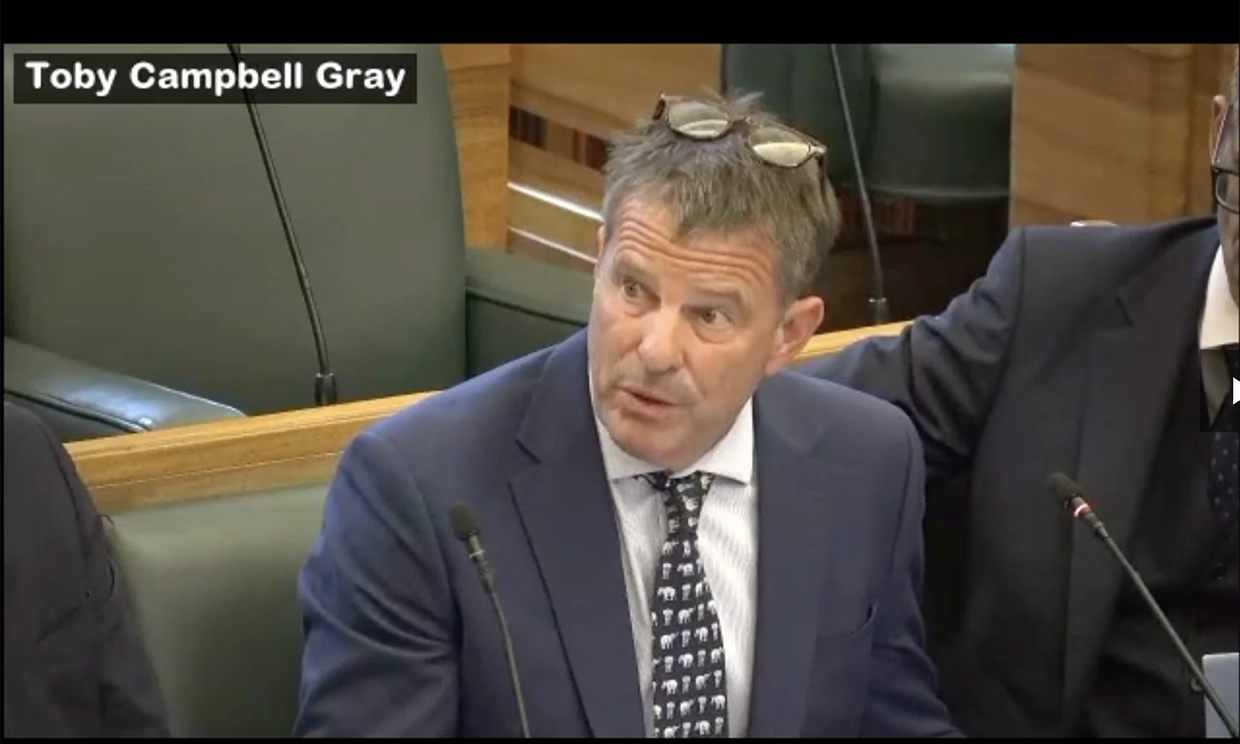
He qualified the ambition, however: to remove shouting from any school completely was, he told members, “a very, very big ask” — no professional practitioner “would say that they could control every single teacher”. The federation would “do our best to get that down to zero”.
The revision went wider than volume: the implementation committee had “scoped out in our code of conduct how children’s dignity may be taken away”, because shouting is not the only means — “It’s just as easy to say quietly something abusive or undignified to a child as it is to say it loudly.”
It answers Recommendation 11, which requires the code to prohibit shouting at individual pupils as a disciplinary measure, to distinguish acceptable voice-raising to gain a group’s attention from shouting that humiliates, to bar any public reprimand whose primary function is to shame, and to set out consequences for staff who shout inappropriately.
The chair’s position sits at an angle to the one his own chief executive gave the review. Both start from the same premise — that the harm lies in the belittling, not the volume — but where Hughes concluded that shouting could therefore be legitimate, Campbell-Gray concludes it should all but disappear: what one defends in principle, the other now says the federation will do its best to reduce to nothing.
The paradox, and the cost
None of this displaces what the review is equally clear about.
MVPA’s results are outstanding — 81 per cent of grades at 5 or above in 2023/24, 93 per cent achieving a 4 or better in English and maths. Attendance exceeds national averages. Ninety-two per cent of parents in the school’s own March 2025 survey said their child was safe there; 78 per cent would recommend it.
More than 300 parents signed an open letter of support in December 2024, and most who answered the partnership’s own survey were emphatically positive — several urged Wood to disregard what they saw as a campaign.
Every teacher and former teacher he spoke to said MVPA is, in many respects, an excellent school; their concerns were about how the policy was applied to the pupils who needed it applied differently.
Wood’s answer is that a system optimised for pupils who can navigate its strictures was never built to protect those who cannot, and the cost has fallen on a minority — including but not only those with special educational needs, with mental health difficulties, or whose families lack the social capital to press a complaint. He puts the question in the words of one of the school’s teachers: at what cost to some pupils are these results achieved?
Evidence spanning sixteen years suggests that the shouting was not a side-effect of the system. And on the record of the founding school, it was kept down when visitors were due.
It is worrying to me that Mossbourne, under its Chief Executive Peter Hughes, is marketed as the go-to role model for other schools and academy chains seeking to improve academic results. Indeed Hughes is involved in companies promoting the Mossbourne way to boost exam results. But the longer term negative impacts of shouting and excessive punishments on what Alan Woods describes as ‘a small but significant minority of students’ must be properly considered – otherwise we are actively promoting a system which boosts some children’s life chances on the back of damaging the prospects of others.
All students deserve a future and given more hope to develop into successful, caring, empathetic and positive, well rounded young adults. Schools where students thrive in a happy, pastoral, positive environment are successful. It leads to students developing good skills not just in school curicular subjects but in life too. Attainment and respect for some basic rules are important as is focusing on students becoming citizens who are ambitious, caring, tolerant and resilient and who will make a valuable contribution to society and the wider world. I feel that ignoring the potentials of all students and an academy that focuses on a lot of discipline is a shame. Schools should be happy, learning focused environments not the opposite. I hope things improve.