
Greens to ‘align’ future Hackney planning with climate goals after Woodberry Down row
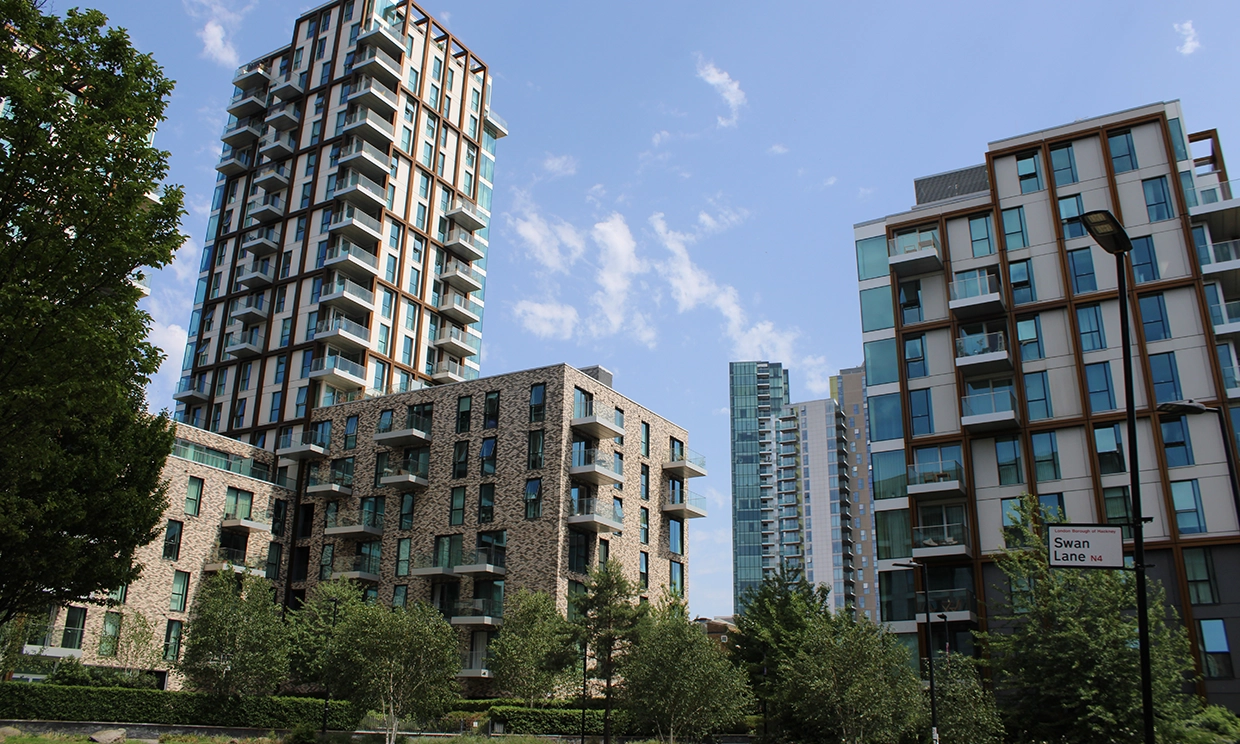
Under the arrangements set by the previous Labour administration, there is no requirement — and has been no discussion — about applying the council’s Climate Action Plan to the redevelopment of the Woodberry Down estate.
But the borough’s new Green leadership says it will look to align future planning in Hackney with its climate goals, following pressure from campaigners over the estate’s redevelopment.
The redevelopment, approved and contracted under Labour, has proceeded under a 2005 agreement with developer Berkeley Homes that carries no obligation to renegotiate in relation to the climate plan.
Campaigners say that is precisely the problem: the scheme is still being run under a 20-year-old agreement whose next phase, they say, proceeds “on the basis of total demolition and reconstruction”.
Sustainable Hackney, an environmental campaign group, has called on the council and Berkeley Homes to apply the Climate Action Plan to all aspects and phases of the estate’s regeneration.
The Climate Action Plan, adopted in 2023 under the former Labour council, set out a roadmap for Hackney to reach carbon neutrality by 2040 — a decade ahead of the government’s target.
Built around five themes spanning emissions and biodiversity, the plan stated that by 2030 “buildings are maintained and repaired regularly, with demolition only used in exceptional situations”.
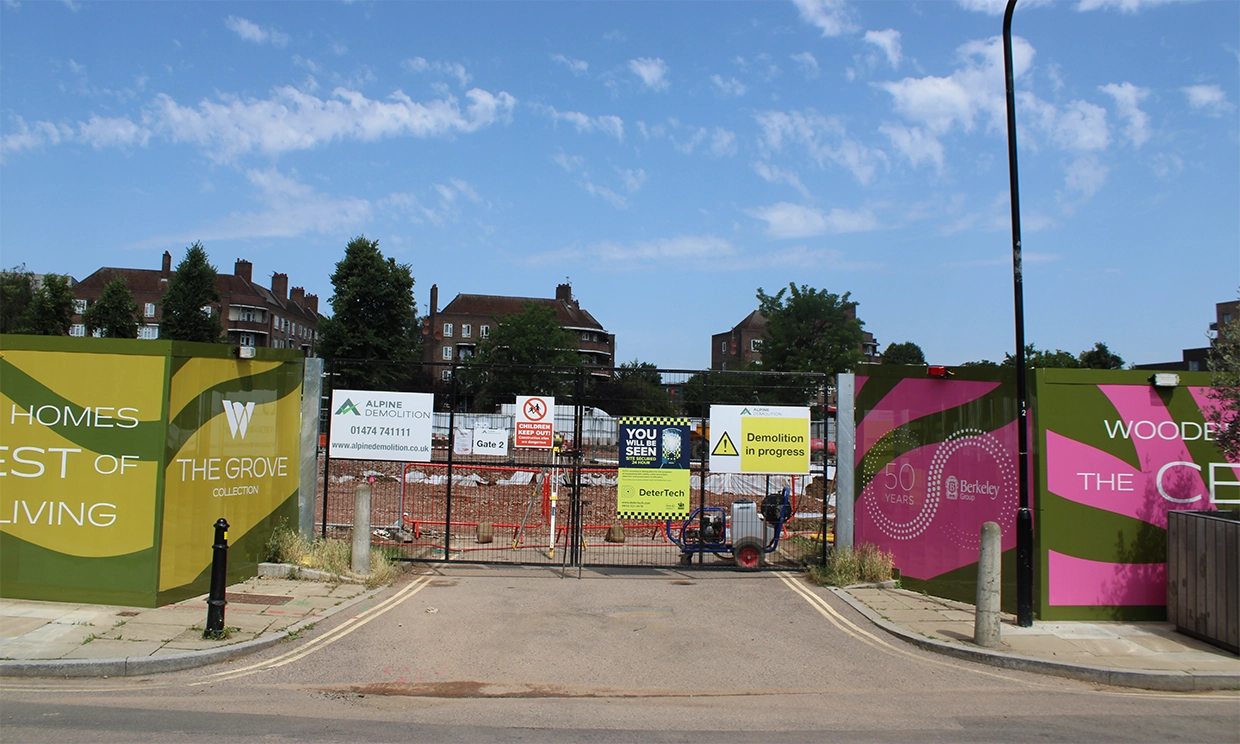
John Yeudall, of Sustainable Hackney and the East West Bank Nature Reserve, said the group had been led to believe the Berkeley Homes agreement would be renegotiated this year – however, he says: “this has not been the case”.
He said the outline masterplan for phases five to eight, recently approved at the council’s planning sub-committee, showed a biodiversity net loss of 9 per cent, when the figure should be improved to at least the mandatory 10 per cent gain.
Sustainable Hackney, he added, is urging the council and Berkeley Homes to apply the Climate Action Plan to all aspects and phases of the Woodberry Down regeneration.
The dispute lands at an awkward moment for the borough’s new leadership. The Greens swept to power in May, taking the mayoralty and 42 of the council’s 57 seats and ending decades of Labour control, with housing the centrepiece of their campaign.
They now inherit a regeneration approved, contracted and defended by the administration they replaced. The mayor of Hackney, Zoë Garbett, has voiced concern about the scheme.
Speaking to the Citizen shortly after her election as mayor in May, Garbett said it had “taken two decades to get to where we are” and called the estate “a really clear example of where we need to make sure that change in the borough works for residents and doesn’t displace them”.
She said she had committed to reviewing estate regeneration projects to ensure they delivered for residents.
The call for the regeneration of Woodberry Down to be subject to the council’s Climate Action Plan follows an election campaign row over social housing. Labour party leaflets had claimed Greens across London “consistently opposed the social housebuilding projects they claim to support”.
The Green party rejected the charge, saying the Woodberry Down redevelopment would result in fewer social homes than before, contributing to a net loss of more than 100 council homes since the last election, and accusing Labour of being “more interested in protecting developer profit margins than solving the housing crisis”.
On the social housing question, the framework inherited from Labour holds that the regeneration began with 1,295 secure council tenanted properties and will deliver 1,327 secure social-rent tenancies on completion — a net increase.
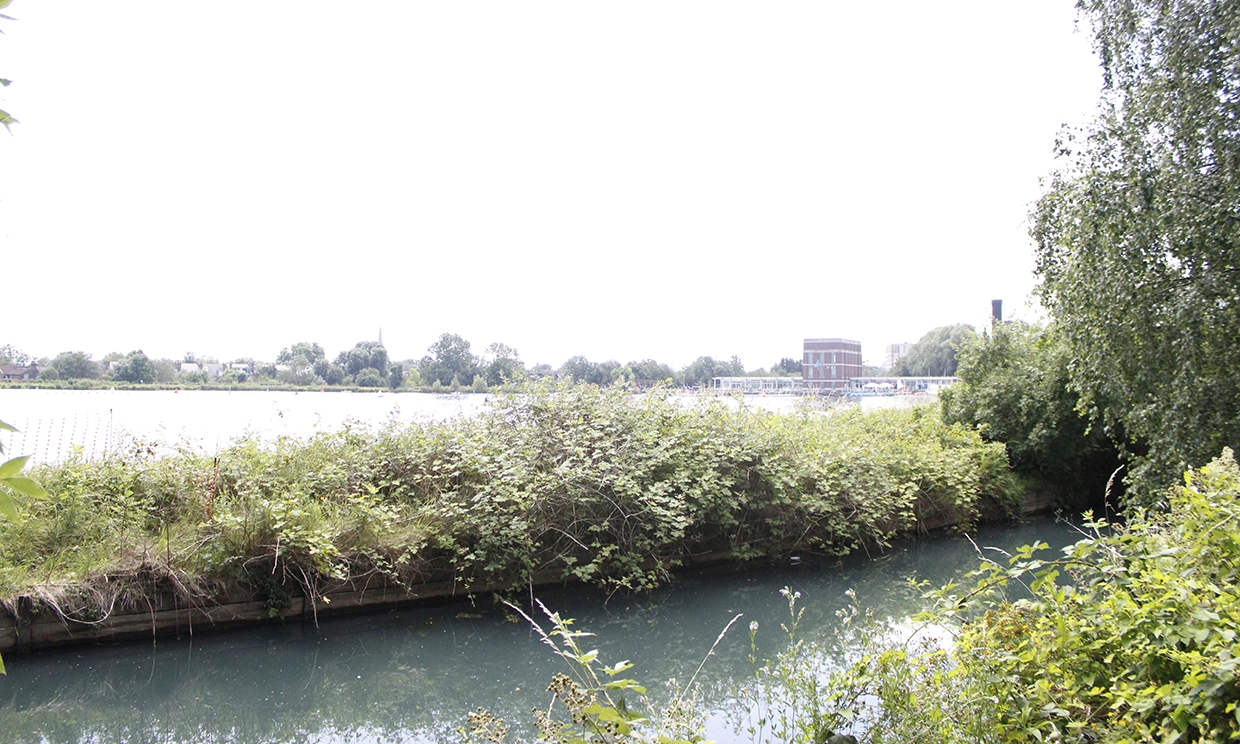
The scheme was designed to provide a new social rented home for every secure council tenant on the estate and has helped create the Woodberry Wetlands nature reserve and new green space.
Under those inherited arrangements, the scheme is in any case bound by some climate safeguards through the planning system.
The 2025 outline application for phases five to eight was assessed alongside a circular economy assessment, sustainability and energy strategies and an environmental statement, and the scheme is required to be net zero in carbon terms, with offset contributions secured through a section 106 agreement.
On biodiversity, the inherited framework holds that the masterplan was not approved with a net loss.
A supporting assessment concluded the development was unlikely to achieve net gain on site, given the habitats involved, so off-site mitigation would be secured by condition or section 106 to ensure the mandatory 10 per cent gain was met at each later stage.

Cllr Alastair Binnie-Lubbock, the Green cabinet member for regeneration, planning and inclusive neighbourhoods, indicated the new administration was open to moving in the campaigners’ direction.
He said the original plans had been “set out under a previous administration” and sat “separately from Hackney’s climate action plan”.
“As a new administration, we will explore how we can align the next local plan with our climate goals,” he said — including “on-site building material recovery, biodiversity net gain, and where appropriate applying retrofit principles over demolition”.
The council’s approach, he added, would “always look to balance the urgent need for safe and affordable housing with action on the climate emergency”.
Noticeable that this is another “article” by this journalist that is just boosts the Green Party. I’m sure the HC are pleased with themselves for producing more client journalism. No mention in this story of the double decanting issue in Woodberry Down. Greens selling out Woodberry Down when they suggested they would stand up to the developers – folding like a box of wet tissues at the first meeting.
What does Mr Binnie Lubbock say that the urgent provision of affordable housing is not compatible with action on the climate emergency, that one has to be balanced against the other, why are these two things incompatible? To me this looks like he is preparing a loop hole for the Greens to renege on their promises to provide affordable housing urgently.
I say this because there has never been a satisfactory scientific case made for low traffic neighbourhoods reducing air pollution to which better public transport, cleaner engines and increased cycling and walking has undoubtedly contributed but LTN’s have been based solely on selfish motives, ie I can drive on your streets but you can’t drive on mine the middle classes cry. And the Greens support this.