
Hackney mayor takes Sadiq Khan to court over slashed affordable homes target
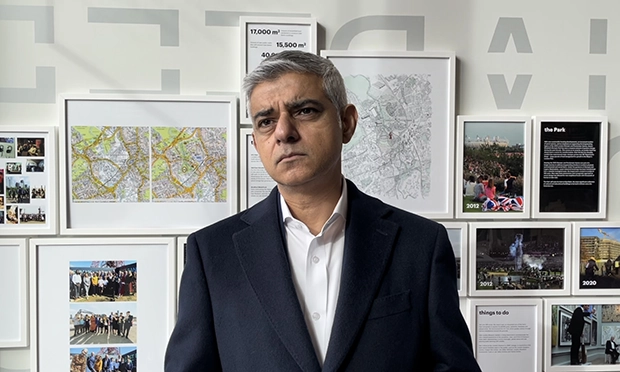
Hackney has joined Tower Hamlets and Lewisham in a legal challenge against the Mayor of London over his decision to cut the capital’s affordable housing target from 35 to 20 per cent.
The three boroughs have applied for a judicial review of Sir Sadiq Khan’s October 2025 decision, claiming the mayor did not follow the proper statutory process or consult local authorities before making the policy change.
Mayor of Hackney Zoë Garbett, who took office last month, has described the housing situation in the borough as “desperate”.
According to the latest figures, almost 8,000 households are on Hackney’s council housing waiting list, and 3,500 families are living in temporary accommodation.

Garbett told the Citizen: “As mayor of Hackney, my goal is simple: a Hackney our communities can afford to stay in. But with 40 per cent of residents living in deprivation – and local families facing some of the longest waiting times for social housing – we urgently need more affordable social homes. To do that, we must ensure developers build genuinely affordable housing, and take action against those that don’t.
“Instead we have a mayor of London doing the opposite – slashing targets, undermining the progress Hackney residents desperately need, and letting developers off the hook.
“The mayor of London is no longer surrounded by councils willing to sign off any developer-driven decision he wants to make. Hackney now has a Mayor who will go to bat for affordable housing.”
Hackney Council’s own planning rules require developers building new homes in the borough to offer at least 50 per cent at affordable levels, subject to a viability assessment — more than double the new London-wide minimum.
A ‘temporary, short-term’ package
In October 2025, Sir Sadiq and the central government jointly agreed to cut the London-wide affordable housing quota for new developments from 35 to 20 per cent. Developers committing to the lower target would be offered a fast-tracked planning application in return.
City Hall has argued the move was necessary to speed up planning decisions, incentivise developers and unlock stalled sites, citing figures showing that just 3,991 affordable homes were built in London in 2024-25, against an estimated need of 88,000 new homes a year.
Sir Sadiq said at the time: “Homes being built in London have dried up, and it’s a nationwide problem. I’m not willing to stand by when that happens, and so working with the government we’ve announced today a temporary short-term package of emergency measures to kickstart house building in London.”
The Mayor of London’s office said he could not comment on ongoing legal proceedings.
‘Political theatre’
The action is being co-ordinated across three boroughs run by very different administrations: Aspire-controlled Tower Hamlets under Lutfur Rahman, and Green-controlled Hackney and Lewisham — both of which Labour lost in May.
Rahman said he favoured a borough-by-borough approach to affordable housing targets, and that Tower Hamlets had remained viable under its own rules, with no developers withdrawing from schemes. The borough has more than 31,000 people on its housing waiting list — about one in 36 of its residents.
The Mayor of Lewisham, Liam Shrivastava, dismissed Sir Sadiq’s policy as “political theatre”, pointing to empty developments in his borough as evidence that the issue was not simply one of supply. Lewisham has 10,500 households on its waiting list and nearly 14,000 living in overcrowded conditions.
In a statement, Green party leader Zack Polanski said: “Every single one of the Green councils elected in London is backing this legal challenge to fight for affordable homes, alongside Tower Hamlets Council. Green mayors fight for a housing and planning system that works for people, not profit, while Labour mayors cut affordable homes.”
A Labour–Green fault line
The dispute over social housing has been a defining one between Labour and the Greens in Hackney for some time. In the run-up to May’s local elections, Labour distributed leaflets claiming that “Greens across London have consistently opposed the social housebuilding projects they claim to support“. The Hackney Greens, then in opposition, rebutted the claim.
A consultation argument
Nick Bano, a specialist housing barrister at Garden Court Chambers, said the councils’ case turned principally on the extent to which they had been consulted before the new rule was introduced.
As “the ones who are going to have to make planning decisions”, local authorities were “very, very heavily affected” by the policy and had “a strong argument that they should have been consulted thoroughly, and their view should have already counted”, he said.
A divided industry
Industry response has been mixed. Steve Turner of the Home Builders Federation, which represents private-sector housebuilders in England and Wales, said the reduction was justified by collapsing housing supply in London and a viability problem at the high end of the affordable requirement.
But Ian McDermott CBE, chief executive of Peabody and chair of the G15 group of London’s largest not-for-profit housing associations, said the structural problem was deeper. “Rising costs and tough economic conditions mean many affordable housing developments are struggling to stack up financially, and the system is under increasing strain.”
London councils now spend £5.5 million a day on homelessness.
The case has been served on the Greater London Authority, of which Sir Sadiq is, as mayor, the executive.