
What’s next after the Greens’ historic takeover of Hackney?
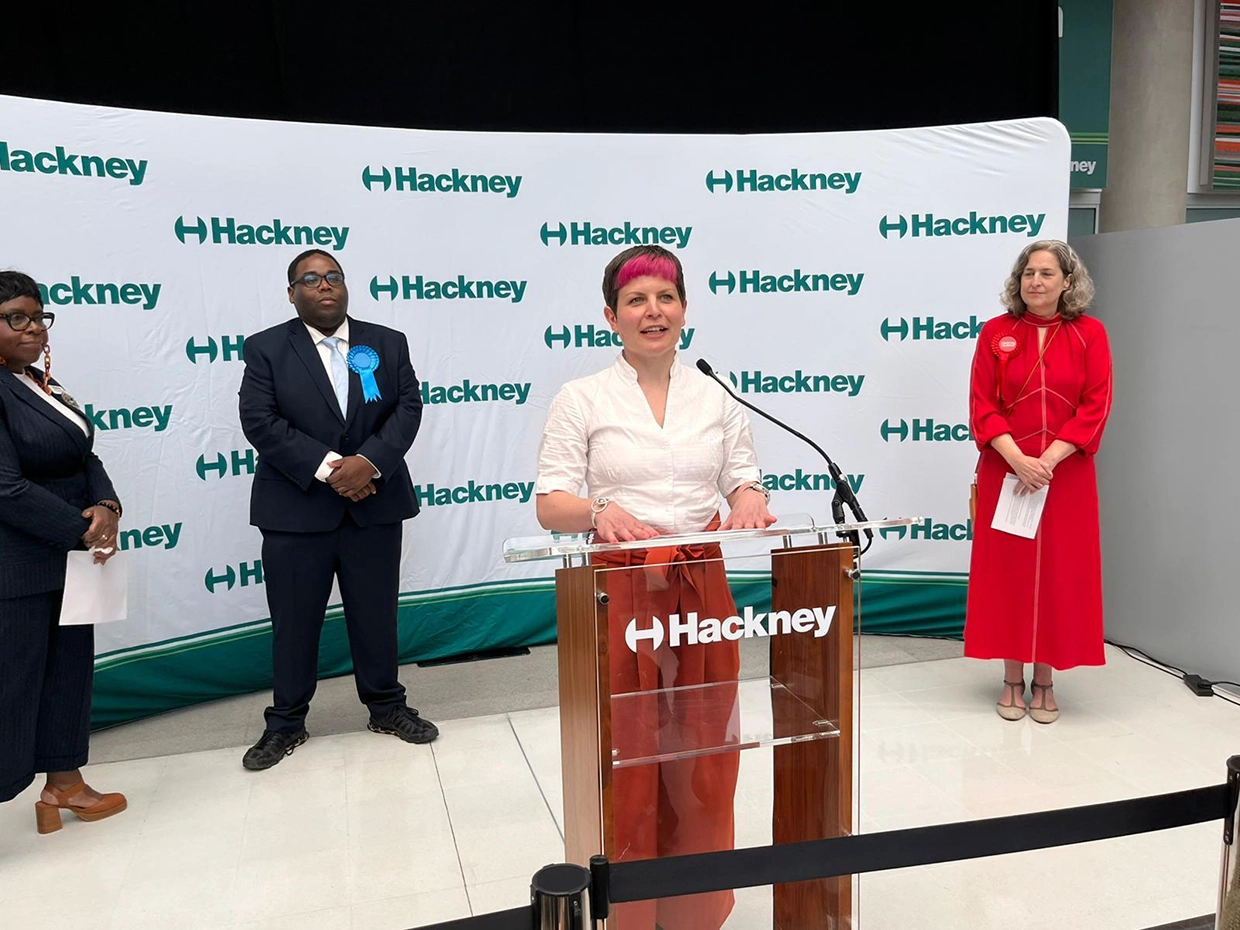
Zoë Garbett speaking after being declared the new executive mayor of Hackney. Photograph: LDRS
The returning officer had not even finished declaring the result before the cheers were ringing out across Hackney Council’s Service Centre.
By then it was all-too-clear: by a margin of nearly 9,000 votes, Zoë Garbett had made history by overturning Labour’s dominance in Hackney to become the party’s first ever mayor and the borough’s first-ever Green executive leader.
It was the Green party’s number one hope, and it had pulled it off. As she took the stage, Ms Garbett reaffirmed her pledge to “change the system” and “start the fightback”.
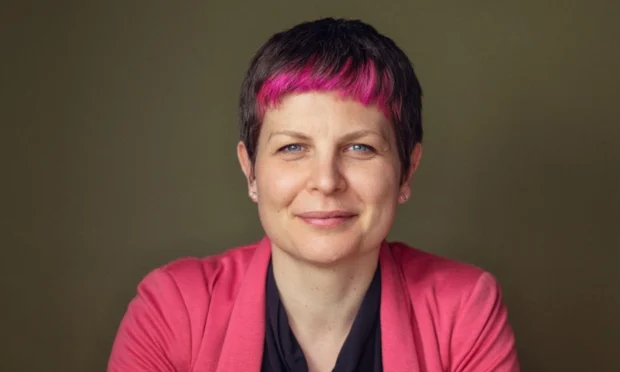
Mayor of Hackney, Zoë Garbett. Photograph: Hackney Council
Meanwhile, one Labour party councillor was busy with the arithmetic, trying to anticipate the council results to come.
Their opponent had won the mayoralty and increased the Greens’ vote share by 30 per cent from 2022. Barring a miracle, Hackney Labour was facing a Green tsunami.
What followed was a long and brutal Friday for Labour as one by one, sitting cabinet members lost their seats and the red fortress crumbled.
The Greens had supplanted the party’s long-held majority with 42 councillors and left Labour in single digits.
With both a personal mandate and a hefty majority, Mayor Garbett can now enact her pledges with the kind of freedom only Labour has enjoyed in the council’s history.
But what does this mean for Hackney?
The borough’s first Green party mayor enters office facing the same financial strains which have plagued previous administrations: surging demand for services like social care, special education needs and disabilities (SEND), and homelessness, amid high inflation and years of constrained funding.
Then there is the housing crisis enveloping the whole of London and an acute slump in affordable housebuilding.
During the campaign, every mayoral candidate pledged to build more homes, but none committed – as Labour did in 2022 – to a target.
On the campaign trail, Ms Garbett told the Local Democracy Reporting Service (LDRS) her party deliberately chose not to commit to a number, and accepted that it would be down to how much funding Hackney would get from Whitehall.
“A lot of this comes down to how much government grant you can get, how much we can get from the pension funds, getting in there and getting under the bonnet,” she said.
Nonetheless, the Greens have promised to make housing a “core priority” and plan to use council-owned land and “every available route” to boost supply of safe and affordable homes.
As Ms Garbett mentioned, one avenue the party is exploring to increase housing supply is freeing up money from the council’s pension fund, following Kensington & Chelsea’s move to use up to £100 million from its fund to buy temporary accommodation for homeless families.
Another Green pledge is to prioritise new community-owned housing developments, such as community land trusts and co-ops, the latter being where a group of occupants manage and control the housing in which they live.
The policy follows a London Assembly report Ms Garbett contributed to last year, which pushed for the Mayor of London, Sir Sadiq Khan, to provide more funding to the London Community-Led Housing Hub to support these initiatives.
Hackney’s new mayor is also likely to be more combative with City Hall than her predecessor Caroline Woodley, who was openly supportive of the Labour mayor in charge of the capital.
Sir Sadiq made clear pre-election he would work with whatever new crop of local leaders emerged to lead their boroughs for the “common good” of Londoners.
But he holds the whip hand over certain policies rejected at a local level, with the power to ‘call-in’ planning and licensing decisions in areas of ‘strategic importance’.
A Green-led Hackney Council has a clear incentive to collaborate with City Hall, on a number of issues including economic development, transport and policing.
However, the Greens have already drawn one battle line, with a clear rebuke of the Metropolitan Police as a “failed system”.
Mayor Garbett, who once challenged Sir Sadiq for the London mayoralty, has also not held back in her criticism of Sir Sadiq’s approach to housing, particularly after he cut a deal with the government to drop the capital’s affordable housing quota.
Expect sparks to fly over the Met’s use of stop-and-search, live facial recognition technology and for the new Mayor to take a more combative approach on development.
The previous Labour-run council passed its last budget in March, including £200m for maintaining council homes and £130m to support Hackney’s lowest income residents.
The new Green leadership has the power to revisit the previous administration’s budget in office. This means Mayor Garbett could seek to enact the alternative plans her party tabled in opposition: more investment in voluntary sector grants, freezing waste fees for Ridley Road Market traders, and imposing a Hackney tourist tax.
Or she could go even further, and start refashioning Hackney’s finances according to her manifesto pledges. On this, a Green spokesperson told the LDRS: “Whilst we are not yet in a position to make specific announcements, we are revisiting the proposals we put forward when in opposition, amongst various other measures to tackle the issues Hackney residents face every day.
“We promised to get the basics right, tackle the housing crisis, bring back community spaces and reduce poverty – that is what we will do.”
In her victory speech, Mayor Garbett made a direct challenge to what she sees as the Labour government’s failures, including on foreign policy, which has become a contentious issue in Hackney.
Since the outbreak of the Israel-Hamas war in October 2023, the Greens and activist groups have lobbied Hackney Council to divest its pension fund from firms linked to Israel’s military and have promised to initiate a “full ethical divestment process from companies complicit in genocide”.
In October 2025, former Mayor Woodley stopped short of committing to starting such a process and argued the council was already doing what it could given the constraints: councils cannot disentangle investments on ethical grounds alone if it risks reducing financial returns for pensioners.
Instead, Woodley vowed to work collectively with other councils and push the London Collective Investment Vehicle (LCIV), which manages local government pension funds in the capital as part of a pooled ‘mega-fund’. LCIV has said it needs a “critical mass” among member funds to trigger an exclusion.
In her first week, Mayor Garbett signalled she was prioritising the issue as she met with the Palestine Solidarity Campaign at the Town Hall, and she has previously lobbied LCIV to “move toward divestment”. It remains to be seen whether as mayor she will be able to go further than her predecessor.
However, the new Green-led council may also find itself subject to intense pressure just from passing a motion committing to “full ethical divestment process”, as was the case for Bristol City Council.
A more symbolic action Hackney’s new mayor may find easier to take revolves around the borough’s twinning arrangements.
In opposition, the Greens pressed the Labour-run council to “cut ties” between the borough and an Israeli port city, Haifa, with which it had a dormant twinning relationship.
Labour refused, arguing that the relationship was inactive but also that such a move risked dividing Hackney’s communities.
But the Green manifesto committed to ending this relationship, and a spokesperson told the LDRS the party was already “in discussions with officers” about the twinning and was hoping to make “rapid progress”.
For more local matters, the council is still adjusting to the sea change ushered in following the 7 May elections.
Mayor Garbett unveiled the first members of her cabinet last week, naming eight senior members who would take on key policy areas.
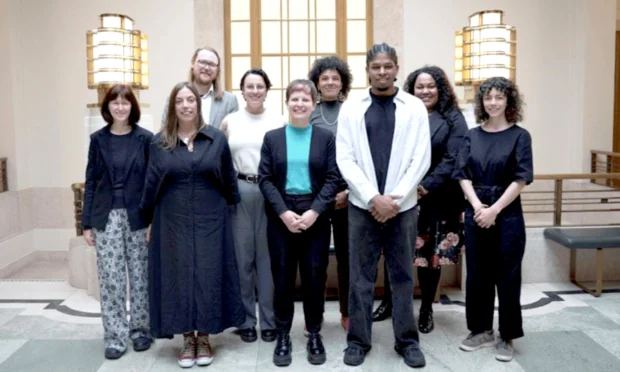
Hackney Council’s new Mayor and her cabinet picks: (L-R) Abi Kingston, Sam Mathys, Alastair Binnie-Lubbock, Florence Schechter, Zoë Garbett, Rachel Nkiessu-Guifo, Dylan Law, Soraya Adejare and Laura Louise-Fairley. Photograph: Hackney Council
The new structure of committees including planning and licensing is set to be decided by the council’s annual general meeting on Thursday 28 May.
Meanwhile, Hackney residents should stay tuned for two by-elections in the wake of the locals.
Due to victory in the mayoral election, Garbett was unable to take her seat as a ward councillor, whilst another Green party councillor, James Tilden, had to quit immediately because he was ineligible to stand in the first place.
No date has been set, but Hackney Labour party will be planning to use the contest to get back into double-digits in the council chamber.
Congratulations Greens! Proud to have voted for you for many years. One small suggestion for Zoe – FOIs. The council has been ignoring them or taking months to respond. The ICO was trying for years to force them to follow the law. Until Sir Kier was voted in… The Greens could quickly just open things up and start responding properly to residents. Easy win for their community participation agenda.
Hackney newspapers proposal…Merge Citizen with Love Hackney
Since the Hackney Gazette has nearly disappeared from Hackney streets ( free from Grocers opp Ridley Market) and the dissapointing Love Hackney irregular Council paper I suggest the Council upgrades its newspaper service.
I suggest the Citizen is merged with Love Hackney to produce a regular monthly Hackney Council tabloid newspaper with much better news and listings for the whole Borough. Of course its distribution will have to improve massively to ensure complete coverage across Hackney. Good luck to Citizen, a fine newspaper. Mark.
Responding promptly to FOI requests will be a good test of the Green party’s faithfulness in promising to be truly accountable to the residents, who elected them.