
‘Be curious, be a detective’ — Hackney Archives team member on the magic of the collection
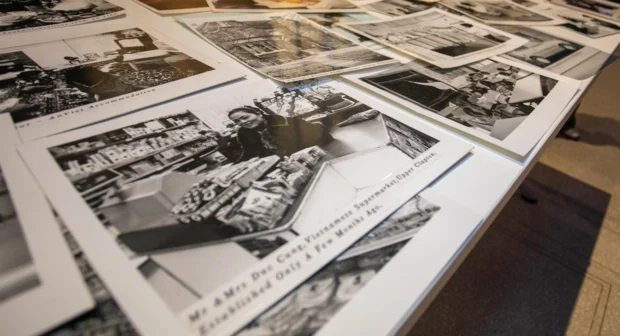
The archives contain more than 600 years of history. Photograph: Hackney Council
“Archives come to life when you come to them with a question which means something to you”, archivist Dr Etienne Joseph said.
“Be curious, be a detective, be empowered”, he added. “Start by finding your ‘why?’ and then go on a journey of discovery”.
If there’s anyone who would know how to get the best of an archive, it’s Joseph. He was recently praised at Hackney Town Hall for his work at Hackney Archives, which in November 2025 became accredited – a status only eight per cent of archives in the UK have achieved.
Joseph was celebrated throughout the night for his dedication to the community and the lofty standards he maintains at the archives. He said the process of achieving this status was no mean feat, involving “demonstrating a commitment to professional standards and future planning”.
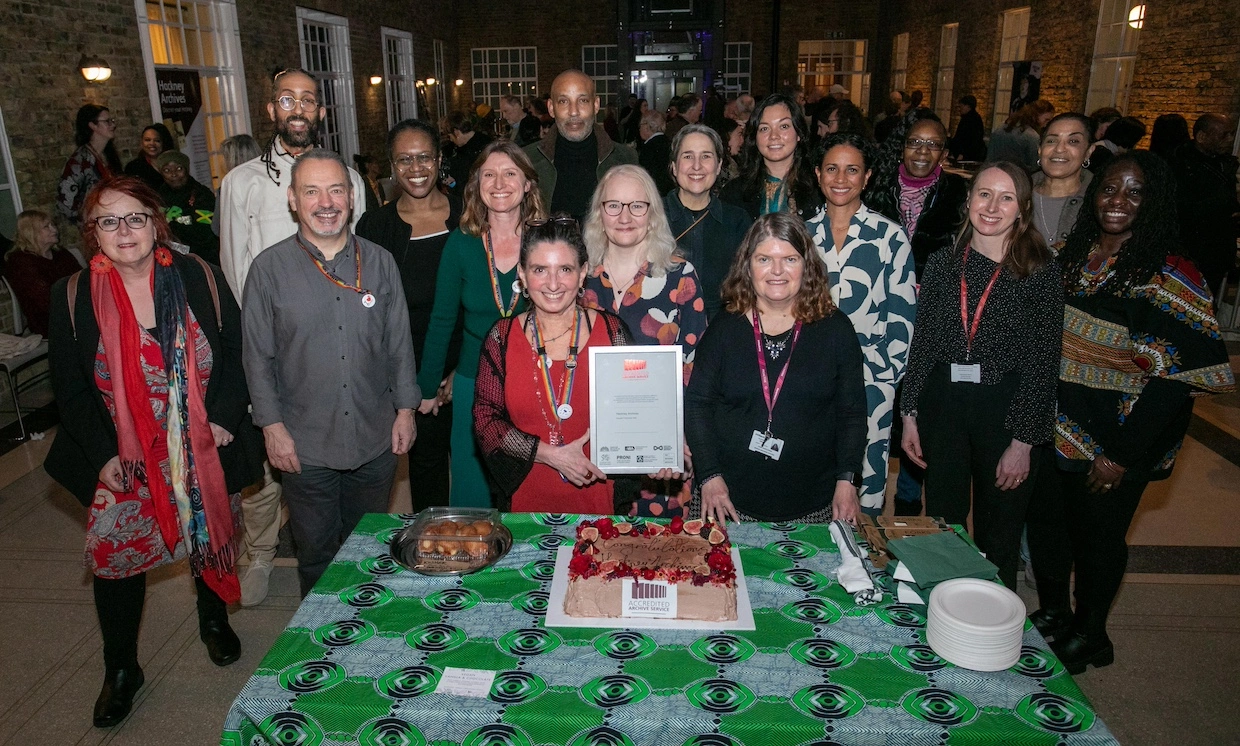
The Hackney Archives team celebrated achieving accreditation status last year. Photograph: Hackney Council
That commitment will be evident to visitors of the archives’ premises on Dalston Square, who may at first be daunted by the wealth of information and historical artefacts stored there.
But that doesn’t stop the borough’s most curious people from paying a visit and delving into Hackney’s history. The archives handle nearly 3,000 enquiries annually, serving a diverse demographic.
“We welcome over 11,000 visitors annually, and the range of enquiries is as diverse as the makeup of the borough”, Joseph added.
“Contrary to popular belief, working at an archive is an exciting job. Each day is different, learning is constant and you don’t really know what the next inquiry will bring”.
An archive is a collection of historical records or artefacts. These could be documents, photographs or even digital files. The Hackney Archives contain more than six centuries of history relating to the borough – its oldest record is dated from 1356, while some of its newer entries include photographs taken on modern-day mobile phones.
For Joseph, the accreditation doesn’t only confirm the quality of the archives. Beyond the technicalities, it is the culmination of years of passion and dedication from the team.
He added: “People that do what we do choose the job because we love the work, not because it will make us rich – because it won’t!
“We have invested a lot of time and care into supporting local history and people interested in the heritage profession. Being accredited helps us to build a stronger platform to continue to do this and attract more support”.
While almost every London borough has its own archive, Joseph says Hackney’s is truly unique – in part because of its “proximity to the City of London”.
He added: “This location has created a fascinating history of class, spanning from 16th-century royalty to 19th-century factory labourers.
“Our collections document 20th-century immigration resulting from Britain’s imperial past. These elements contribute to diverse community narratives and a strong tradition of active citizenship, from abolitionists to pan-Africanists and anti-racists.
“Preserving Hackney’s records means maintaining processes to ensure material remains accessible for as long as possible”, he added.
“The challenge is the resources required to maintain such a large collection, particularly modern records which demand digital preservation infrastructure which is both costly and constantly changing”.
Hackney Archives, Dalston Square, London E8 3BQ.
Thank you so much for shining a light on some of the work we’re doing at the archives.
Its important to emphasise that very little of what we have achieved would have been possible without the expertise and support of the many people we have collaborated with over the past few years, and the efforts of an extremely dedicated team. Although there is much more to do, we are really happy for the recognition of our work, but very keen to ensure that everyone who has been a part of this work is properly acknowledged.
We’d also like to make it clear that whilst we do try hard to uphold professional standards, far from being lofty, Hackney Archives are for everyone and we are always here to give a warm welcome to anyone who is interested in answering questions about Hackney’s history.