
Outdated incinerator will stay in use beyond lifespan as replacement progress slows
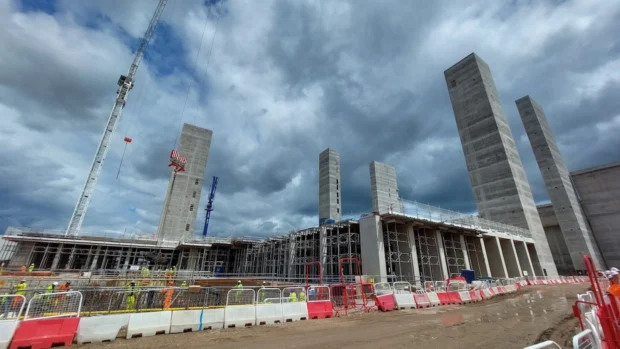
The Edmonton EcoPark was built in the mid-1970s. Photograph: LDRS
An outdated incinerator providing power to north London will stay in use well beyond its lifespan, as progress slows on its replacement.
The facility will now remain operational “up to and beyond 2030” according to North London Waste Authority (NLWA), which runs Edmonton Eco Park where the incinerator is based.
However, this is “significantly past design life” for its mechanical, electrical and civil infrastructure, according to a report published in December.
The NLWA is controlled by councillors from Barnet, Camden, Enfield, Hackney, Haringey, Islington and Waltham Forest, and is responsible for disposing of waste from the seven boroughs.
A replacement energy facility was initially slated to begin operation in 2027, and while construction is ongoing, no clear timeline has been established by the authority.
In August, the project’s overseers said it was being hindered by local and international challenges. They pointed to Brexit, the war in Ukraine, and high interest rates impacting the cost of raw construction materials.
Councillor Clyde Loakes, a non-executive director of the NLWA and deputy leader of Waltham Forest Council, said that month that work “had not stopped” despite rumours and “construction progress continues to be made, with over 200 workers on site”.
Top councillors in Haringey agreed the month prior to shelve plans to pipe heat from the incinerator, citing “economic turbulence” and the need for “prudent” management.
According to the December report, the authority received 22 complaints between July and September.
They primarily related to traffic congestion, long queues, “early or inconsistent” closing times, and “unclear guidance” on residency and requirements for booking vans.
Other residents reported bad odours, and complained about the impact of cars queueing on their streets.
However, the authority received some 40 ‘compliments,’ focused on the “friendliness and helpfulness of staff, the cleanliness and organisation of sites, and the positive experiences of visitors”.
Note: this article was updated on Monday, 12 January at 3.54pm to include LDRS amendments in paragraphs two and eight.