
Hoxton legal advice service at risk of closure after 32 years as charity scrambles for funding
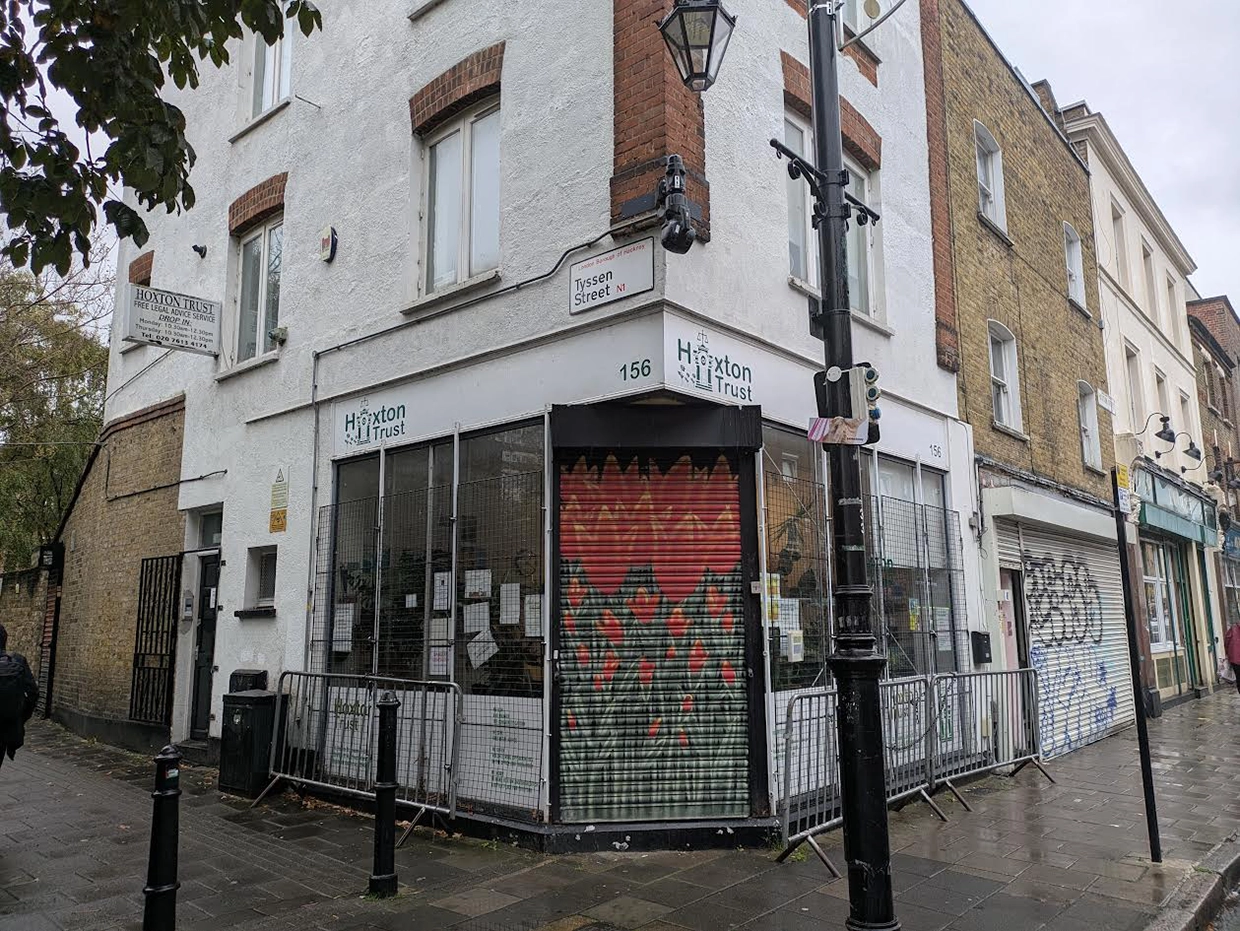
The Hoxton Trust has provided free legal advice to Hackney residents for 32 years. Photograph: The Hoxton Trust
A Hackney charity which provides free legal advice to residents has less than six months to solve a funding crisis which could force its clinic to close after 32 years.
The Hoxton Trust has offered help to thousands of Hackney residents since 1993.
Its Hoxton Street clinic are now at risk, with the charity struggling to replace a grant which has paid its three part-time advisors for the last five years.
Paul Fleming, the Trust’s CEO, said the charity now needs to source approximately £40,000 to keep its services running.
“If we haven’t got that money, we will have to stop,” he said.
The clinic is open on Mondays and Thursdays from 10am-12pm and assists five residents a day with a range of legal problems including housing, benefits, and immigration on a first come, first served basis.
Fleming says the Hoxton Trust is already able to help fewer people than the organisation would like. “I think if we opened more, we’d see more clients, but we open when we can afford to,” he said.
If the clinic closes, it could put more pressure on other services nearby.
The Citizens Advice Bureau on Hillman Street can only see 20 people per day and asks them to arrive early due to ‘very high demand’.
The Trust’s clinic also covers the two weekdays that the Citizens Advice service is closed.
Fleming said there are only a few organisations who will fund legal advice. “I can count them on my hand. My options are now quite severely limited,” he said.
For the last five years, most of the charity’s funding has come from the City Bridge Foundation, which owns five Thames crossings including Tower Bridge, London Bridge, and the Millennium Bridge.

The Hoxton Trust Community Garden is also maintained by the organisation. Photograph: The Hoxton Trust
That support will end next year as the foundation has already provided funding to the charity for two more years than it normally does.
Hackney resident Baby Bila received advice from the clinic and was concerned to hear it might have to close its doors. She said: “We need it – the service is very good.”
The service is one of the few in the area people don’t need to book ahead to use.
For Bila, this made it easier to get to help. She said: “I tried somewhere else, they said: ‘Go away, you need an appointment.’”
Germa has volunteered on the clinic’s front desk for two years.
He said there are many people who find it easier to drop in at the Trust than to make an appointment at other centres.
In addition to the grant, the charity receives money from the rent of two nearby commercial properties it owns.
That income helps pay the wages of staff like the Trust’s gardener, who runs community activities in the Hoxton Trust Community Garden next door.
The Hoxton Trust continues to offer free legal advice from 10am-12pm on Mondays and Thursdays at 156 Hoxton Street, N1 6SH.
I volunteered at Hoxton Trust’s legal advice centre for its first year, before I found a more appropriate way to do this work elsewhere. Back then, none of the lawyers giving advice to whoever came in seeking it was paid at all but we mostly worked there to gain further work experience or to keep our skills current between paid jobs. The centre was open every day, although who worked there on which days varied.
As I recall, the first time that any funding for the legal advice work was received came several years later and that tiny amount was split between the two lawyers who were working at the Trust permanently.
Hoxton Trust’s legal advice centre seems to have changed its approach over the years, from having a largely voluntary workforce to expecting that its people can be paid and by reducing its ability to offer free advice to fit the funding that it’s become used to receiving. That change of approach isn’t an improvement and may well not be realistic.
I’d be surprised if every single lawyer who’s based anywhere near Hoxton is now continuously employed, not only earlier in their working lives but for as long as they might wish to do so when formally retired. So there are probably still potential volunteers available, if the Trust just reconsiders its expectations.
Professional negligence litigation and more stringent regulatory oversight make that approach unworkable these days @DianaW.