
Bakery workers pave the way for hospitality organising with ‘landmark’ union recognition
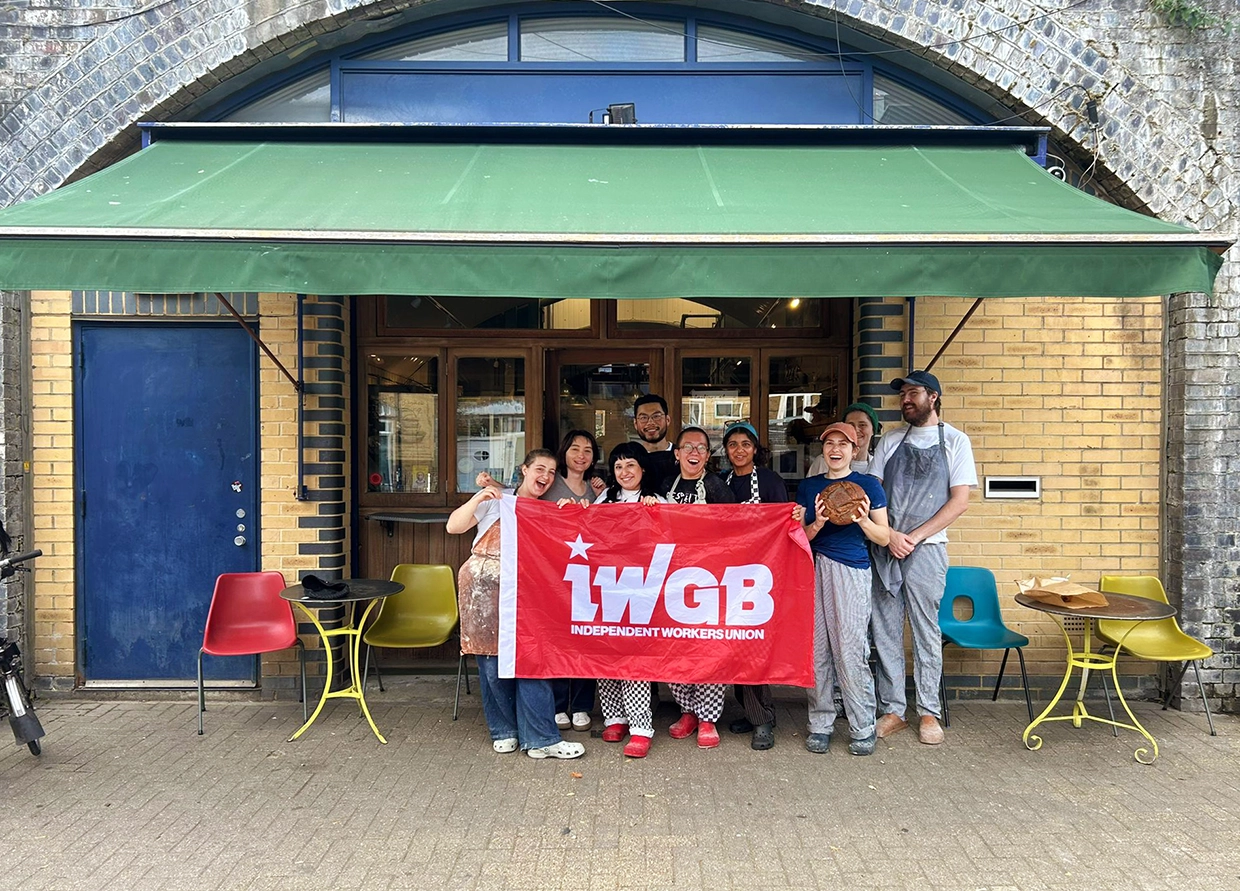
In union: bakers at E5 Bakehouse. Photograph: Hackney Citizen
Workers at a Hackney bakery have won a union recognition agreement with their employer, the first of its kind at one of London’s independent artisan bakeries.
E5 Bakehouse runs an acclaimed sourdough bakery, café, and baking school with sites in Hackney, Poplar, and at the V&A East Storehouse, employing more than 100 staff.
Known for its commitment to sustainability and local sourcing, E5 is part of a wave of London bakeries that rose to popularity alongside others including The Dusty Knuckle and Toad.
It is now the first among them to formally recognise a union.
Represented by the Independent Workers’ Union of Great Britain (IWGB), workers now have a formal route to negotiate pay, hours, and working conditions.
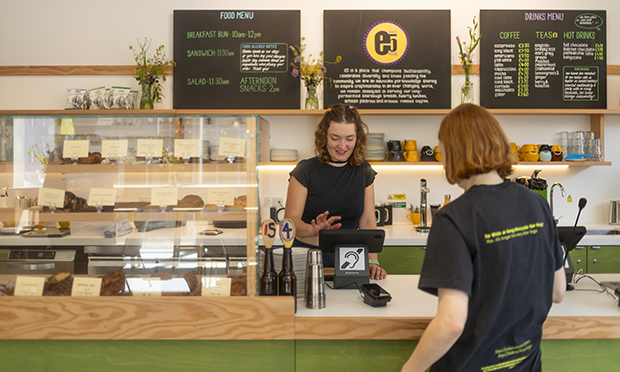
The e5 Bakehouse cafe. Photograph: Kemka Ajoku for V&A
Mabel Ki, baker at E5 Bakehouse and member of the E5 Bakehouse union, said: “True sustainability begins with the people who make it possible. Running an ethical business is as much about how you treat your workers as where you source your ingredients.
“By unionising, we’re making sure E5 practices genuine sustainability across all dimensions – social, environmental, and economic. Not just because we care about each other but because we care about working somewhere that has a positive impact.”
The recognition agreement comes after staff across all departments including bakers, baristas, couriers, café staff, chefs, and kitchen porters, met regularly across the last year to share experiences, according to IWGB.
Baker and member of the E5 Bakehouse union, Issy Arnold, said: “All too often hospitality workers are made to feel dispensable and therefore like we have no real power to stand up for ourselves, but at E5 we’ve built a strong union that’s already delivered real, material wins.
“We hope this sparks a wave of organising that shakes up our sector and sees workers finally valued and respected for what we do. Workers in bakeries, cafés, and restaurants might think unions aren’t for them – we hope our landmark recognition agreement proves otherwise.”
In a sector known for long hours, low pay, and high turnover, IWGB said the agreement marks a “breakthrough” for collective organising.
Covid-19 exposed the restaurant and cafe industry’s shaky foundations: the tight cashflow, high overheads, and often a reliance on tourism.
The number of restaurants going bust was on the up, and many couldn’t see their business model as sustainable.
Coming out of the pandemic many turned to unionisation to represent the voice of workers, with pressure groups such as Jonathan Downey’s Hospitality Union – made up of restaurant owners and industry figureheads – pushing for rent holidays and debt moratoriums.
Henry Chango Lopez, General Secretary of the IWGB Union, said: “Organising in the hospitality industry is notoriously difficult but these workers at E5 have overcome every obstacle in their way to build a powerful union.
“This agreement sets the standard for London bakeries, cafes and restaurants, forging a path forward we hope others will now follow.”
The IWGB has already supported E5 workers to achieve several wins, including full pay for staff who lost shifts during an unplanned safety and maintenance closure.
E5 Bakehouse founder Ben Mackinnon has welcomed the agreement as a “really positive move.”
He told the Citizen: “Earlier this year we had to close very quickly due to a health and safety issue. It really hit the business hard and we didn’t think to pay people who had been laid off at short notice but had been depending on their pay packet. We worked with the union to make sure they got their pay.
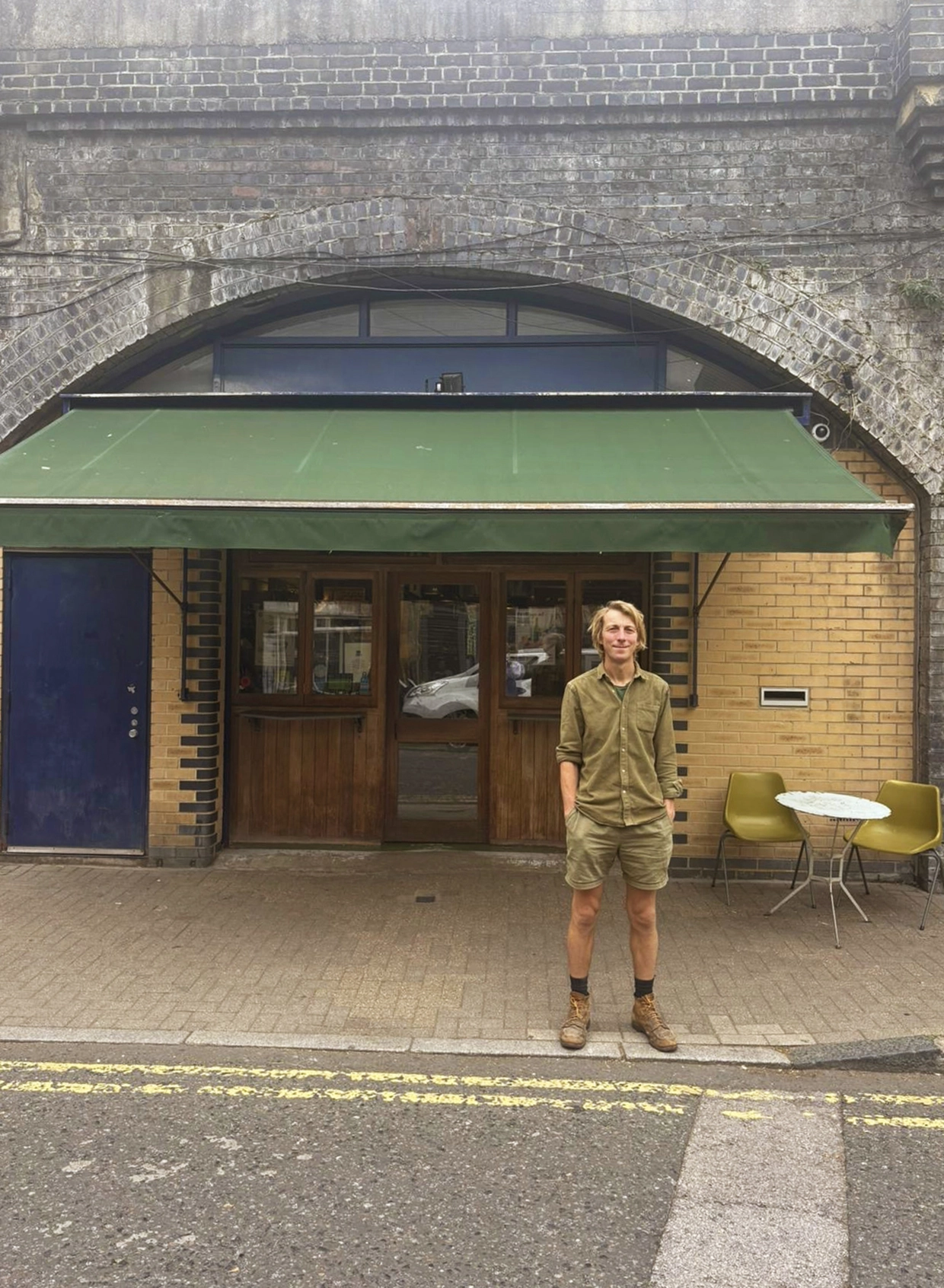
‘Positive’: Founder Ben MacKinnon outside E5 Bakehouse
“There is a lot of bad practice within the hospitality industry more widely, so this is a great demonstration about how a union can exist and we can work together.”
E5 Bakehouse came from humble beginnings.
Mr Mackinnon started out in 2011, knocking on doors across the borough with samples of his bread and offering to deliver on Saturday mornings.
He soon found a base for his project inside a London Fields railway arch where he has now been stocking the bread bins of Hackney residents and restaurants for more than a decade.
Despite his success, running an independent business in Hackney – an area where average rents have tripled in the past 20 years – has come with its challenges.
Back in 2021, E5 Bakehouse faced a 50 per cent rent increase from its landlord due to “significant” rises in market rates.
Mr Mackinnon said: “Our rent is still really high and that’s the challenging aspect of running the business. It’s a very tough market, there’s a lot of inflation, but we’re working hard to still be here.”
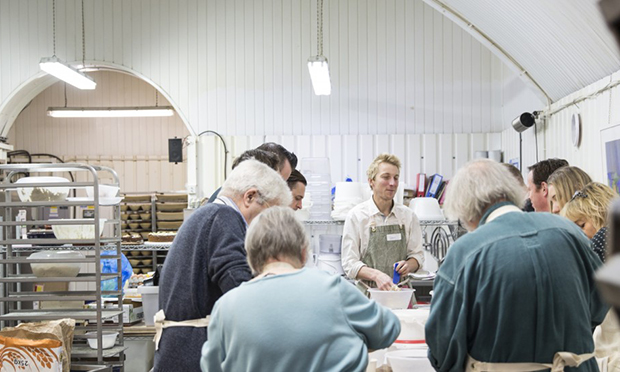
E5 Bakehouse in London Fields runs courses for wannabe bakers. Photograph: Ben Mackinnon
The bakery is committed to being as ethical and sustainable as possible. It is a London Living Wage employer, offers paid training courses, uses renewable energy, and increasingly sources flour from UK farms, with a view to exclusively using UK wheat.
Mr Mackinnon said: “It’s a great team, from customers to staff and we’re really proud it can provide such a positive place for people to work. Hopefully with a union this relationship will only continue.”
The bakery owner stressed the importance of local business in Hackney, adding that the Bakehouse had become an established and valued part of the neighbourhood over the last decade.
He said: “We have been busy, we’re opening new stores and our bread is better than ever. The community is fantastic and values independent and local businesses so they really help us.”
I’d love to know who the landlord is. How is it acceptable (even possible) to increase rent by 50%? Hackney Council needs to do much more to protect small businesses, as well as those living in rented accommodation (which the council often ends up paying for as it’s way beyond what most average earners can afford). Hackney is currently thriving – which is great – but that’s often owing to the innovative and creative businesses that decide to come here and start up. Businesses like this, which do so much for the local community, need better support (rent-capped). I’d also consider their employees, who likely would also prefer to live locally but likely can’t afford it, for the same reason.