
Final Woodberry Down plans win approval despite fears over ‘staggering’ loss of wildlife
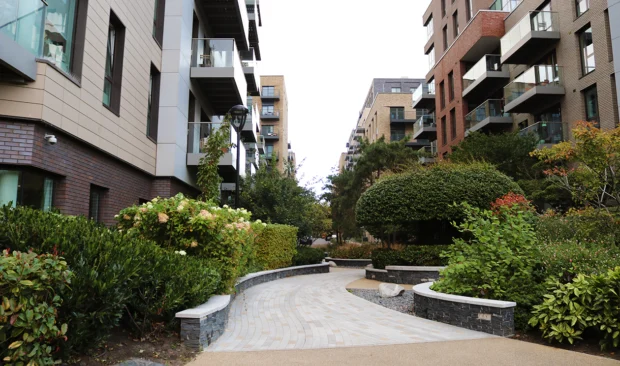
The Woodberry Down redevelopment was first approved in 2005. Photograph: Hackney Citizen
The final phases of the Woodberry Down regeneration masterplan has been approved by Hackney council despite residents’ objections.
At a planning sub-committee meeting on 3 September, Hackney council granted Berkeley Homes conditional outline planning permission, subject to conditions, for the final phases of the project.
Ahead of the decision objections against the latest version of the regeneration – which began 20 years ago – were heard from residents and representatives of the Woodberry Down Community Organisation (WDCO).
Speaking on behalf of Woodberry Grove North residents Geoff Bell and Elaine Gosnell, objector Frances MacFarland said he was “shocked” to find out earlier this year that the masterplan had been extended to cover his street.
Referring to phase 6 of the plans, he said: “We generally agree with the application.
“But it seems to us that nobody has noticed that we have done a home grown regeneration here.
“Number 44 has been totally rebuilt and extended to find room for a family with five young children. Number 46 has had a roof extension and replaced its windows. Another property has been transformed into a specialist dentist practice which is always very busy.
“It would be financially and environmentally irresponsible to demolish these houses.”
A spokesperson for Berkeley said Woodberry Grove North, including the three properties mentioned, has been “clearly shown” within the Woodberry Down site boundary in every version of the masterplan since 2008.
They said: “All three approved masterplans since this time have been subject to extensive public consultation.
“Letters were issued by Hackney Council in February 2025 to confirm that these properties are included in Phase 6 of the regeneration.”
A cut to social housing was also raised during the meeting.
The application sought planning permission for a maximum of 3,083 residential dwellings across the four remaining phases of the Woodberry Down Regeneration Scheme.
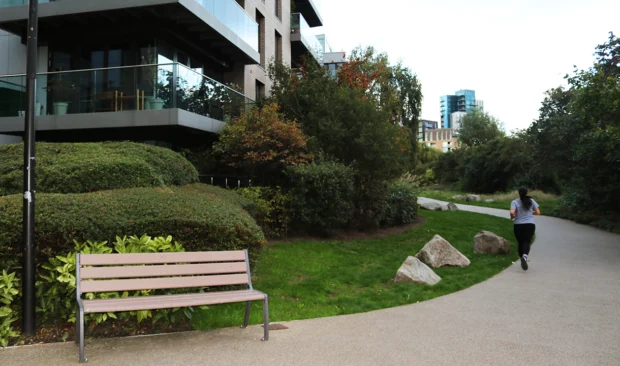
Social housing and biodiversity have been major sticking points for objectors. Photograph: Hackney Citizen
The target of affordable housing across the scheme is 43 per cent. This is split between 44 per cent social rent and 56 per cent shared ownership, resulting in a 20 per cent total for social housing across the remaining phases.
However, MacFarland asserted that there were 1,520 council homes on the estate in 2008, reduced in this scheme to 1325, a loss of 13 per cent.
This was echoed by Barbara McFarlane, architect and member of Sustainable Hackney, who told the meeting: “If you vote this scheme you’re voting for fewer social homes than when the regeneration started.
“In that time, numbers in temporary housing have doubled. We all know that we need homes for the less well off rather than the affluent. Hackney cannot afford to lose more social housing.”
Responding, Berkeley Homes spokesman Tom Anthony noted that the property developer has contractual obligations under its original development agreement that they cannot legally reduce.
He also added that the original commitment of 41.7 per cent affordable housing has not dropped and is maintained at 43 per cent for the latest application.
Objectors also raised concerns about the “staggering” loss of wildlife and trees.
Campaigners claim the scheme will lead to a net biodiversity loss of 9.25 per cent when the minimum requirement under planning guidance is for a 10 per cent gain.
McFarlane said: “We’re worried about the harm to existing biodiversity.
“Instead of open landscape, there will be privatised green space podiums, six metres above the ground where nature can’t thrive.
“The current scheme is business as usual and makes very little attempt to tackle the climate and ecological crisis – are these homes what we need?”
The Woodberry Down regeneration was first approved in 2005 with the aim of delivering thousands of new homes, along with improved community facilities and public spaces.
The WDCO generally supports the Woodberry Down regeneration in principle, but has expressed significant concerns over recent masterplan proposals, particularly regarding the reduced number of genuinely affordable social homes, concerns over density and the impact on local infrastructure.
Once all the new homes are completed, Hackney council claims there will be £12 million contributed to local infrastructure, including roads and drains.
A Hackney Council spokesperson said: “The Woodberry Down regeneration is building thousands of much needed new homes, including a brand new high quality social rented home for all secure council tenants living on the estate as well as new shared ownership homes.
“It has also provided new community facilities for everyone in the area, including the biodiversity-boosting Woodberry Wetlands nature reserve, acres of new green space, a new community centre, shops, offices, children’s centre and play facilities at Spring Park.”
Conditional outline planning permission has been granted for phase 5-8 of the Woodberry Down regeneration, subject to completion of a Legal Agreement and referral to the Mayor of London.