
Warehouse venue got twice as many supporters as objectors over dancefloor plan – it wasn’t enough
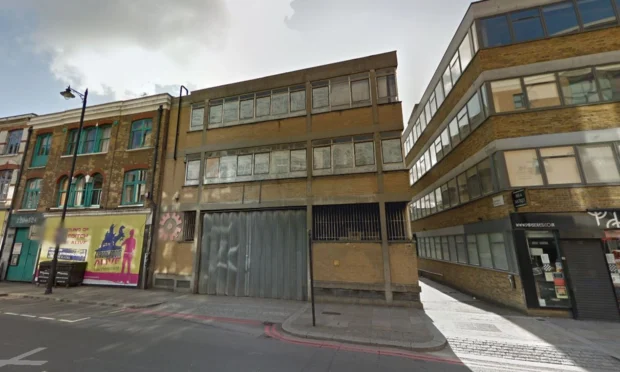
The 25,000 sq ft industrial-style venue at 118 Curtain Road. Photograph: Free to use by partners of the Local Democracy Reporting Service
An East London arts warehouse has had its basement nightclub plan rejected despite being backed by a string of people.
The perceived risk of noise, crime and disorder was enough to convince Hackney Council’s licensing sub-committee to reject an application by Spaces Unlocked in Shoreditch to keep its basement open as a dancefloor until 4am from Thursday to Saturday.
Residents worried that it would effectively become a “superclub” labelled the request to expand “excessive” and cited existing issues with people attending the venue – supporters, though, said these problems were caused by other venues.
One neighbour had threatened to plaster high-definition cameras around Curtain Road to catch guests he suspected were using illegal substances and throwing up on the pavement.
“In the last seven days, I’ve had three separate piles of vomit, general litter and a nitrous oxide canister on Mills Court. I was fortunate a pigeon decided to eat through these piles of vomit because the council never bothered to clean it up,” said Jindur Sidhu.
He was joined by others who complained about the building’s poor sound insulation and said were fearful the licence would amplify existing noise, violence and crime in the area, recognised by the council an “extremely busy and chaotic” triangle.
These worries were compounded by Spaces Unlocked’s reference to “hordes” of people flooding the basement when promoting recent gig from famed DJ DeadMau5. But it was pointed out The Horde is just what DeadMau5 fans are referred to as.
Another resident deemed manager Kerry O’Connor to be “thoroughly untrustworthy” and complained about the lack of sound-proofing, an assessment roundly rejected by a supporter.
Far more people backed the venue
There were 76 representations made to the licensing committee: 51 in support of the application and 25 opposing.
The list of objections was outweighed by almost twice as many representations from those in support – including local businesses, neighbours and charities, along with London’s deputy mayor for culture and creative industries, Justine Simons.
Creative James Sutcliffe argued that Unlocked Shoreditch was categorically “not a superclub” and said a lot of problems raised by neighbours were from patrons leaving other venues.
Parent Paul Brennan, who had let his 14-year-old daughter to do work experience at Spaces Unlocked, said he could “confidently vouch” for the safety of late night events.
He added that references to “hordes” needed context, as these were the name given to DeadMau5 fans, “the same way Lady Gaga’s fans are called Little Monsters”.
Designer and visual artist Rocco Gimondi said he knew the warehouse was well sound-proofed despite complaints saying otherwise, and argued that the club nights it had run in the past year had not seen “a single complaint or police call-out”, a point echoed by others.
Meanwhile, Nicola O’Donnell from Rays of Sunshine, a charity for seriously and terminally ill children, heaped praise on manager Kerry O’Connor for creating “pure magic” for an 11-year-old girl, Millie, whose time was “slipping away” after a cancer diagnosis.
Ms O’Donnell said Ms O’Connor had secured Millie tickets to see Olivia Rodrigo in London last year, but had also invited the Grammy-award winning singer-songwriter to Curtain Road where she then hosted her tie-in exhibition, ‘Guts Gallery’, which gave Millie the chance to meet her idol.
Unlocked’s management also won the backing of an East London non-profit organisation for underprivileged children and young people. On behalf of The Wickers Charity, Ms Brogan Garit-Smith said the space was “changing lives” and that the licence was not about “excess” but sustaining the venue’s existence.
“Together we need to build a stronger Hackney and build spaces like this which are keeping children safe and off the streets,” she said, adding: “The East End was built on community. Goodwill alone is not going to keep their lights on.”
Manager Ms O’Connor told Hackney Council she had carried out acoustic works for dance events in the basement but was not looking to hold club nights every week, but was relying on them to raise income.
“I need to be able to make sure I can survive in this building with this business model. This is my career, my life, and my team,” she said.
Despite this, the Town Hall refused the application as it would mean another late-night premises in an area subject to stricter rules due to a saturation of licensed premises.
The council’s sub-committee said it had serious concerns about the building’s capacity, as well as antisocial behaviour in the area, and were unconvinced the latter would not be made worse by a new nightclub.
Note: this article was amended at 19:50 on Wednesday 13 August 2025. It originally stated that the application received triple the amount of supporters compared to the number of objectors, when in fact it was just over double (51 in support of the application and 25 opposing).