
Council launches public space anti-social behaviour consultation
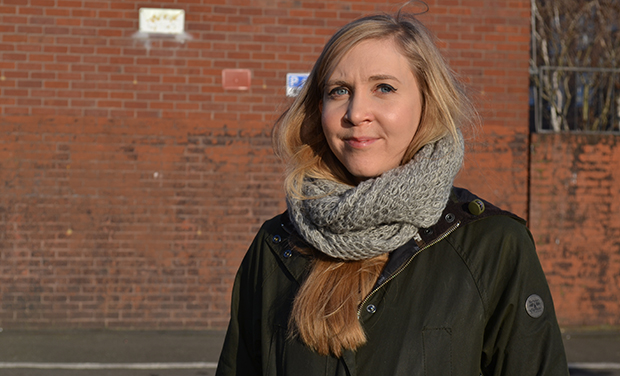
Caroline Selman
Following the uproar over the council’s attempt to implement a Public Space Protection Order two years ago, Hackney Council has now launched a consultation on its approach to dealing with anti-social behaviour (ASB).
The consultation, which will feed into the borough’s public space anti-social behaviour strategy, comes as the council’s own enforcement service is being restructured to create a greater presence on the streets.
The Town Hall is to boost the number of enforcement officers from nine to 24 – an increase of over 260 per cent.
The council is asking for the views of residents on specific kinds of anti-social behaviour “where there may be a link to support needs, such as substance misuse or mental health issues.”
Town Hall bosses say resolving them “can often prove challenging to address without causing unintended harm.”
Critics of a previous attempt to clamp down on ASB claimed the council was seeking to criminalising rough sleepers, causing an eventual u-turn.
The council says its current approach in these circumstances is to offer support to help people access the help they need. It says enforcement action is taken as a last resort, where people have refused the council’s help and continue to cause anti-social behaviour.
Cllr Caroline Selman, Hackney Council’s cabinet member for community safety, said: “We want to do all we can to ensure that residents do not have to suffer the misery that anti-social behaviour can cause, which can have a significant impact on their quality of life.
“Sometimes those who commit anti-social behaviour have support needs. This is particularly the case with behaviour such as begging, some cases of anti-social street drinking, urination or defecation and anti-social behaviour associated with sex work.
“In these cases it’s important that we get the balance right between enforcement and support to ensure we are responding in a way that is both effective and fair. Addressing the underlying causes of ASB also means that we can be more effective in protecting residents from ASB in the long-term.
“We already think carefully about this but we think it is important to involve residents in that discussion, to hear their views and learn from their experience and perspectives, and the media also plays a very important role in the democratic conversation.”
As part of the consultation, residents are asked about Hackney’s approach to anti-social behaviour, and whether they would support the council setting up a redirected giving scheme, where residents could donate to a fund that gives grants to support vulnerable people who are begging in Hackney.
Selman said the Town Hall would look at similar schemes set up by other local authorities, some of which have proved controversial, to make sure its own version “does not demonise people”.
The consultation closes on 24 September.
Have your say at consultation.hackney.gov.uk or call 020 8356 3170 to request a paper copy.
The anti-social behaviour I see on a daily basis in the public realm is vehicles continually speeding on 20mph roads, inconsiderate behaviour by motorists toward vulnerable road users such as pedestrians and cyclists and drivers using phones while at the wheel.
I’m much more at risk of serious injury and death from these types of behaviours than somebody begging because they have literally nothing and young kids with nowhere to go playing up in the streets because we are losing funding for youth centres.
When will this anti-social behaviour by inconsiderate drivers going to be tackled? Or will they continue to turn a blind eye as they don’t fit the profile of a typical anti social behaviour offender.
Rid the streets of all advertising. Advertising is surely one of the most anti-social components of all public spaces. Adverts are a form of mental pollution, predominantly selling unhappiness, by making us dissatisfied with how we look and making us crave the next new thing (which in turn increases environmental damage by encouraging us to treat everything as being merely disposable).
São Paulo made the bold decision of ridding its streets of all advertising many years ago.
Matt has a very good point – vehicles and occassionally cyclists often have a very poor attitude to other users of the public thoroughfares. I guarantee most drivers think they have the right of way over pedestrians who are crossing the road, but they dont.
Nonetheless this consulation is very narrow – it is focused on begging and sex work. Most of the ASB in my area stems from the concentration of support services for addicts and the like – which then shows itself as begging and sex work, but also needles and dealing, violence, fighting, yelling and screaming at all hours, burglery and car crime, public urination, crap tossed everywhere and my kids seeing human tradegy that they should not be exposed to until they are older. (“daddy, why is that lady crying and cutting herself?”). These people can not look after themselves let alone show any civil responsibility. These behaviours drag in the dealers who speed, drive on the footpath, and threaten residents.Iconically it is the council that caused the situation by giving out D1 planning consents retrospectively and without community consultation and then refusing to enforce any planning restrictions and conditions. No funding or consideration was given to address the effect on the wider community of businesses and householders from concentrating the treatment of addicts and the support for the homeless and mentally ill (often all wrapped in the same human) in a very small area. The whole thing was poorly planned and executed. it dis have to be that way – look at how Camden executed their strategies.
Glad to see this consultation but I wonder about scale, scope and ambition and moreover the ability and willingness to implement the findings. What constitutes anti-social behaviour is already a leading question, as others have articulated. Dealing with it, as Hackney Council has already found out is not that simple. Yet in London Fields alone there are numerous issues not least a large level of drug use, nitrous oxide, injecting in the open urinal opposite London Fields school, smoking crack by the toilets or playgrounds, the aggressive street drinkers – are all key issues. But then Hackney council’s own policy towards BBQs in London Fields produces a form of anti-scoail activity – increased drink, noise, smoke, general behaviour…
Meanwhile the rush to embrace the ‘cool’ label has seen a huge surge in licensed premises and areas such as Mare Street are seeing an upsurge in anti-social behaviour yet little to tackle the matter and little sign of visible foot patrols of community or other police. Shoreditch and Dalston are already problems and a first consideration for any new approach is to question whether Hackney council are a producer of some anti-social issues they now wish to tackle. Better joined up thinking will be a start, but if there are no financial resources or tangible strategies will we see London Fields, Mare Street and other areas subsumed under a product of Hackney and their desire to be a ‘cool’ ‘hip’ borough whatever the costs and consequences to residents and local business?