

“There is something deeply personal and historically resonant about Armet Francis’ archive coming to Autograph,” says Professor Mark Sealy OBE, director of the Hackney-based arts charity, which was recently gifted the photographer’s monumental archive of over 70,000 images.
For over forty years, the pioneering Jamaican-British photographer has chronicled the resilience and survival of African diasporic communities, building a rich visual record of Black life in Britain and beyond.
The arrival of the archive feels particularly poignant; Francis was one of the founding signatories of Autograph in 1988, then known as the Association of Black Photographers, making the return of his work to the gallery’s permanent collection feel less like an acquisition and more like a homecoming.
It’s a sentiment shared by Sealy, who says: “In many respects, Francis’ work and Autograph have travelled alongside one another for nearly four decades. His photography insisted that Black life was worthy of serious attention, study and celebration at a time when so much of our experience was either absent from the national picture or represented through crisis, pathology and fear.
“In many ways it answers the question of why Autograph exists – it’s for moments like this.”
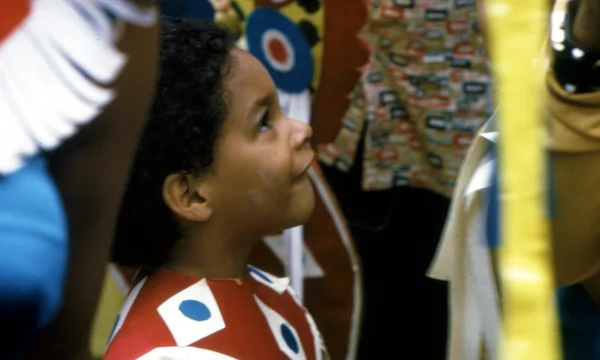
To mark the gift, Autograph has launched an online gallery featuring some of Francis’ rarely seen archival photographs, taking viewers on a journey through the lives and experiences of Pan-African diasporic communities, from his 2008 commemorative Windrush portrait series to the 1994 Lambeth and Brixton Tube images capturing the diverse community around the London borough of Lambeth.
A 1975 photo of political activist Angela Davis speaking to packed audiences at the Keskidee Centre can be seen alongside an image of young Black Londoners protesting at the lack of justice in the New Cross Fire of 1981.
Sound system
Looking at the archive, Sealy highlights the image Carnival Sound System 1968, a black-and-white photograph of the Notting Hill Carnival, which he states is “a radically important image because it appears to signpost a future Britain.”
At first glance, it is a photograph of people gathered around sound, celebration and the emerging culture of Carnival.
“But historically, it tells us something much more profound: here are people creating a space in which culture becomes a means of belonging. The image captures a classic moment when music, movement and the collective pleasure of being together produce a different idea of Britain.
“This is not the Britain that was routinely represented in the newspapers and television of the period, with Black communities framed through the language of immigration, crisis or social anxiety. Francis gives us another picture: people gathering, listening, watching and participating in the making of culture and relaxing.”
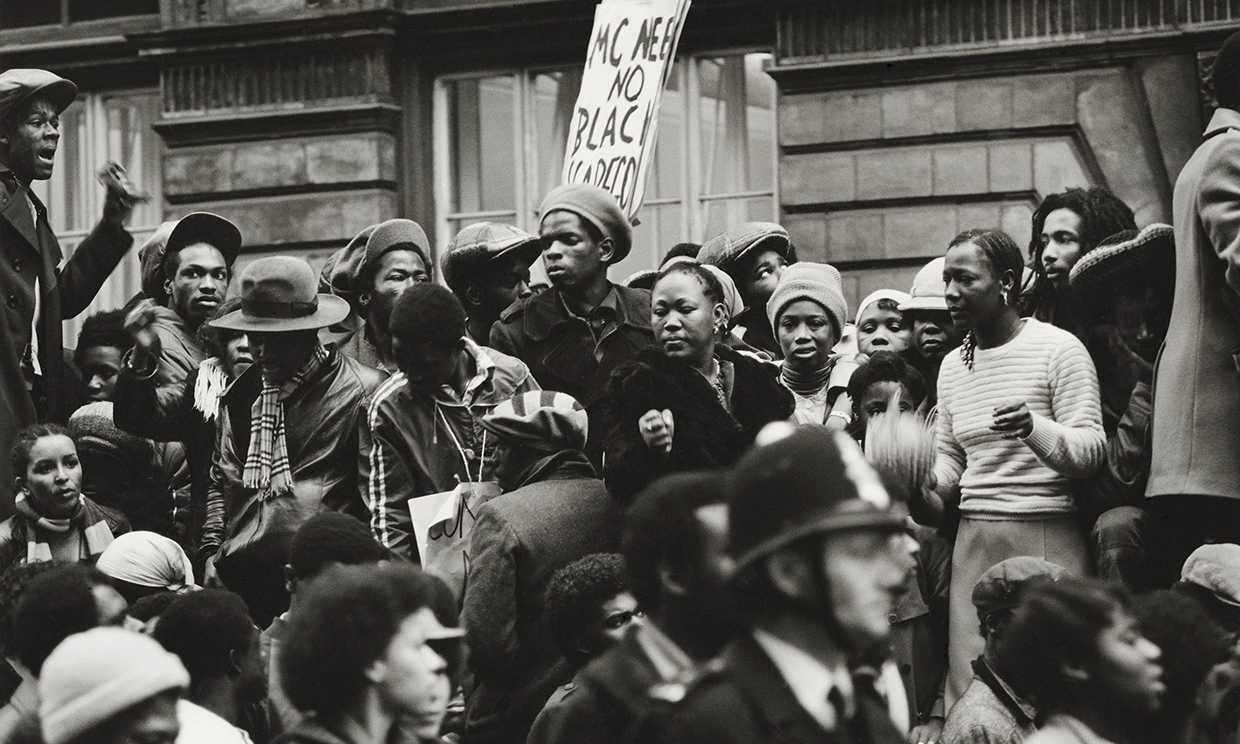
What makes the photograph radical, Sealy says, is its sense of possibility. “In 1968, the future of multicultural Britain was still being fiercely contested,” adding that it was the year in which the Commonwealth Immigrants Act and the Race Relations Act came into law.
“Yet within this frame, Francis recognises something already taking shape. The sign, the sound system, the bodies gathered in public space: they become markers of a new cultural landscape. The photograph tells us that Britain was changing not only through legislation or politics, but through the everyday acts of people coming together to make music, community and joy.”
Never neutral
For Sealy, preserving these moments is just as important as capturing them.
“Archives are never neutral,” he says. “What we choose to keep, catalogue and make available determines, in part, who gets remembered and who is allowed to occupy history. Too often, the visual histories of Black Britain have remained dispersed – in private homes, studios, boxes, cupboards and precarious personal collections – always vulnerable to loss, neglect or disappearance.
“I have for decades been gathering the missing chapters of Black life in the UK, and now the archive that Armet has produced will allow many stories to surface.”
For Sealy, that work is also about allowing the archive to open up new ways of understanding Black life in Britain. “In these increasingly hostile times where the right-wing activists feel emboldened, we can turn to archives like Armet’s to evidence different narratives as to how Britain is,” he says.
Now overseeing the archive, his focus is to make sure Francis’ work is shared widely.
“It’s important that it becomes accessible,” he states. “The long-term plan is to make as much of this work accessible through analogue and digital means. It takes time to build these infrastructures and it’s always a challenge. However, this is nothing new to Autograph. We exist in a world that negates the necessity of this work and we will continue to fight and labour for its preservation.”
The online gallery can be viewed at autograph.
Find out more on these topics


