

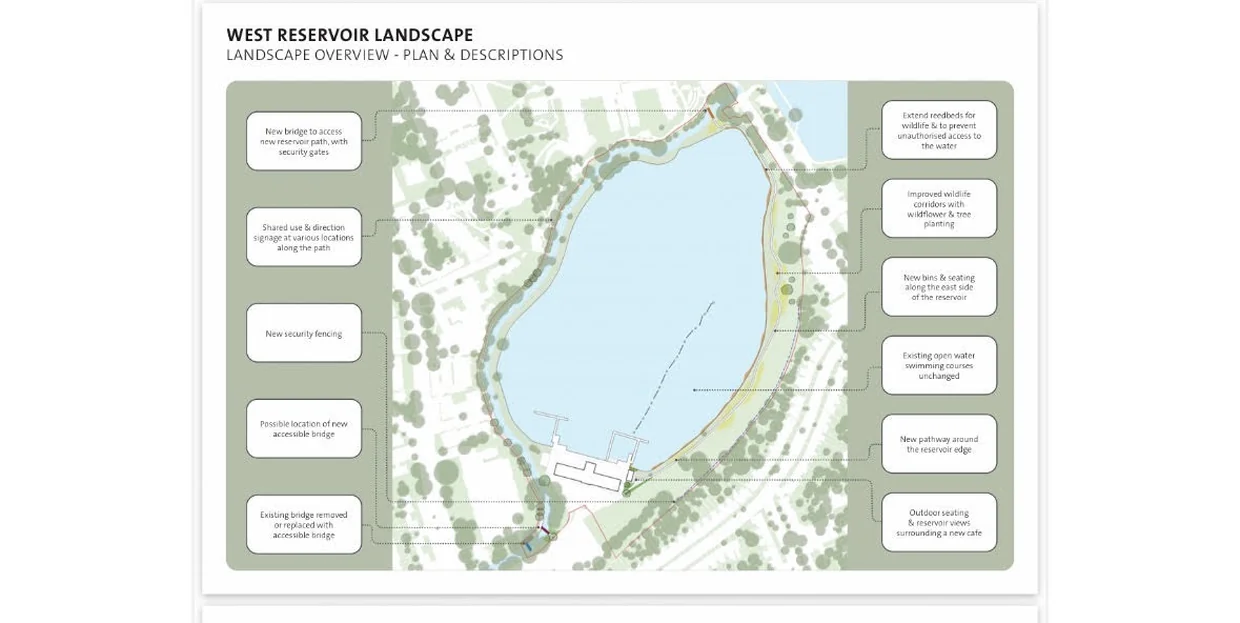
The path around the east bank of the West Reservoir opened to the public for the first time on Wednesday 9 September, three months after the council's improvement project was completed — but the scheme is now facing criticism from residents and from a Green party councillor over fencing that restricts the waterside beach and part of the new café to people who have paid to swim.
"We are pleased that the new pathway and bridge at the West Reservoir opened on 9 September, increasing access to more of the reservoir," a council spokesperson said. "West Reservoir is one of the most significant leisure and natural resources in inner London and we are proud to have upgraded this much-loved facility to be more inclusive, accessible and environmentally friendly."
The opening came three weeks after a complaint to Mayor Zoë Garbett from Malcolm Alexander of the New River Renewal Campaign and Professor Petra Wend, a member of the Woodberry Down Phase 2 Residents' Association who leads its landscaping task force. Their letter of 21 August called it "appalling" that the path remained shut and said there was "no sign of any activity".
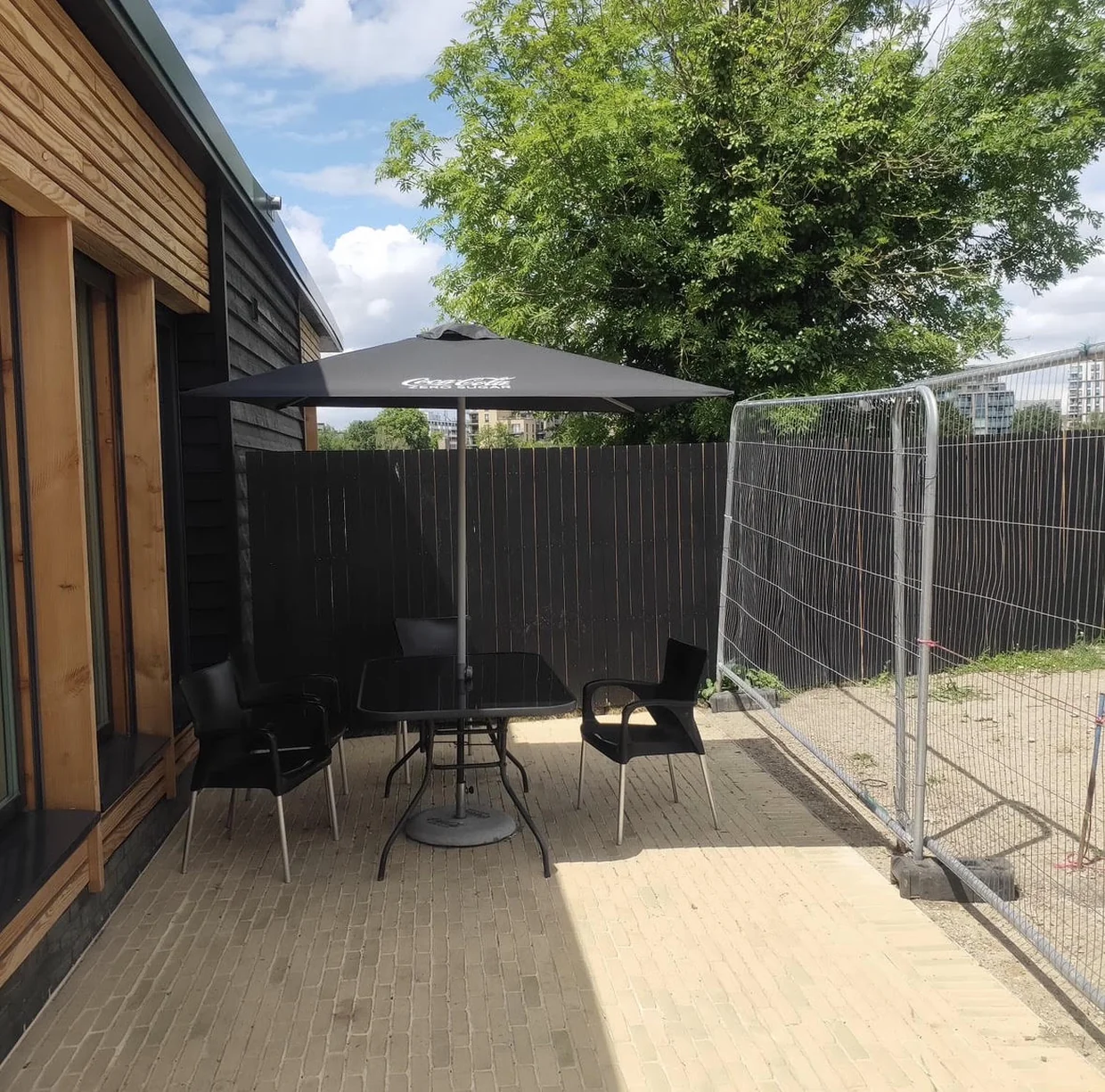
The council says work was going on. It kept the path closed through the summer to install additional reedbeds and a new security fence at the north of the site, and to give new landscaping time to establish.
Ian Holland, the council's assistant director of parks, leisure and green spaces, told the Skills, Place and Economy Scrutiny Commission on Thursday evening that the delay had been deliberate.
"We had to delay the opening of the east bank and the new bridge on the northern bank," he said. "We did that with good intentions because the landscaping hadn't taken and we were hoping for rain, which didn't ultimately come."
Segregation
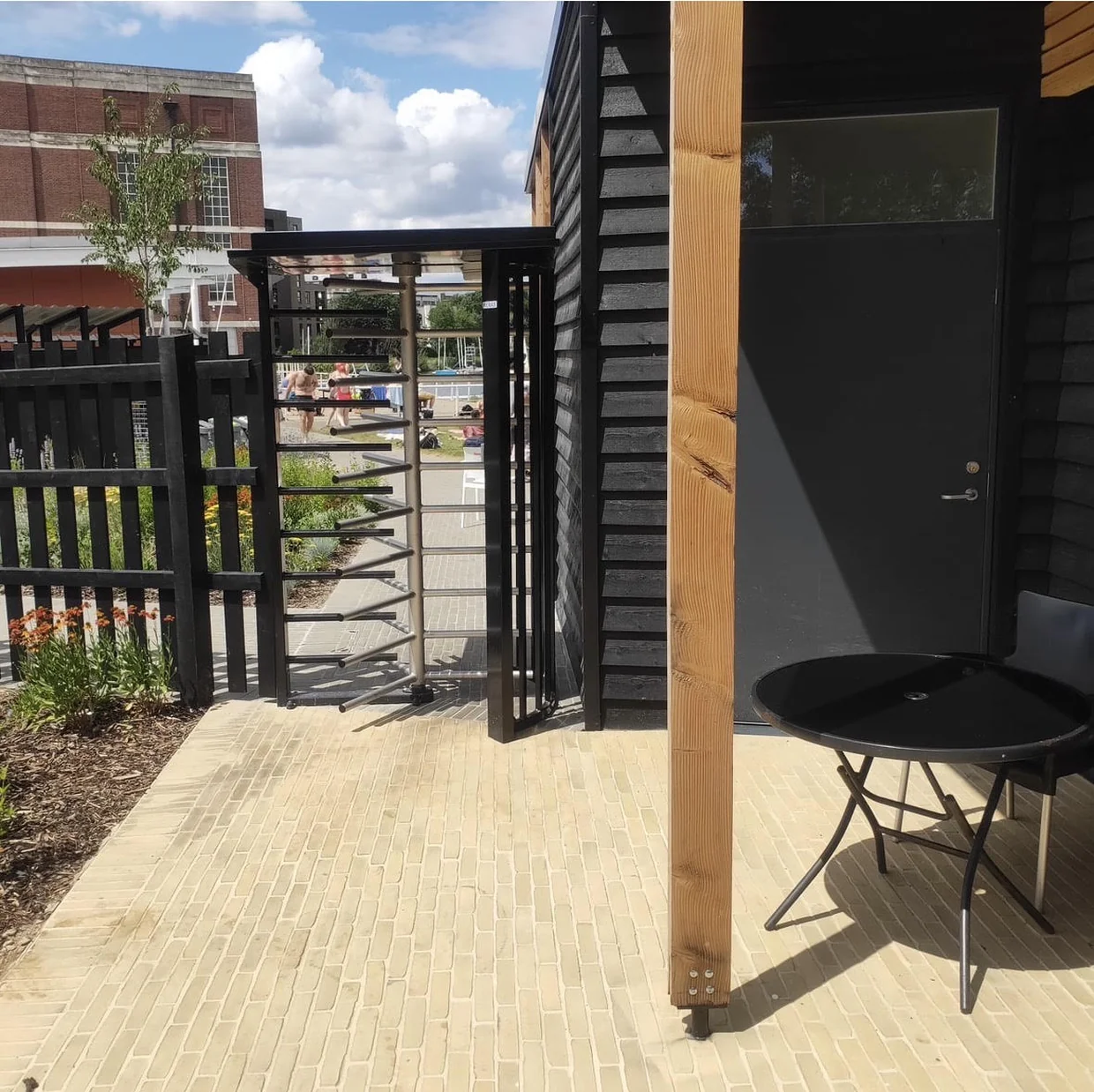
A bigger complaint concerns the new layout at the water's edge. The campaigners say a solid fence now blocks the view from the public side of the café, with a turnstile at the other end, and that the beach where swimmers sit is closed to everyone else.
"Before the development of the West Reservoir Improvement Project, everybody was free to sit in the café, relax and observe the reservoir, boats and swimmers," their letter says. "Now, it is a place of segregation where non-swimmers are treated as 'outsiders' who are excluded from sharing what should be common spaces. The café is now segregated and non-swimmers have to sit away from their friends."
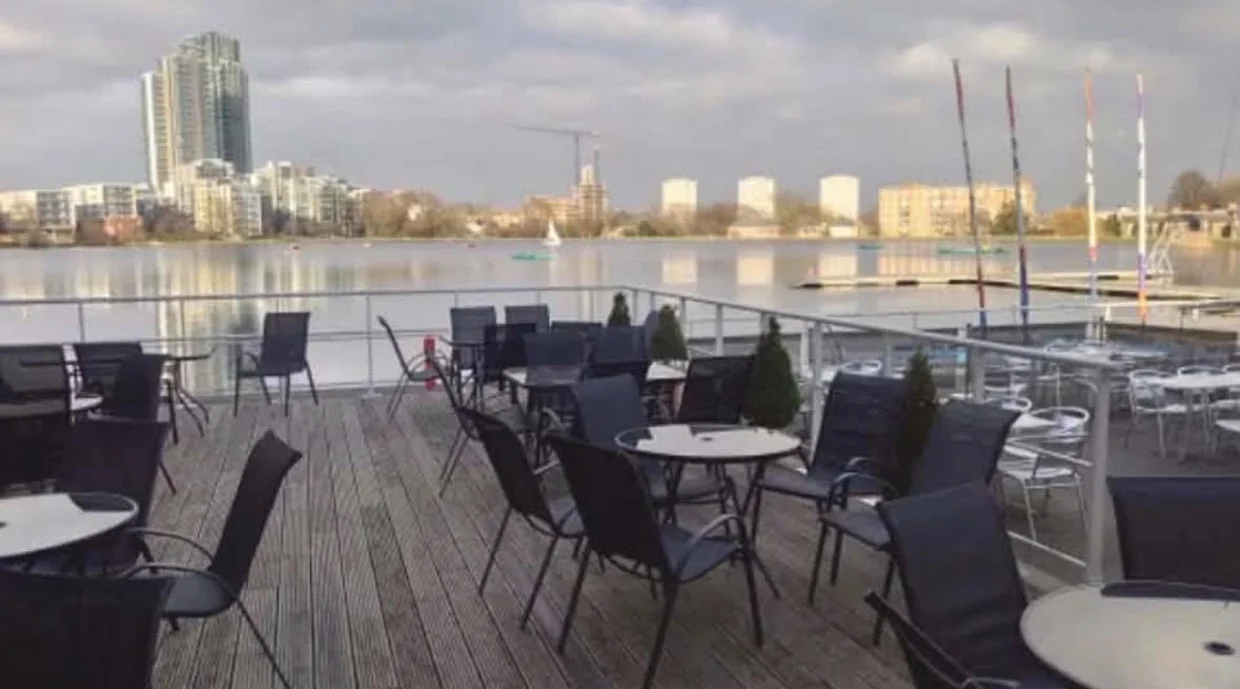
The complaint was put to officers at Thursday's meeting (10 September 2026) by Jasmine O'Connor, one of three Green party councillors elected in King's Park ward in May, who said the issue had reached councillors well beyond the wards around the reservoir.
"I think there's been a sort of huge welcome for the improvements to the West Reservoir," Cllr O'Connor said, before raising "the sort of high fencing that's restricting the beach area solely to paying swimmers and blocking the free access to water views for non-swimmers".
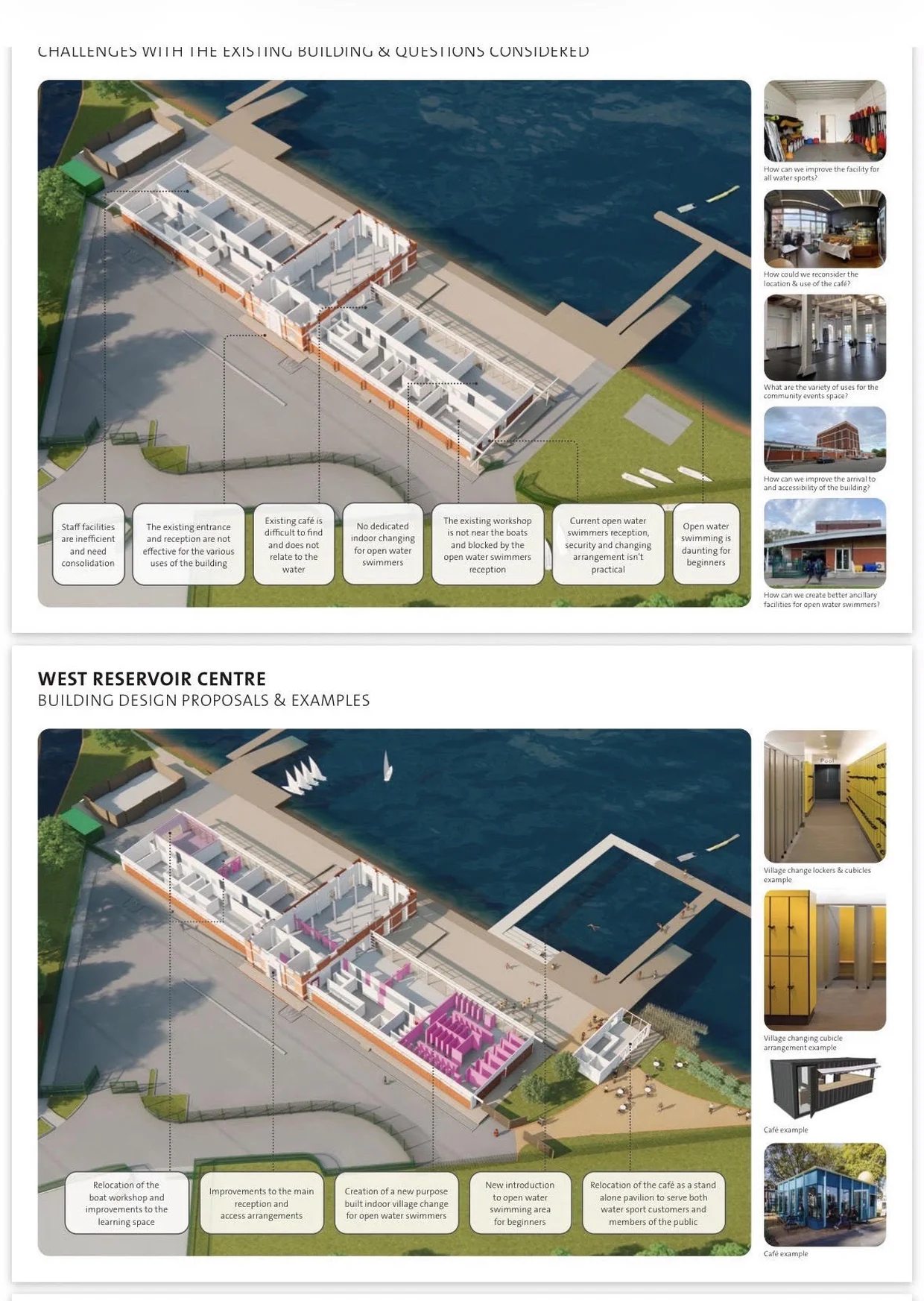
She added: "The related concern is that these changes were not included in the consultation, the public consultation. And so residents feel that, you know, they've not been listened to, that a valuable space has been taken away."
Permission
Holland's answer focused on the planning aspects, rather than the consultation.
"I suppose the first important point is the scheme has been built as per the planning permission," he said. "So there's nothing different."
The council says full permission was granted in August 2024.
He defended the restriction on grounds of safety and of swimmers' privacy. "For safety reasons, we're significantly increasing footfall to that site. We need to restrict access to the activity area. We just can't have hundreds of members of the public walking into the activity space," he said.
"The swimmers particularly are concerned about people looking at them and watching them as they get in the water, which I can understand, which is us trying to come up with a way of obstructing the view slightly, whilst giving members of the public access to the water as well."
He also rejected the charge that the scheme had reduced access. "I struggle with some of the criticism that we've restricted water access. There is new public access to the entire east bank of the reservoir that's never been there before."
Similarly, the council told the Citizen: "When designing the project we had to consider and balance the views of many groups," its spokesperson said. "The privacy and safeguarding of the users within the centre needed to be balanced with the space remaining accessible to all. The cafe building being split into two sections was the best way to balance these two needs."
Meanwhile, Sarah Young, a Labour councillor for Woodberry Down and a member of the project's local board, gave a different reason for the fence's position when asked about the complaint by the Citizen. She said she had been advised that the solid section was placed to stop people climbing round into the centre and swimming without paying, as well as in response to swimmers who did not want to be overlooked.

Alexander disputes the privacy rationale altogether. He points out that the swimming area is mixed gender and that the centre has private changing cubicles, and says no explanation for the fencing has been given to residents. "It is a waste of public money and serves no legitimate purpose in relation to health and safety or privacy," he said.
Consultation
The council's own consultation report, published in July 2023 after an eight-week exercise that drew 794 responses, does not support the suggestion that dividing the café was put to residents. Among the proposals consulted on for the West Reservoir Centre was the "relocation of the cafe with new outdoor seating area, to maximise the space inside the building". Neither fencing nor any separation of paying from non-paying users appears anywhere in the published proposals.
The report does show that the conflict between the café and swimmers was the most common objection officers received. Of 522 comments on features respondents disliked, 113 related to the proposed café location and its conflict with swimmers and green space, with a further 21 saying the location would leave swimmers overlooked.
Of the 794 respondents, 78 per cent were existing users of the reservoir and 66 per cent were open water swimmers. Five per cent gave the café as their main reason for visiting.
Warned
The campaigners are not raising the café issue for the first time. In a submission to the council's planning committee on 4 February 2024, objecting to application 2023/2683, the New River Renewal Campaign wrote that the plan to relocate the café "would prevent members of the public from having a view of the reservoir and its activities, which they currently have", and that the plan "suggests there would be a small terrace for people who pay to use the water sport centre". Permission was granted six months later.
The same submission complained that the campaign — the only community organisation to respond to the 2023 consultation — had not been told the planning application had been published. The consultation report had promised that the council would "continue to engage with stakeholders as we further develop the proposals".
The campaigners' letter also says parents whose children were taking watersports courses were asked to leave the area because they were not paying. The council says such visitors are entitled to be there: access to the centre is for those taking part in activities, and parents and others accompanying them are also allowed in.
Holland told the commission the operator had confirmed the same: "GLL have confirmed that if somebody is accompanying somebody that is taking part in an activity at West Res, so if somebody is going swimming or their children are going to sailing, then they can go into the space with them."
The centre is still run by GLL Better Leisure, and the council says the café is run by the same operator as before the works.
Unanswered
The council did not answer questions about whether the fenced separation formed part of the consulted design, which elements of the scheme changed after the consultation closed, who authorised the enclosure of the beach and waterside seating, whether an equality impact assessment was carried out on the access changes, or what the project finally cost. It said the scheme was paid for from a mix of council money, section 106 contributions from developers and Greater London Authority funding, without giving figures.
Alexander and Wend wrote again on 8 September saying they had received no acknowledgement from the Mayor, which they called "completely unacceptable". An acknowledgement had in fact been sent from the mayoral mailbox on 25 August, quoting a target of 15 working days for a substantive reply. Alexander says he never received it.
The council's member casework team said they were sorry if he had not received it, and for the delay in providing a substantive response to his concerns. They cited a large increase in the number of enquiries to the Mayor and cabinet since the election, which they said has caused some delays. A full reply from the Mayor is still pending.
There may yet be a reconsideration of the fence. The council says it met representatives of the Woodberry Down Community Organisation last month and has "taken their feedback regarding the view from the cafe, the fence and seating on the public side of the cafe on board", adding: "We hope to make some changes to these concerns soon."
Holland went further at Thursday's meeting, telling councillors that a change was possible subject to planning approval: "I think there's probably a solution that can open up better water views from the public side of the cafe," he said, and officers could "increase the number of seats with water side views from the public area of the cafe".
The council maintains that waterside seating is already available on both sides of the café, as well as along the new path.
Asked what would satisfy the campaigners, Alexander said: "A substantial rethink of the segregation in the café allowing both swimmers and non-swimmer uninterrupted views (like before) of the water and its water sports activities, and normal social contact in the swimming, resting and café areas."
Find out more on these topics


