

A crumbling and vacant Grade II-listed former council building is costing an Hackney Council approximately £850,000 each year for standing empty.
After a long and chequered history, the council has revived efforts to restore the 90-year-old Stoke Newington Town Hall, after it was placed on Historic England’s list of heritage sites considered most at risk of neglect and decay in late 2024.
Once a “vibrant community hub”, the old municipal building has become a financial and structural millstone for the council.
Following past refurbishment attempts in the 2010s, the hall has lain empty for seven years as it drains an annual £844,000 from the local authority’s coffers due to utility costs, security and fire safety monitoring.
Council planners have confirmed that the building needs “substantial” fixes, including to its roofing, drainage, ventilation and fabric, alongside a host of latent defects including hidden asbestos and underground bunkers.
However, the latest renovation effort has hit several snags amid contractor failures and “logjams”, and it is £600,000 behind schedule – partly because of the discovery of a concrete coal bunker in the basement. The mounting issues have now forced the local authority to shell out £1.7m on a lead consultant to salvage the project from disarray.
Art deco
The art deco building was first completed in 1937, when it served as the municipal headquarters of the Metropolitan Borough of Stoke Newington, before the borough was abolished in 1965 and subsumed into the borough of Hackney.
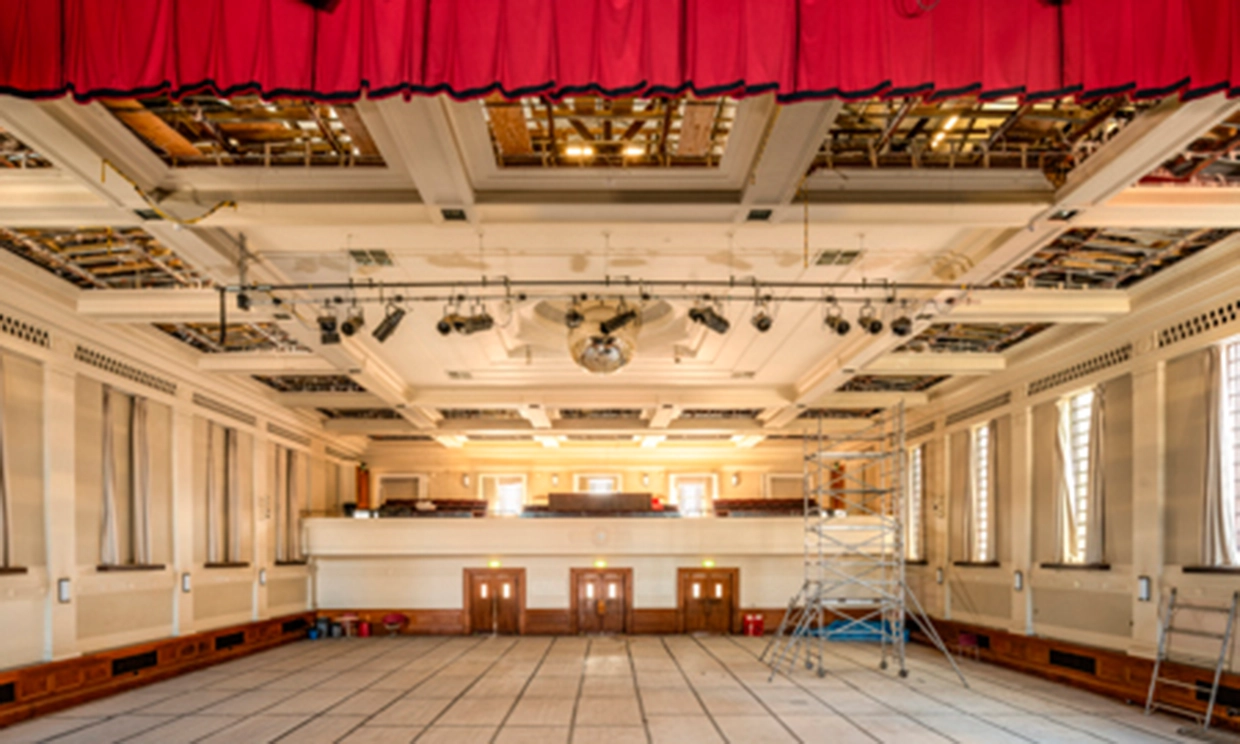
The hall was designed by J Reginald Truelove; its striking architecture, domed chamber ceiling and vaulted galleries have since made it a popular wedding venue.
The council’s attempts to restore the hall have seen numerous setbacks.
Despite the council pouring £8 million into major renovations by the 2010s, a surveyor’s report commissioned by the council in 2016 found the building was rotting from leaks pervading the entire building, a result of both ageing and poor maintenance. Inspectors later found cracked walls, blockages and missing bricks.
Following the building’s designation as officially at risk, the council renewed its attempts to restore the building in 2025, but must now bring in a new architectural expert after inexperienced consultants were fired from the project. Another contractor was found to have bypassed building regulations.
Hackney’s contract makes the new supplier legally responsible for organising the various refurbishment jobs and for giving the refurb an “overarching strategy”.
The council has fast-tracked the latest contract to avoid any further delays jeopardising time-sensitive decarbonisation grants earmarked for a new air source heat pump plant room in the building.
Sell-off
According to reports, the fate of the old town hall remains subject to a looming “strategic asset review”, meaning the council could still choose to sell it off.
In 2017, the council estimated it had spent over £5 million refurbishing the building and expected to pay another £10 million to safeguard its future.
During the Covid pandemic, the site functioned as a rapid testing centre, but in 2021 the council carried out emergency works on one of the hall’s large function rooms after its ceiling plaster fell away, revealing asbestos.
Find out more on these topics


