
Haifa mayor calls for ‘dialogue’ but leaves Citizen’s questions unanswered
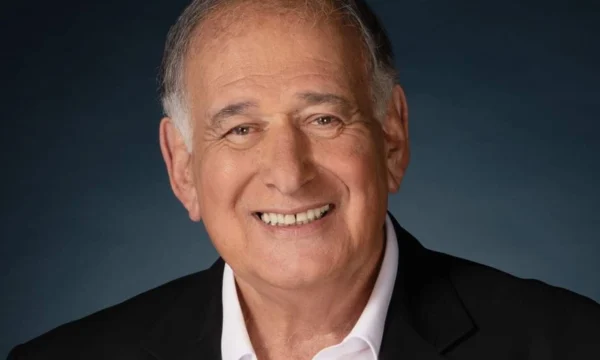
Speaking of Hackney Council’s proposal to de-twin from his city, the mayor of Haifa has written that arguments and differences of opinion should be addressed not by severing ties or singling out entire cities and communities, but “through dialogue, familiarity and working together”. Since 3 August, the Citizen has put a number of questions to him about the politics of his city. He has not answered any of them.
Nor have four members of Haifa’s city council: the deputy mayors Fakher Bayadsi, of the Jewish-Arab party Hadash, and Avihu Han, of the Greens Blue and White faction; and the councillors Raja Zaatry, also of Hadash, and Sally Abed, a national leader of the Jewish-Arab movement Standing Together. All four were asked about the claims Hackney councillors made about Haifa when they voted last month to begin ending the boroughs’ 58-year twinning arrangement.
Mayor Yona Yahav’s office replied, enclosing a link to his article in The Times (published 5 August 2026) together with a statement from Haifa’s Interfaith Forum, a body which operates, in its own words, under the auspices of the University of Haifa and of the Mayor of Haifa. It offered to put the paper in touch with the Forum’s members. It did not address the questions. They were put again on Tuesday with a deadline of 5pm on Wednesday 12 August, which passed without a response. The Citizen will report any answers that arrive.
Hackney’s full council voted on 28 July to begin winding up the twinning, agreed in 1968 to encourage friendly contacts and exchanges between ordinary citizens of the two places. A consultation runs until 14 October, and a six-member cross-party working group chaired by Cllr Sam Mathys, the cabinet member responsible for twinning, is to review all five of the council’s twinning arrangements and report back to full council in January. The next scheduled meeting after November falls on 28 January 2027.
The claims made in the chamber
Speaking against the motion, Cllr Simche Steinberger (Conservative party, Springfield ward) noted that Haifa was among Israel’s most left-leaning cities, where the Green party was the second-largest group on the council — an argument that Hackney should not sever ties with a pluralist city over the conduct of Israel’s national government. Recalling doctors from Haifa’s Rambam Medical Centre visiting Homerton Hospital to share expertise, he told the chamber: “It’s probably the only twinning which actually does something.”
That claim about the council’s composition can be tested against the municipality’s own listing of its 31 members. The faction called HaYerukim Kachol Lavan — Greens Blue and White — holds three seats, joint second with Mechubarim LeHaifa Beiteinu on three. The largest faction, Mayor Yahav’s Haifa Shelanu, holds five. Whether Greens Blue and White has any connection to the Green party as Hackney voters would understand it is the subject of a question the Citizen has put to its leader, and which remains unanswered.
Haifa City Council: a chamber of 17 factions
The council has 31 members, elected on 27 February 2024 and headed by Mayor Yona Yahav. No faction holds more than five seats. Tap a faction in the key to isolate it.
Haifa Shelanu (Our Haifa) 5 · HaYerukim Kachol Lavan 3 · Mechubarim LeHaifa Beiteinu 3 · 14 other factions 20
Mayor Yona Yahav’s Haifa Shelanu is the largest faction with five of 31 seats, won on 13.8 per cent of the council vote. Eight factions hold a single seat each.
Sources. Seat totals and faction names from Haifa Municipality’s council members page, retrieved 13 August 2026, cross-checked against the Haifa Statistical Yearbook 2025, chapter 16, table 16.1. A note on the coalition figure. The yearbook states that Yahav’s coalition comprises 22 members drawn from 12 named factions, but the seat totals of those 12 factions add up to 23. The chart follows the faction arithmetic and shows 23 and 8; the one-seat difference is unexplained. Separately, Yaniv Ben Shushan (Likud) is reported in the Israeli press to have left the coalition in July 2026 in protest at Fakher Bayadsi’s appointment as deputy mayor. That report does not form part of the municipality record and is not reflected in the seat colours; if confirmed, the current standing would be 22 and 9. How to read it. The seats follow the shape of the council chamber on Hasan Shukri Street. This is a schematic of the chamber’s shape rather than a seating plan. A note on comparability. Mechubarim LeHaifa Beiteinu is shown as a single three-seat faction, as the municipality now lists it, though its members were elected in 2024 on two separate lists (Mechubarim LeHaifa, one seat, and Haifa Beiteinu, two). Transliterations. The Hebrew is authoritative and the English forms are the Citizen’s own: the municipality publishes no English or Arabic version of its council page.
Green councillors argued that maintaining the link is inconsistent with the borough’s anti-racist values. Mayor Zoë Garbett, in her letter to Yahav of 29 July, cited the gravity of the UN Commission of Inquiry reports concluding that Israel has committed genocide, attributing that finding to the UN body rather than asserting it herself.
What Haifa’s council looks like
Haifa’s council is governed by a coalition assembled after the municipal elections of 2024, in which Yahav was elected mayor. On 7 July this year it approved Fakher Bayadsi of Hadash — a Jewish-Arab party of the anti-war left — as a deputy mayor, under a rotation agreed when the coalition was formed. According to reports in the Israeli press, the appointment was contested to the final weeks, was achieved only after his party colleague Raja Zaatry stood down from his own deputy title to make way, and prompted the council’s Likud member to leave the governing coalition in protest.
Yahav defended the appointment, saying Haifa was and would remain a city of shared living. It is the clearest evidence for his claim, in The Times, that the city’s Arab residents — about a fifth of the population — are represented at every level of local government, and, in how hard it was fought, an indication of how contested that representation is. Avihu Han of the Greens Blue and White faction also serves as a deputy mayor.
The Citizen asked Deputy Mayor Han whether Cllr Steinberger’s use of his party’s name was fair to a Hackney audience, and whether Greens Blue and White — which the Citizen understands to be a Haifa-focused environmental list — has any affiliation with the European Green movement or with Green parties abroad, including the Green party of England and Wales, whose Hackney councillors led the de-twinning motion. He has not replied.
The mayor’s own words
Among the questions the Citizen put to Yahav was one concerning a statement he issued on 31 May last year, in response to an anti-war rally in Haifa addressed by the Hadash MK Ayman Odeh. In Hebrew, he said that anyone who cries out that Gaza has won and will win, or who speaks of Israel and the Israel Defense Forces “in terms of war crimes and genocide, is not welcome in our city”. The statement was reported by Ynet on the evening of the rally.
The Citizen asked whether, in light of that statement, Mayor Garbett — who has cited the UN inquiry’s genocide finding — is welcome in Haifa, and whether the same latitude would extend to Haifa residents who cite the same finding. The question has not been answered.
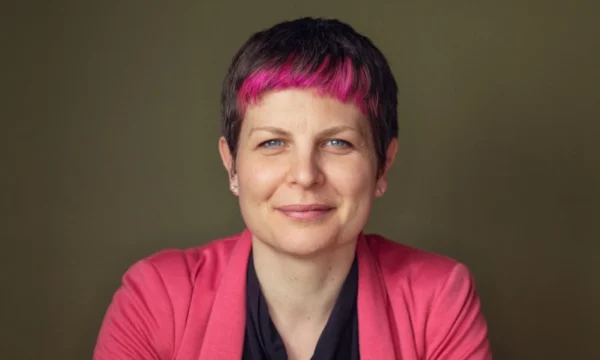
Writing in The Times on 5 August, Yahav invited Garbett to visit Haifa and look for herself, “not through screens and social media posts”, saying he believed one visit could teach more than a thousand arguments. He presented the city as an exceptional model of coexistence in the Middle East, built through “small decisions made every day: to respect, to listen, to co-operate”. Political disagreement, he wrote, must be distinguished from “the delegitimisation of an entire society through a distortion of reality”: “Governments can be criticised. Policies can be challenged. That is how democracies function.” Asked whether Garbett intends to accept the invitation, a Hackney Council spokesperson said it would not be providing a comment.
The interfaith forum
The statement sent to the Citizen by the mayor’s office, dated 2 August 2026, is signed by religious leaders from four faiths: among them Sheikh Rashad Abu al-Hija, imam of the Al-Jarina mosque; Rabbi Eliyahu Bloom of the Rambam community in Neve Sha’anan; Father Dimitrios Samra of the Greek Orthodox church; Father Derair Sahak Hovakimian, head of the Armenian community; Emir Muhammad Sharif Odeh of the Ahmadiyya Muslim community; Rabbi Naama Dafni of the Reform congregation Or Hadash; and Sheikh Tawfiq Halabi of the Druze religious council. Eighteen further members are named.
It describes Haifa as a city where Jews, Muslims, Christians, Druze and Bahá’ís live, work and study together, expresses deep regret at Garbett’s letter, which it says contains numerous distortions, calls on her to reconsider and withdraw her statements, and invites her to see the city for herself. Its invitation was issued three days before the mayor made his own in The Times.
Yahav cited the forum himself in that article, five days before his office sent the Citizen its statement, writing that it brings together Jewish, Muslim, Christian and Druze religious leaders through the year, and that its purpose is to strengthen trust between communities and to resolve disagreements through dialogue rather than confrontation.
What the four were asked
Zaatry, Abed and Han were asked whether ending the twinning would have any practical effect or is primarily symbolic, and whether Haifa’s Arab communities have ever felt the benefit of a link with Hackney. Bayadsi, approached after his appointment, was asked what the contested rotation said about the state of Jewish-Arab partnership in the city, and whether he regarded the mayor’s statement of 31 May last year as his city’s position. None of the four has responded.
The Hackney side
On the council’s own account, the twinning has in recent years amounted to little beyond the Homerton–Rambam hospital exchanges. The agenda papers put before members last month record the last known civic event as a reception for visiting Rambam nurses in October 2019, and describe the Haifa link as inactive since then. The papers also state that the Göttingen and Barbados links have been dormant for 25 years.
Hackney’s handling of the process has drawn criticism, and accusations of spite and of antisemitism. Garbett’s first letter to Haifa invited a response by 7 October, three years to the day after the Hamas attacks in which around 1,200 people were killed, most of them civilians, and 250 taken hostage. She apologised to Yahav, calling it a deeply regretful oversight, and the deadline was moved to 14 October. One Labour councillor, Ben Lucas, has called on the council to investigate how the original date was set. A Hackney Labour spokesperson told the Citizen that the Green administration’s proposal was contradictory and confusing, asking what the purpose of a review was if its outcome was already being pre-determined.
Note: this article was amended at 21:48 on Thursday 13 August 2026 to clarify that four members of Haifa’s city council, including two of its deputy mayors, were asked about the claims Hackney councillors made about Haifa when they voted last month to review ending the boroughs’ 58-year twinning arrangement.
This is excellent local journalism, looking beyond the claims and counter claims to examine the facts. Thank you Hackney Citizen for the work which has gone into this.
Seconded! Excellent, insightful and serious reporting – a real antidote to much of the mainstream press whose coverage fails to pay more than superficial heed to internal Israeli politics.