
Hackney bought 43 homes for temporary housing — but kept no record of who was living in them
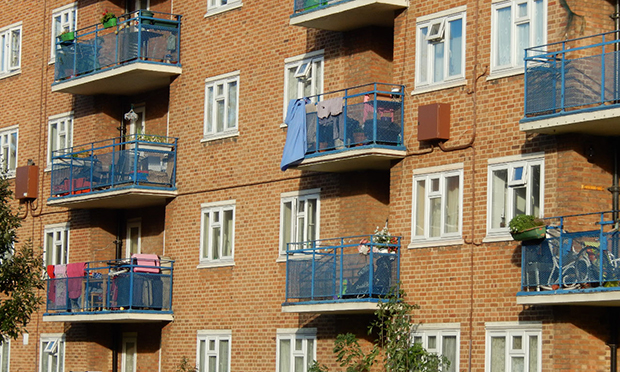
Hackney Council bought 43 homes for temporary accommodation over two years without recording whether anyone was living in them at the point of sale, an investigation by the Local Democracy Reporting Service has found.
The purchases, made between March 2024 and March 2026, form part of a London-wide pattern in which councils are acquiring properties to house homeless families while remaining, by their own account, in the dark about whether renters were turned out to enable the deals.
In its response to a Freedom of Information request, Hackney said: “The council did not record whether the properties were occupied or vacant at the time of purchase. The council purchased these units with vacant possession. Any action to remove any former occupants was directly dealt with by the property vendor, and the council had no involvement with this vacant possession process.”
Hackney Council was approached for further comment.
The borough is far from alone. Of the London authorities that responded to the LDRS, 11 said they did not record whether the homes they bought had been occupied, despite the properties needing to be empty before new tenants could move in. Many maintained that removing former tenants was the responsibility of the previous landlord.
The investigation followed an LDRS report in March that tenants were being evicted from a block in Kew so that Westminster City Council could buy their homes for temporary accommodation — a case that drew anger from Richmond Council. The wider picture suggests the practice is common across the capital.
Brent bought 50 homes across 2025 and 2026 and likewise said it held no information on who had lived in them. “We do not hold information on occupation prior to purchase,” the council said. “The council has not evicted tenants from any of the properties acquired; all purchases were completed with vacant possession and the building owner is responsible for providing vacant possession.” A spokesperson said the council bought on the open market and was “not routinely provided with background information about occupiers or reason for sale”.
Asked whether it was circular to buy homes for emergency housing that might themselves have made people homeless, Brent said its programme existed “to increase the supply of safe and suitable temporary accommodation for homeless households”, adding that it “does not evict tenants from properties it acquires and does not instruct owners to serve Section 21 notices”.
Some councils did know. Westminster — Labour-run when the Kew purchase began, and Conservative-run since the May elections — confirmed that tenants had been evicted to enable purchases. Its FoI response lists homes bought from Richmond to Newham, the majority recorded as “previously occupied”, with the vendor having obtained vacant possession before the sale. Most had several bedrooms, suggesting families may have been moved on. Enfield recorded two households evicted in 2024 via Section 21 notices — so-called no-fault evictions, now outlawed. Southwark said it kept no register at all, and so could provide no data. Westminster City Council was approached for comment.
Section 21 notices were banned under the government’s renters’ rights package, which took effect on 1 May, but landlords can still evict tenants when selling a property, subject to longer notice.
The London Renters Union said councils should be expanding social housing rather than relying on temporary accommodation. “Temporary accommodation is a short-term fix to a long-term problem,” said spokesperson Jae Vail. “We’ve seen social and council housing sold off for Right to Buy, it was demolished, especially in parts of London, and we should be focusing on building back that stock rather than pouring money into temporary accommodation.” The union said it was also concerned about further evictions, since landlords retain the right to remove tenants when selling.
In Kew, residents of Garden Court, opposite Kew Gardens, were served Section 21 notices by their landlord, Dorrington, to clear the way for the Westminster sale. Michael Slade, a resident of 16 years, told the LDRS: “It’s a family. They’ve broken up a family. My friends come in here, drink tea and coffee with me, and we chat. They phone me up every day. Everyone’s within walking distance.” After the coverage, Westminster told Mr Slade and several others they could stay.
Richmond Council, which condemned the Kew evictions, said it did not displace tenants to acquire homes. “Efforts to house one family should not come at the expense of another family’s housing security,” said its leader, Cllr Gareth Roberts. He said Richmond had bought back 50 former Right to Buy homes and announced investment to acquire 50 more. “The housing emergency facing London is real, but solving it cannot mean making existing residents pay the price.”
The pressure behind the buying spree is stark. The number of London households in temporary accommodation rose by more than 50 per cent between 2015 and 2025, from 48,000 to 73,000, according to London Councils. A spokesperson for the group said the shortage of affordable housing had “undoubtedly worsened in recent years”, and called on the government to raise councils’ capital funding to build or buy homes and to lift Local Housing Allowance rates.
A spokesperson for the Ministry of Housing, Communities and Local Government said: “We expect councils to make sure tenants aren’t unfairly caught out when they’re purchasing homes for housing stock — but our renters reforms mean no one can be kicked out for no reason.” They said the government was investing £39bn in “the biggest boost to social and affordable housing in a generation”.