
Council’s uncollected £850k debt leaves leaseholders ‘trapped’ in their building
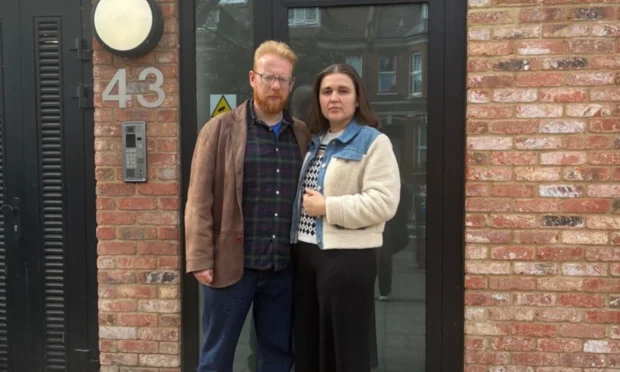
Richard and Anna Bell are among 17 leaseholders unable to move house. Photograph: free to use by partners of the LDRS
Hackney homeowners say they are “trapped” in an unsellable property because of their freeholder’s unpaid debts to the local council.
A family of Hackney leaseholders last year tried to sell their property in Upper Clapton, only to discover during the process that mortgage providers were unwilling to lend on the flat.
The developer and freeholder, Restoration Hackney Ltd, owes an outstanding £850,000 to the local authority, but this leaves any future leaseholder liable if the company were to go bust.
To try to save his flat sale from collapsing, in September Richard Bell, 38, repeatedly asked Hackney Council to guarantee it would not pursue him and fellow leaseholders if the freeholder defaulted on the payment. The council declined.
“It could have salvaged our deal,” Mr Bell told the Local Democracy Reporting Service (LDRS). He claimed another leaseholder’s sale was now “circling the drain” as a result.
Hackney Council granted planning permission for the block of flats in Upper Clapton on the proviso that the developer paid approximately £700,000 in Section 106 funding and £150,000 to the Community Infrastructure Levy (CIL).
The council registered these debts as local land charges attached to the property.
Though the developer became liable for the payments in 2017, the council struck an agreement that the Section 106 fees did not have to be paid until the 14th flat was sold, at which point the freeholder would have 20 working days to pay.
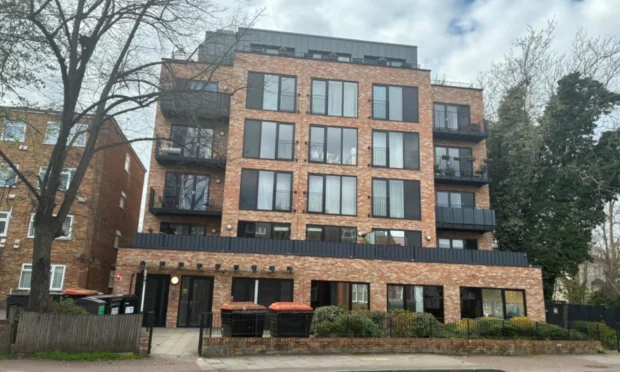
Upper Clapton Road Flats. Photograph: Richard Bell
Since the 2018 sale, the council has issued two demand notices for the £700,000 Section 106 payment, with five years between them.
It has sent three letters demanding the £150,000 CIL money.
Mr Bell and his wife Anna, 34, want to sell their “increasingly cramped” one-bedroom flat to find somewhere with another bedroom for their two-year-old son.
When the council did respond five weeks after several emails, it said it was taking action to recover the money from the developer, though by this point the couple’s sale had collapsed.
The council said it would “almost always” seek payment from the main liable party, but the residents hoped for more.
“We find it baffling and cruel,” Mr Bell said. “They could simply guarantee that we won’t be held responsible for the freeholder’s debt. That would allow us to sell our homes. Instead, they’re refusing to do so and using the considerable power they have over our lives not to help us, but to keep us trapped.”
The council, however, said it could not guarantee the debts of all 17 leaseholders out of fear of setting a precedent for future developers avoiding their debts.
A senior officer added that the council held “several meetings” about the outstanding sums with the new owner of the site, which was transferred in 2024 when a new person took over Restoration Hackney Ltd.
In February, lawyers acting on behalf of the couple and supported by the majority of the building’s leaseholders wrote to the council accusing it of acting “unlawfully [and] irrationally” in its administration and enforcement of the debt.
Solicitors Judge & Priestley advised the leaseholders that the statute of limitations had now run out, meaning that the council could no longer recover the £150,000 in CIL contributions.
The Section 106 money, however, can still be pursued which also means leaseholders still face a financial risk relating to the £700,000.
Commenting on the lost CIL money, Mr Bell said: “That’s money toward parks, playgrounds and roads that Hackney residents are never going to see.”
The couple told the Local Democracy Reporting Service: “We’re appalled that the fees haven’t been paid. No one should be allowed to rip off Hackney residents in this manner. Hackney Council needs to explain why it has taken such a lax attitude towards collecting these debts. Right now, they’re effectively letting the developer off but punishing us as leaseholders.”
A Freedom of Information (FoI) request revealed the council was owed roughly £2.9m in unpaid developer contributions from projects across the borough.
The LDRS understands the council has secured £1.2m worth of these unsettled debts in the past year.
A spokesperson for Hackney Council said: “We understand the frustration of leaseholders facing difficulties selling their properties as a result of the previous and current freeholder not paying substantial contributions due to the council.
“We have an obligation to make sure all developers that build in the borough pay to help maintain the services and the infrastructure relied upon by residents. There has been a change of freeholder of the block and neither the previous, nor the current owner has yet paid the amount that is due, despite us contacting and meeting with both.
“We will support residents however we can. Unfortunately, we are unable to guarantee the debts of a private developer as it could set a precedent for other developers to avoid paying debts in the future. We are exploring further legal options to make sure the outstanding payments are made.”
The Local Democracy Reporting Service approached Restoration Hackney Ltd for comment.