
Hackney has lowest Meningitis B vaccine rate in London as parents share outbreak concerns
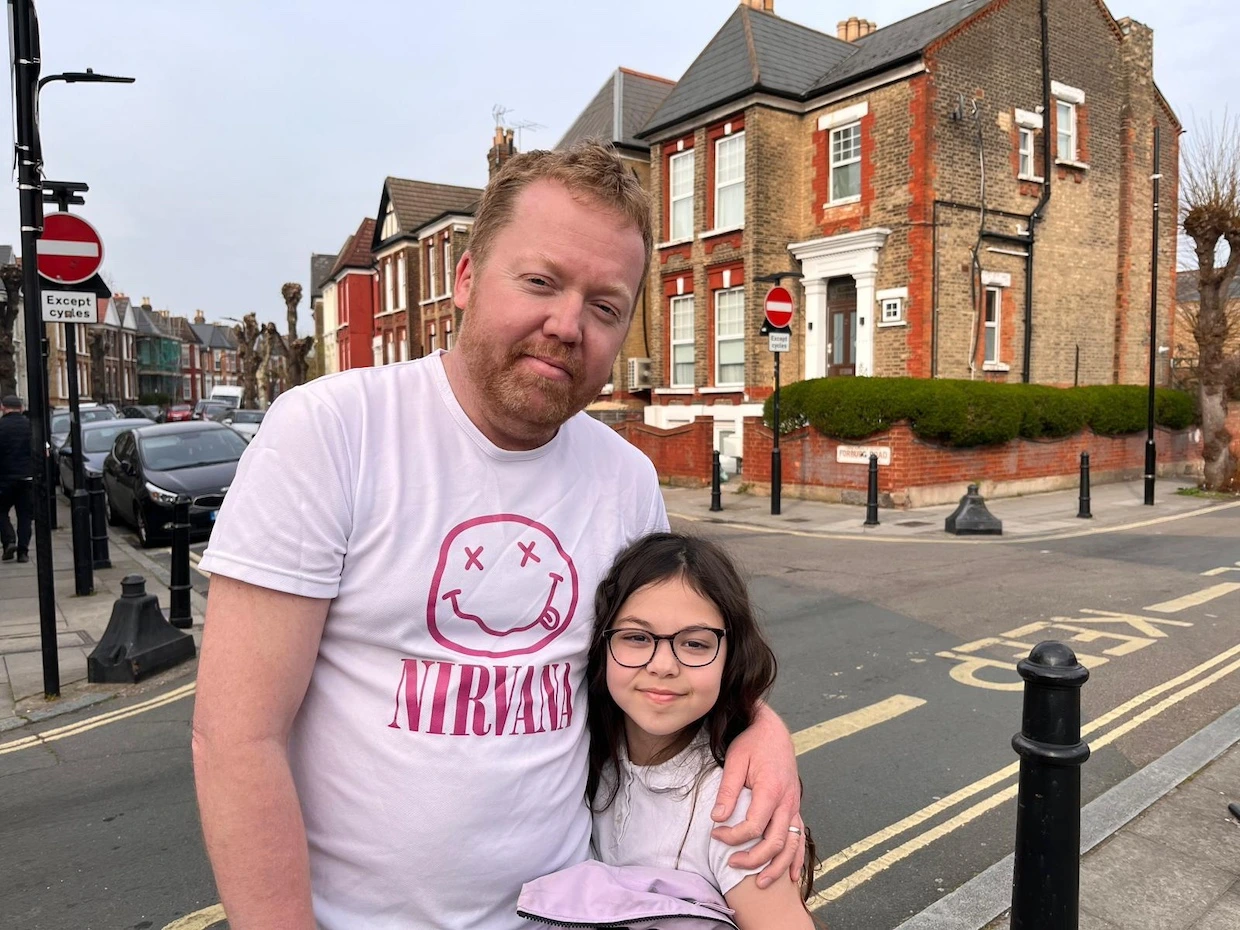
Andrew Baldock and his daughter, Ivy. Photograph: LDRS
The fatal meningitis outbreak in Kent reached London last week. But as of Monday, 23 March, the UK Health and Security Agency (UKHSA) confirmed there were no new cases in the city in the last 24 hours.
Experts still consider the chances of a wider spread of meningitis to be low, but the bug has put the spotlight on significant gaps in vaccine coverage for MenB in the capital and the country after 20 confirmed cases and two deaths in Kent. Nobody in London has died from the recent outbreak and only one case has been recorded in the city, which is directly linked to the Kent outbreak.
Analysis of government health data shows none of London’s boroughs have reached the World Health Organization (WHO) target for 95 per cent of infants to be vaccinated to ensure herd immunity.
One borough stands out: with around two in five children unprotected against MenB, Hackney has by far the lowest jab rate in England. Just 61.3 per cent of infants in the borough have been given the vaccine.
As the local council assures that no cases have reached Hackney, the Local Democracy Reporting Service (LDRS) spoke with parents outside a local primary school to gauge their feelings on the situation.
The UK became the first country in the world to introduce a routine MenB vaccination programme for infants in 2015. However, anyone born before July 1, 2015, is not offered the vaccine free of charge on the NHS, unless they have a specific medical risk.
Claudia Sousa, who has a nine-year-old and a 12-year-old, has already had both her children vaccinated before travelling abroad to Brazil, but said she was “very concerned” about others at Jubilee Primary School where one of her children is a pupil.
“It’s a very dangerous disease,” she said.
The LDRS understands that like other schools, Jubilee Primary has been advising parents on what they can do amid the reported cases of MenB elsewhere in the country. Claudia confirmed she had received a newsletter from the school.
Her worries were echoed by another parent, who did not wish to be named but said she was “stressed out” by the situation and felt anxious to even discuss it.
Parent Andrew Baldock, whose daughter Ivy is in Year 4 at north Hackney’s Jubilee Primary School, was not in any panic. “I don’t hear too much about it and I’m not overly concerned about it,” he said.
“[The school] told us they were monitoring the situation but there was nothing to worry about,” Andrew said. He was confident that his children had received the MenB jab.
Maggie Bell (a pseudonym) was “scared” about her children in school since her eldest child was yet to be vaccinated. Unlike other parents, she said she had not received any information from the school regarding the outbreak.
The response to the Kent outbreak across London is being led by the UK Health Security Agency (UKHSA), in collaboration with the NHS and local authorities.
In Hackney, vaccine programmes for children and young people are in place and being delivered through GP practices and the school-based vaccination programme.
Hackney’s Cabinet Member for Health and Adult Social Care, Cllr Chris Kennedy, told the LDRS the council had not been notified of any MenB cases in the borough.
“Since becoming aware of the outbreak in Kent, we have followed UKHSA guidance to raise awareness of the signs and symptoms in schools, colleges and universities. We are continuing to encourage residents to get up to date with vaccinations that prevent meningitis,” he said.
Hackney Council attributes the borough’s low rate of vaccine uptake to multiple factors, including concerns about potential side effects, doubts around how effective jabs were, and people not seeing themselves as being at risk of disease.
The local authority added that it was working with communities and partners to improve vaccine access, provide clear and trusted information, and ensure services were responsive to all residents’ needs.
Meningitis, or Meningococcal disease, can progress rapidly. Signs and symptoms of meningococcal meningitis and septicaemia can include a fever, headache, rapid breathing, drowsiness, shivering, vomiting and cold hands and feet. Septicaemia can also cause a characteristic rash that does not fade when pressed with a glass.
Early symptoms can often be confused with other illnesses, such as a cold, flu or hangover, and students are particularly at risk of missing the early warning signs.
If you or anyone you know develops any of these symptoms, seek medical help immediately by contacting a GP, calling NHS 111 or dialling 999 in an emergency. Knowing the signs and taking early treatment can be lifesaving.