
Council suggests taking autistic boy on bus ride to ‘prove’ he can’t use public transport
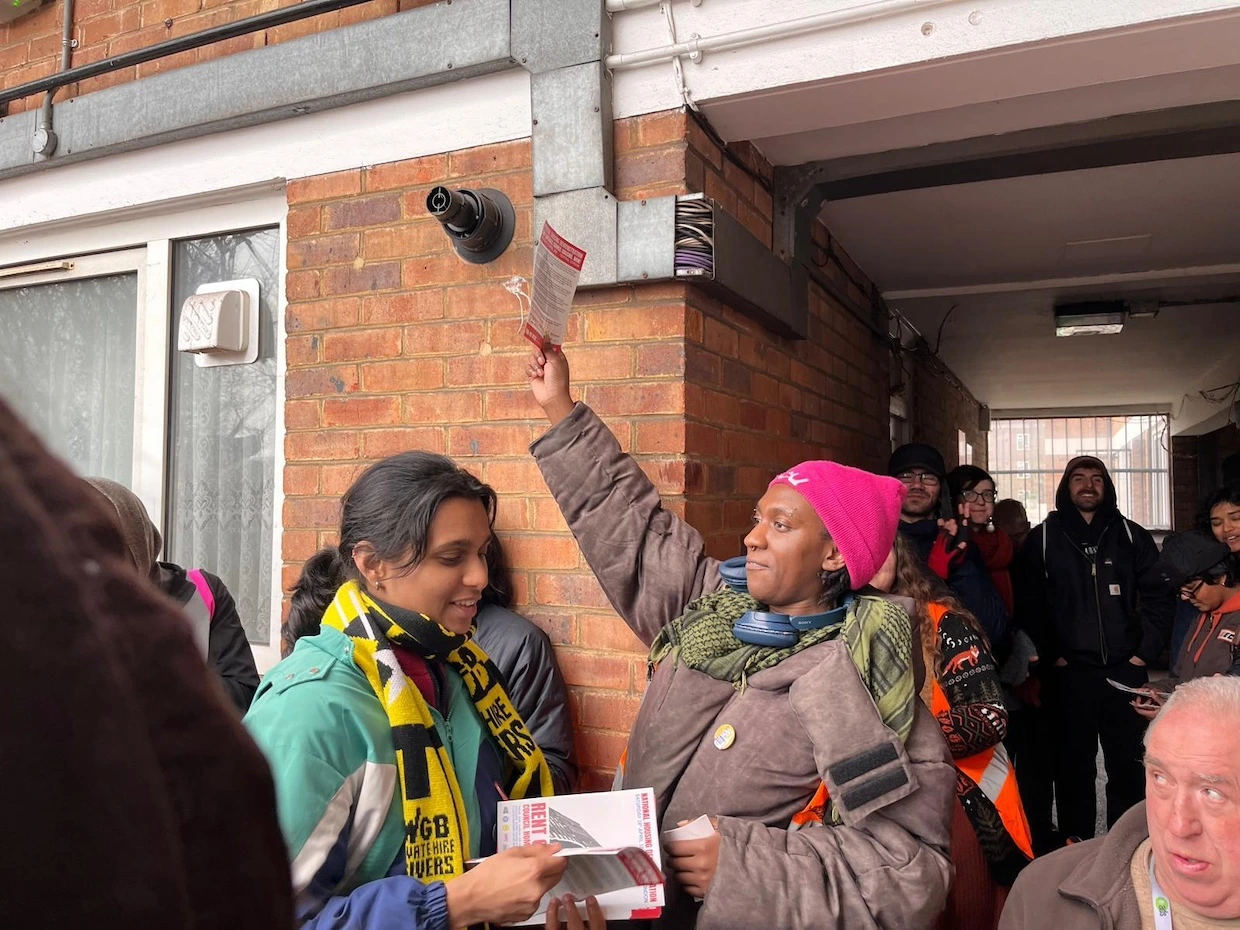
Charity Oppong and her children are facing the prospect of eviction. Photograph: LDRS
Hackney Council has suggested taking an autistic child on a bus ride to prove his family’s claim that travelling by public transport would trigger a distressing meltdown.
Charity Oppong and her children are facing eviction for subletting a council flat from a named tenant for several years. Ms Oppong moved into the property nearly 20 years ago with a family member who later moved out. Ms Oppong continued to pay rent, but did not request the tenancy be transferred to her name.
After learning of this in 2021, the local authority has moved to oust the family on the grounds of tenancy fraud. Last year, a court granted it an eviction warrant. The council says it acknowledges the family’s “distressing” situation in light of the special needs of Charity’s seven-year-old son, Kayden, who has severe autism.
The council has suggested rehousing them in temporary accommodation in Newham, but his family says it will cause harm by moving him several miles away from his local school where he is “settled” and gets targeted support.
His sister Nana told the Local Democracy Reporting Service (LDRS) Kayden is prone to meltdowns on public transport and other vehicles due to sensory overload and high anxiety. The family and the boy’s headmistress have urged the council not to move him because of this, and sent letters in support, which also detail the opinion of medical professionals.
However, documents seen by the LDRS reveal the council recently told the family it would not accept these letters alone and would seek to put this to the test before changing its rehousing offer.
The family’s personal housing plan – an agreement between the council and residents who face homelessness – states that the council wants “direct observational evidence” that Kayden is “unable to travel by bus, taxi or car”. To do this, it proposes that its own medical assessor travels with the boy to see how he copes.
The council added that its medical assessor would need evidence from the local child health care centre setting out his struggles with travelling and how this was being mitigated.
Speaking to the LDRS, Nana, said: “Who’s going to be there to contain his meltdown? I thought this was about safeguarding and protecting children. If they want to f*** around and find out, we say: go ahead.”
The podcaster and blogger Kate Belgrave, who reports on public sector cuts and issues, called the council’s proposal “bizarre”. She said: “In other words, the council wants to put the boy in an environment that he can’t cope with to record him not coping with it. Is this actual abuse?”
Kayden has an Education, Health and Care Plan (EHCP) which entitles him to certain support. These plans are often based on evidence from doctors and autism and disability assessors.
A 2024 survey by the National Autistic Society found that 62% of autistic people who responded had more meltdowns or experienced sensory overload while travelling or reaching their destination than in a more fixed and settled setting. The research also found buses, trains and taxis or rideshares were the most difficult for people with autism.
A report by King’s College London published earlier this year warned that neurodivergent children in temporary accommodation faced “torture-like” conditions.
The household has been supported by activists who have physically blocked bailiffs from entering the property and turfing them out. Last week, a court granted a lawyer’s request to stay the eviction for eight weeks until both a judicial review and an ongoing safeguarding assessment from social services had concluded.
A Hackney Council spokesperson told the LDRS: “While we have a responsibility to take action in cases of illegal subletting, we understand how distressing this situation is for the family.
“We have a legal duty to ensure that any home offered to a homeless family is suitable for their specific needs, taking into account factors like size, affordability, health requirements and location. In this case, we carefully considered all the information and medical evidence presented, using these details to inform the offer of the temporary home.
“If the family feels the offer of the temporary home does not meet their needs, they have a statutory right to request a review. This has previously been explained to the family. Once the necessary application form has been completed and processed, the council can provide transport for a child with an EHCP if required.”
The council did not respond to the LDRS’ questions as to what kind of medical professional it was suggesting travels with Kayden, and why it needed to prove the boy’s difficulties if he already has an EHCP and autism diagnosis.
The LDRS previously reported that Hackney Council explicitly told NHS staff not to write letters of support for special needs children whose families feared their lives were at risk due to unsuitable housing.