
Campaigners accuse council of downplaying risks to SEND children in unsafe housing
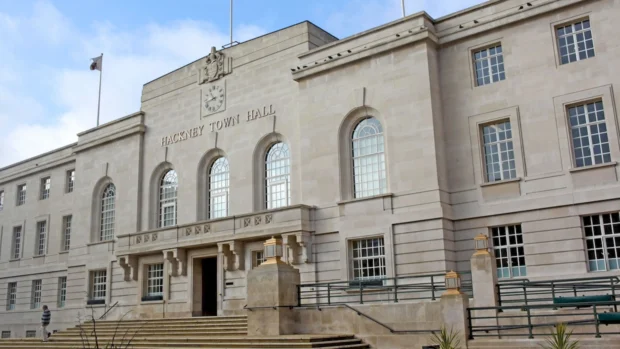
One parent of a SEND child said people were ‘falling through the gaps’ of the council’s housing needs assessment process. Photograph: London Borough of Hackney
Parents of SEND children have accused Hackney Council of brushing aside their distress by putting them through an “adversarial” review process.
Niki Lampaski, whose son Erik is non-verbal autistic, last week warned the local authority that its “fragmented” system was failing families of children with special educational needs and disabilities (SEND) who need to be moved for their safety.
Speaking for the group Housing Inclusion Hackney at a council meeting on 11 February, Lampaski warned people were “falling through the gaps” in the council’s “traumatising” housing needs assessment process.
“Overcrowding and disrepair are routinely dismissed as ‘non-medical’. Professional evidence is minimised or reinterpreted. Children with hidden disabilities are treated as though their needs are negotiable. And families are subjected to repeated, adversarial assessments rather than supportive, safeguarding-led processes”, she said.

Niki Lampaski pictured with her son, Erik. Photograph: Niki Lampaski
Lampaski’s son also has sensory processing disorder, which can cause individuals to be overly sensitive to sights, sounds and movements. Her family of four currently share a one-bedroom private flat in the borough.
She added that the council had made her “go to great lengths” to prove the impact this was having on her son. Lampaski told the Local Democracy Reporting Service (LDRS) that Erik lacks awareness of danger and must be monitored for his heart and liver functions.
There are roughly 8,500 households waiting for social housing on Hackney’s register, and they face longer wait times than in most London boroughs. According to the Centre for London, those asking for a three-bedroom property can expect to wait 17 years and six months.
Families who apply to get onto Hackney Council’s housing register undergo a medical assessment to see if their medical condition or disability is being caused or worsened by their accommodation.
During the process, which involves two different teams to assess housing needs, Lampaski said reviewers had “applied a positivity lens to every need presented to the point where my child apparently has no needs”. She added: “But then Hackney Education puts him in a special needs school. It just doesn’t make any sense”.
In a report titled Lived Realities, the campaigners said the council should replace its review system with a medical assessment panel. A senior council director suggested there were not enough staff available to do this.
At a meeting of the Children and Young People Scrutiny Commission last week, councillors and officers stressed that the housing crisis was the underlying problem.
Cllr Sade Etti, Cabinet Member for Homelessness Prevention, Rough Sleeping and Temporary Accommodation, said: “Only 10 per cent of our social housing is on the ground floor, yet this is exactly what our SEND families need”.
However, later on in the meeting, committee chair Cllr Sophie Conway (Labour) was more critical of the council. “What we can’t have is families being told by one service ‘your child has sufficient needs to qualify for a space at a specialist school’, but for another service to say ‘your child’s needs are not great enough’”, she said.
Cllr Conway added: “Sometimes it’s easy to make an assumption that all families want is suitable accommodation. But sometimes they want acknowledgement of what they’re going through, even if that means they languish on a housing waiting list for a really long time”.
Alex Clarke, Director of Housing Strategy and Homelessness, said the council’s assessment “should not be a traumatising process” or feel adversarial. He said: “I’m happy to sit down [and] talk about how we can improve that”.
In October, Lampaski and others expressed shock when they learned the council was instructing NHS staff to stop writing letters of support for SEND children being moved into safer homes. Hackney Council told the LDRS these were “not needed” for its assessments.