
TfL ‘lacks depth and nuance’ in efforts to make transport accessible to disabled people
Transport for London’s efforts to make its services accessible are ‘surface level’, a City Hall report has found. Photograph: Nick Fewings / Unsplash
Transport for London (TfL) is “lacking depth and nuance” when it comes to engaging with the needs of disabled people travelling around the capital, a damning City Hall report has concluded.
The London Assembly Transport Committee have said that TfL’s efforts to make public transport more accessible – including launching a new strategy in 2024 – are “surface level” and is putting off those with extra or special needs from using the network entirely.
During a months-long investigation, the committee looked at the transport barriers faced by London’s 1.2million-strong disabled population, parents with young children and the growing number of elderly Londoners.
Elly Baker, chair of the Transport Committee, told the Local Democracy Reporting Service (LDRS): “This report looks at structural problems that TfL have in terms of collecting data, using data, and then how they translate that into the decisions they make, and also how they engage with people.
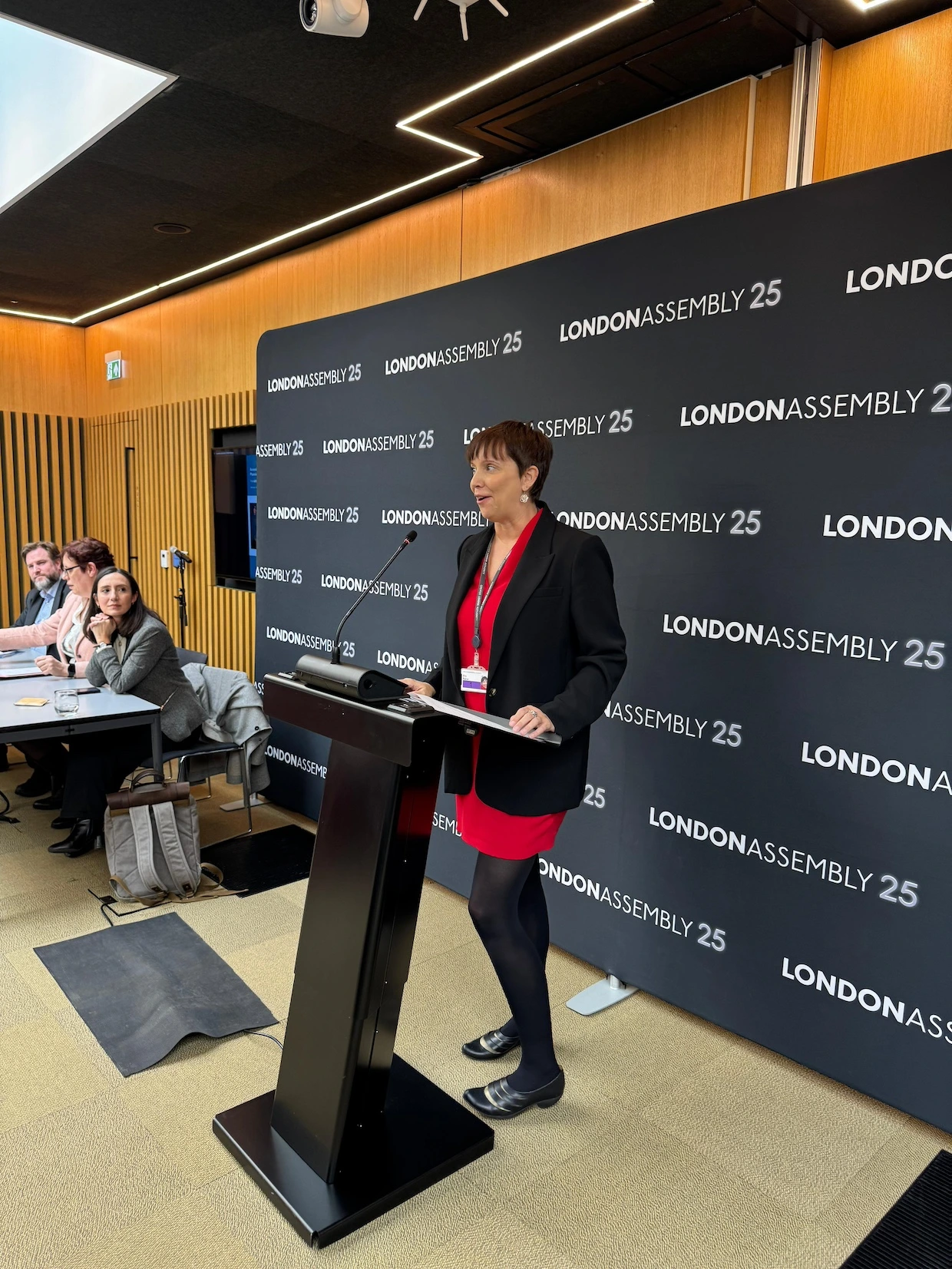
Elly Baker, Chair of the London Assembly Transport Committee, at the launch of the report. Photograph: Allison Bell/GLA
“We just want to embed better ways of engaging with people in their organisation. That won’t solve the problem entirely – it’s a cultural change that is needed – but it will be part of it.
“Fundamentally, I think, one of the things that we identify is that TfL have an equity in motion strategy, but that strategy is effectively lots of good things that they are already doing. What they haven’t done is take a good, long look at themselves and ask if they are valuing everyone’s journey appropriately, looking at the data, speaking to people, and see what other people would say are the most important things to do, and not assuming they know.
“So we’re really just asking them to be more open, be more reflective, and maybe change course a little bit. It’s definitely not a lack of care. But TfL has been around for 25 years now and has had no positive competition in this country. And I think it’s resting on its laurels a little bit.
“Over that 25 years, thinking has changed in the way we analyse all sorts of aspects of inclusion. And I just think that’s not being reflected enough in TfL”.
Campaign group Transport for All told assembly members that many disabled people who would prefer to utilise the public transport network are instead forced into using cars or taxis due to their route not being adequately accessible.
Difficulties include a lack of step-free access on the network – just over a third of stations have ‘level boarding’, with TfL vowing to make at least half of stations step-free by 2030 – and problems reading signs and maps to plan journeys.
Disabled passengers also experienced negative attitudes from staff when asking for assistance, and fellow travellers when trying to utilise priority seats on trains and buses.
The same people also tended to avoid travelling at peak times due to added stress and anxiety. London Travel Watch told the committee: “Lack of accessibility can negatively impact disabled people’s use of transport. It can impact the time people travel, with peak times when overcrowding is more likely making the barriers worse (such as limited priority spaces and seating)”.
Recommendations in the report included TfL being made to “collect more detailed data on the travel patterns and needs of different user groups”, establish diverse advisory panels and publish an yearly equality assessment alongside their budget submission to the Mayor.
On the former, the committee noted that the London Travel Demand Survey (LTDS), an annual survey that TfL sends to a random sample of 8,000 households in London, is “due a refresh” and must include questions on passenger spend, time taken, whether journeys are care-related and who people travel with.
“TfL acknowledges it must use the data it collects to design its services to be more inclusive,” the report says. “But it does not contain detail or specific actions on how exactly TfL plans to improve its use of data to inform decisions. It also does not contain any actions to review and update Equity in Motion once this data has been collected.
“TfL must ensure that it uses the data it collects in a meaningful way and updates its strategy to reflect the findings from the data”.
This also includes publishing annual Dial-a-Ride data to track the number of users. “If Dial-a-Ride is not operating at full potential, a significant number of older and disabled residents may be unable to complete essential journeys – to shops, health appointments, or social activities”, assembly members warned. “This could place them at increased risk of transport-related social exclusion, exacerbate isolation and deepen inequalities.”
The Transport Committee also asked TfL to use the improved data to update its Equity in Motion strategy. The programme, launched in 2024, sets out more than 80 actions “to ensure as many Londoners as possible can access and benefit from public transport and that London’s transport network is welcoming and inclusive”.
These include more dedicated spaces for wheelchair users and buggies created on Bakerloo, Central and Waterloo & City line trains and 1,000 new priority seats on buses.
The network’s 2030 deadline for all the actions is “commendable” but ambitious, the committee noted, with “substantial scepticism about whether the level of detail included in the plan is sufficient to ensure the aims are actually met”.
Liberal Democrat Assembly Member Hina Bokhari, who sits on the committee, said the report was a “step in the right direction” but lamented that it didn’t call for a dedicated Disability Champion to hold the Mayor and TfL to account in City Hall.
“There’s a resistance because of the fact that, I think, to be blunt, I think the Mayor of London sees this as a role that will hold into account in a way that will make him uncomfortable,” she told the LDRS.
“The transport system is not working for Deaf and Disabled commuters. We have still a lack of accessible toilets across our system, including one of the busiest stations in London, Peckham Rye.
“These are stark realities of a transport system that says they’re listening to Deaf and Disabled Londoners, but are not co producing with them. It’s not about having a tick sheet or making a decision and then checking in afterwards.
“It’s about making sure that policy, from the start, is listening to Deaf and Disabled Londoners. And if deaf and disabled Londoners are finding London accessible, that means it’s accessible to everybody. This is not just about disabled Londoners. This is about all of us. All of us want an accessible London”.
TfL were contacted for comment.