
Council sets out new plans to reduce air pollution amid LTN controversy
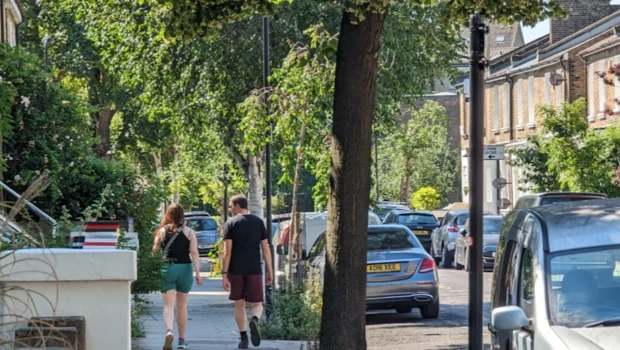
Hackney Council has vowed to do more to cut toxic pollutants by 2030. Photograph: Hackney Council
Hackney Council has set out new plans to tackle air pollution in the borough amid criticism that some of its measures to improve air quality have backfired.
On Wednesday (4 February) the local authority announced an “ambitious” Air Quality Action Plan for delivering “cleaner and healthier air” across the borough by the end of the decade.
Based on World Health Organisation (WHO) guidelines, which go further than official national targets, the council plans to enforce stricter air pollution levels in Hackney. It added that the next five years will see it focus efforts on pollutants coming from sectors like building and construction, commercial kitchens and takeaways, and from wood-burning in the borough.
The council also plans to step up efforts to stop drivers leaving their engines running when parked, known as ‘idling’. Parking and enforcement rules will also undergo a review.
Hackney locals can also expect new measures to improve indoor air quality, “including a loan scheme for home air quality monitors”, the council said.
After a consultation carried out last year, the council’s cabinet rubber-stamped the new proposals at a meeting last week. Residents had turned up to protest measures the council had already introduced to cut pollution.
After 1,800 people signed a petition against “excessive” road closures in the borough, last Monday (January 26), resident ShaToya Rose voiced her and others’ opposition to low-traffic neighbourhoods and other road closures as scores of residents crowded around the Town Hall’s doorstep demanding the council “open our roads”.
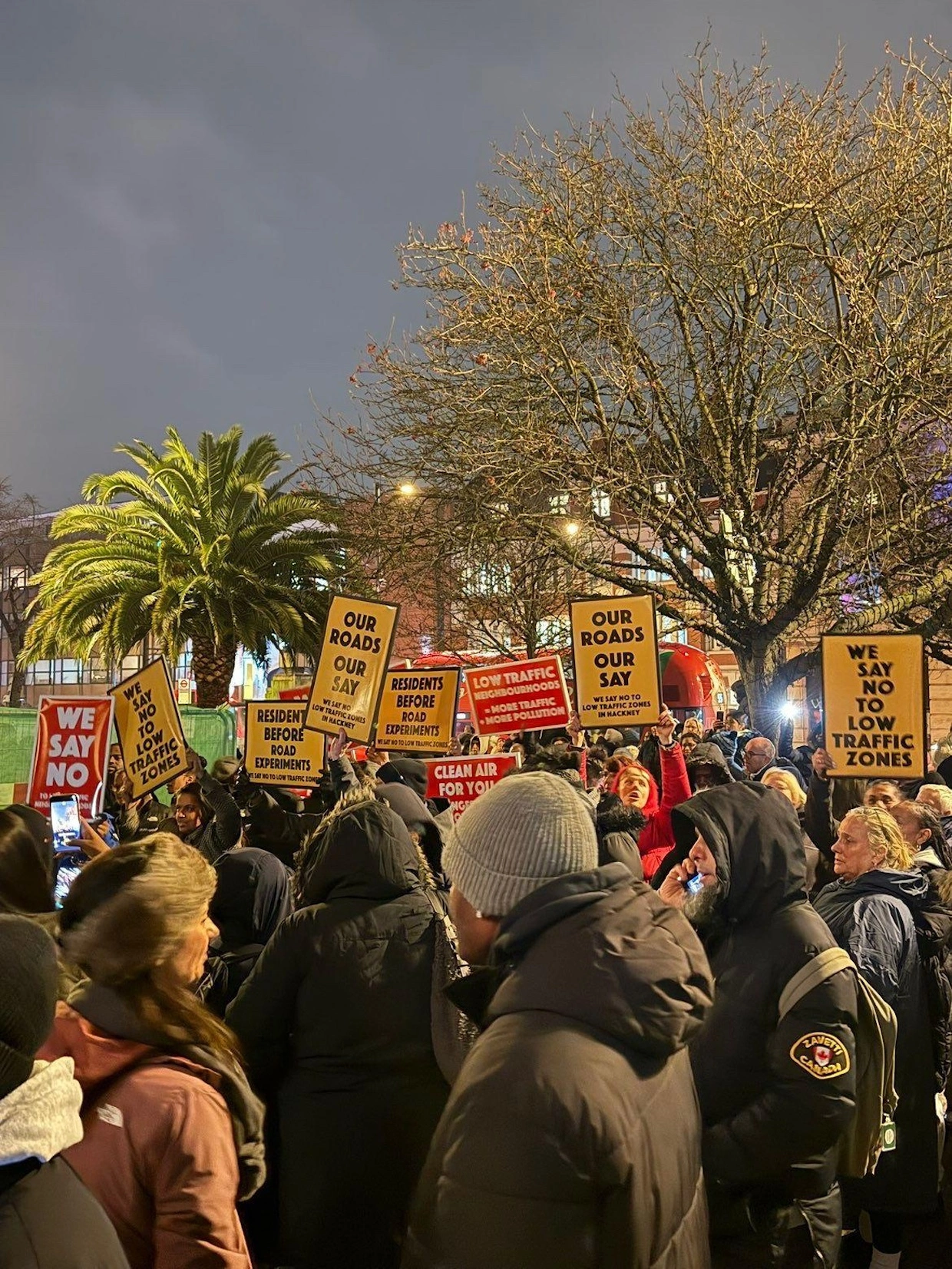
Demonstrators gathered outside Hackney Town Hall on January 26 urging the council to reopen roads. Copyright: ShaToya Rose/LDRS
She said the council’s LTNs had failed to cut traffic and instead created more congestion she claimed was exposing children to more fumes and pollution in their playgrounds and on their way to school.
Roughly 70 per cent of eligible roads in Hackney now belong to a low-traffic zone.
Ms Rose claimed residents had lost faith in the council over its rollout of the schemes she argued had become a “public health issue”. She added that residents were “missing hospital appointments” because of gridlocked traffic.
“Paramedics report delays due to congestion, and lives are being put at risk”, Ms Rose said.
In the chamber, Cabinet Member for Climate, Environment and Transport, Cllr Sarah Young, defended LTNs for “dramatically” improving air quality, citing independent data. She added that the council had been listening to resident feedback and would continue to make changes to traffic management policies to tackle “difficulties”.
The rowdy council meeting was eventually halted after protesters called out Mayor Caroline Woodley as she tried to move on to other council business.
Last week’s demonstrations came in the wake of Transport for London (TfL) admitting that low-traffic zones and bus lanes had led to increased car congestion in parts of the capital.
Hackney Council’s consultation on its plans to improve air quality last year surveyed residents’ views on the council’s priorities. Nearly half of respondents (47.7 per cent) said they were dissatisfied with the council’s current approach.
After the survey, the council said it received a “significant volume” of comments expressing “strong dissatisfaction” with traffic management and reduction schemes like LTNs. These residents were particularly concerned with main and boundary roads becoming congested and unfairly impacting the people living there.
On Wednesday Cllr Young restated the “huge progress” the council has made by rolling out LTNs, cycle lanes, street trees and other policies.
“However, air pollution remains one of the biggest environmental threats to our health. It affects people at every stage of life and is linked to conditions including asthma, heart disease and dementia. While our data shows that nitrogen dioxide levels have fallen significantly, we know there is more to do”.
Responding to the latest air quality plans, ShaToya Rose told the Local Democracy Reporting Service (LDRS): “We all want cleaner air, but policies must work in the real lives of the people they affect. Residents across Hackney are continuing to report serious impacts, and progress only works when communities are genuinely listened to”.
Ms Rose told the LDRS residents are planning another protest against road closures and LTNs on Wednesday 18 February.
Residents can read the council’s full list of new proposals to improve air quality in Hackney here.
Get these councillors and all figures pushing their anti-car agenda OUT. can’t come any sooner. how are you closing off roads to residents who drive and pay road tax? ridiculous
The Council only introduced LTN’s as a favour for their gentry friends they are the people Labour in Hackney really represent.
So you have actual data showing air quality has improved versus concern trolling from drivers claiming, with no evidence, that it hasn’t (but they don’t actually care enough to not drive in the first place).
Righto.
Sadly it seems that too many people are addicted to car use instead of using public transport, cycling and walking.
And this is in a London borough that enjoys access to many buses and also Underground transport.
Frequent unnecessary car use is responsible not only for air pollution and for adding to climate change. It also reduces healthy exercise in walking and cycling, No wonder the NHS is struggling to manage the extra burden of obesity and other effects of sedentary habits.
hackney’s public transport is worse than the London average – there are almost no tube lines. Buses are not a viable alternative for long journeys. The only viable alternative really is cycling, but if you have kids that doesn’t work for longer distances. Cars are the only backstop to many journeys and with electrification, more traffic does not need to bring worse air. We’re already only making car journeys when no other alternatives are available – LTNs will not reduce car journeys but make them longer with more cars stuck in traffic at any point in time – a lose lose for both drivers and pedestrians.