
City Hall’s ‘Night Czar’ replaced by commission working to revive city’s nightlife
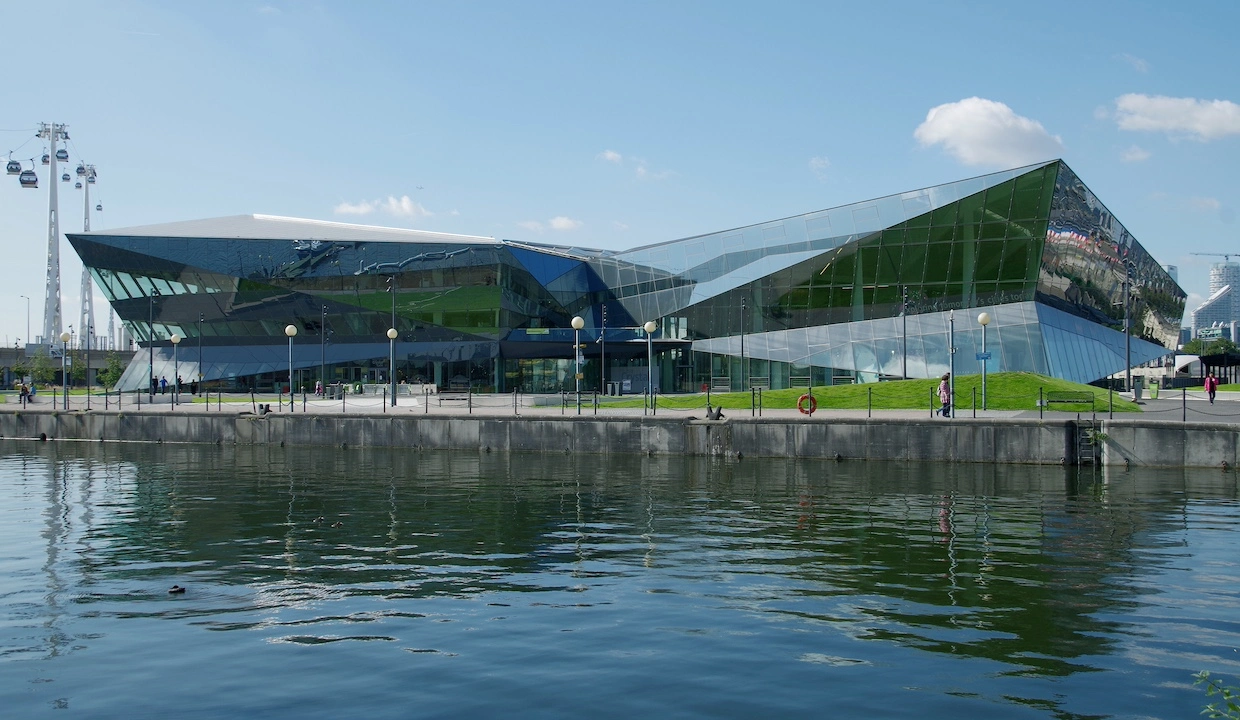
City Hall, Newham. Photograph: Matt Buck, CC BY-SA 2.0, via Wikimedia Commons
London’s new Nightlife Commission is an “evolution” of City Hall’s plan to ensure the capital thrives as a 24-hour city rather than an admission that the former controversial ‘Night Czar’ failed in the role, the Deputy Mayor for Culture has insisted.
Justine Simons told the Local Democracy Reporting Service (LDRS) that the new, independent group would instead bring together a “whole range of voices” to help support London’s struggling night-time economy.
Yesterday (Tuesday January 27) London’s Nightlife Taskforce recommended the creation of the Commission as part of 23 recommendations in a comprehensive, long-term strategy aimed at reviving the city “after dark”.
Amy Lamé, who was responsible for “championing London’s nightlife” between 2016 and 2024, oversaw the closure of 3,011 night economy businesses in London.
City Hall did not appoint a successor for the role, for which Ms Lamé was paid an annual salary of £132,846.
Instead, the new Nightlife Commission, “made up of experts from across the city’s nightlife sector”, will work with the GLA, councils and the Met Police to inform City Hall’s decision making.
Speaking at the launch of the report, Ms Simons told the LDRS: ” We’ve got the Mayor’s Task Force who have come together, they spent a whole year talking to 3,000 Londoners, talking to councils, talking to the Mayor, to come together and think what is it that we can do to really support and promote and grow our nightlife.
“So there are challenges – and that’s why today is really important.
“It’s about coming together a range of different voices across nightlife, with the Mayor and all parts of the system really to advance the recommendations and boost our nightlife”.
Asked about the performance of the previous Night Czar, she added: “This is an evolution. The journey around nightlife in the big cities is an evolution and what I think has been really fantastic is that the independent task force has brought together a whole range of voices.
“It’s not one story. It’s a whole different diverse set of stories and experiences. And that breadth is really pulled together in this task force and will continue with the Commission. And that’s what is important really, it’s building those diverse set of resources together to support our nightly.
“No one person can do it alone, no one organisation can do it alone and that is the philosophy really, which is bringing together voices from across the [sector].
“Everyone cares about the success of London’s light and life and what we’ve announced today really builds on that, it brings everyone together”.
Cameron Leslie, the manager of the London nightclub Fabric, added: “The representation of this group is going to have a much stronger foundation than perhaps a solo voice that, before, has been very hard to be able to channel that through”.
He admitted that the measures were “not a silver bullet” but instead represented a long-term strategy that “can take root straight away”.
“It’s something that has to evolve over time”, he told the LDRS.
“This is not a long-term plan, it’s a long term strategy”.
The report, which was unveiled at the Colour Factory in Hackney Wick, East London, also recommended the GLA look at boosting night-time transport and policing to ensure people can safely travel to and from venues.
Almost a third of Londoners told the Taskforce that transport was a top priority – especially a lack of coverage in South and South East London, which the night Tube largely doesn’t serve.
Meanwhile, owners and operators remain most concerned about theft and drug-related issues around venues, with the Taskforce suggesting police resources be deployed to areas with higher footfall.
The report also recommends loosening rules around noise at night-time venues, and require at least 10 unrelated household complaints before Environmental Health investigations into licensed spaces are triggered.
Asked about the potential cost of these measures, Ms Simons said: “What we’re going to do next is work with the new independent commission and all the parts of London government to look at each of those recommendations individually and work out how we can best take it forward”.
This year, the Mayor is set to receive new licensing powers from the Government that will allow him to ‘call in’ powers to decide licensing applications of strategic importance, such as for key nightlife venues and supporting more al fresco dining.
The full list of recommendations to the Mayor are below:
1. Support the creation of an independent Nightlife Commission
2. The Commission must be given a role, with representation on key groups across the GLA and local authorities.
3. The Commission can design a comprehensive and accessible support package for all those working in nightlife, covering mental health and wellbeing; professional development; training; and more.
4, The Commission can play a role in helping resolve conflicts between different authorities and the sector.
5. Adopt this report’s definition of nightlife
6. Call on the UK Government to champion nightlife
7. Update heritage and community protection schemes to be more inclusive
8. Advocate for the redefinition of nightlife business rates
9. Lobby for a Night-Time Business Cost Relief Scheme
10. Establish a Nightlife Future Fund
11. Simplify meanwhile use nightlife space regulation
12. Publicly owned space for inclusive nightlife
13. Advance London as a 24-hour city through funding initiatives that strengthen nightlife spaces and transport
14. Re-establish the Late Night Transport Working Group
15. Pilot a new approach to sound management
16. Strengthen Agent of Change principles
17. Environmental Act Reform to ensure a a minimum of ten unrelated household complaints before Environmental Health investigations into licensed spaces are triggered.
18. Independent Review of Police Licensing through Casey 2
19. Police deployment on footfall
20. Harm reduction approach to public health and welfare first
21. London Strategic Licensing Policy
22. London Plan over Cumulative Impact Assessments (CIAs) and core hour policies
23. Develop a London Licensing Operating Standard
That’s no longer City Hall guys
Not central hall. Some local democracy reporting service we have here!