
London falls below ‘acceptable level’ of breast cancer screening uptake thanks to ‘population churn’
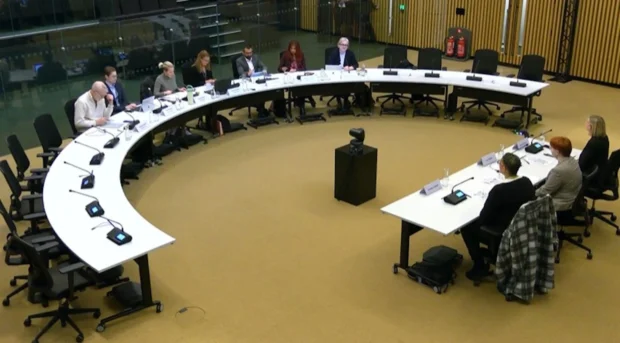
The London Assembly Health Committee heard last week that the capital faces unique barriers to screening uptake. Photograph: London Assembly
London’s uniquely high population ‘churn’, rates of deprivation and cultural diversity have led to low rates of breast cancer screening in the capital, health experts have warned.
Screening coverage in London has continued to lag behind other regions of the UK, with a 62.8 per cent uptake in 2024 also significantly below the NHS’s “acceptable level” of 70 per cent. The figures prompted the NHS in London to launch its first ever breast screening campaign last year in a bid to increase detection of cancers at an earlier stage.
Last Thursday (22 January) the London Assembly Health Committee heard that the capital is facing distinctive challenges compared to other regions of the UK when it comes to screening.
Dr Josephine Ruwende, a Cancer Screening Lead at NHS England, said the city’s “population churn” – which could be down to gentrification and the high cost of living forcing people out of London, as well as a high proportion of renters moving around – made contacting the right people difficult for the health service.
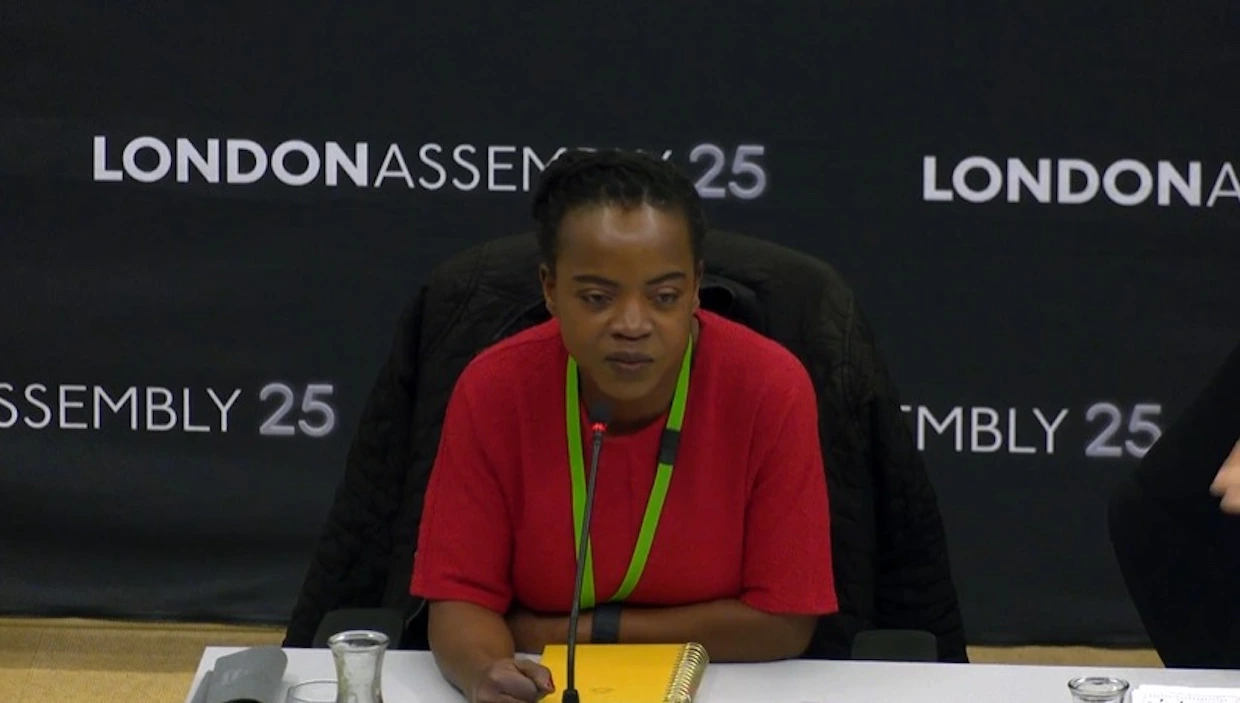
Dr Ruwende, Consultant in Public Health and Cancer Screening Lead for NHS England, spoke to the London Assembly Health Committee last week. Photograph: London Assembly
“The biggest factor we see in London is the impact of population churn”, she told Assembly Members. “This is people changing addresses and then not updating their GP – this then affects the invitation process because GP details are used to identify individuals who are eligible.
“In boroughs where we have the highest population churn, we see it strongly associated with lower uptake.
“Even in the most affluent boroughs, you have high population turnover – 40 per cent of the population can change addresses in a year, while there are also more people who have second homes or spend a significant proportion of time outside of the country that become complex for the NHS to have accurate details of.
“So the NHS are then sending invitations to the wrong address or when people are outside of the UK”.
London’s diverse population also brings its own challenges when it comes to encouraging people to take up appointments when they are correctly contacted, experts said.
Leeane Graham, Advocacy Lead at Black Women Rising, which supports women of colour through their cancer diagnosis, said there were “cultural barriers, fear and a mistrust of the health service due to previous experiences and word of mouth within our own communities” that are stopping some ethnic minority women from getting screened.
“There’s a lot of medical mistrust within the Black community, which has been ongoing for many, many, many years.
“We know that there’s low uptake in areas where it’s mostly women of colour or it has a high percentage of women of colour; how are we really reaching out to those people to make sure they understand what happens as well within those screenings?
“If you’ve never been for a breast screening before, the thought of having a mammogram can be really, really terrifying”.
Lee Dibben, Education and Policy Manager at Outpatients, said previous negative experiences with the healthcare system among the LGBTQ+ community has also contributed to lower uptake rates.
“There is a really deep-seated fear of how they were going to be treated within those healthcare space,” she told the London Assembly Health Committee. “So there’s a trust deficit that needs to be bridged through things like inclusive campaigns and messaging”.
However, the Mayor of London and government faced calls to help educate the capital’s female population as a whole, with Helen Dickens, Chief Support Officer at Breast Cancer Now, suggesting there was a lack of “awareness and understanding of breast screening” among all groups.
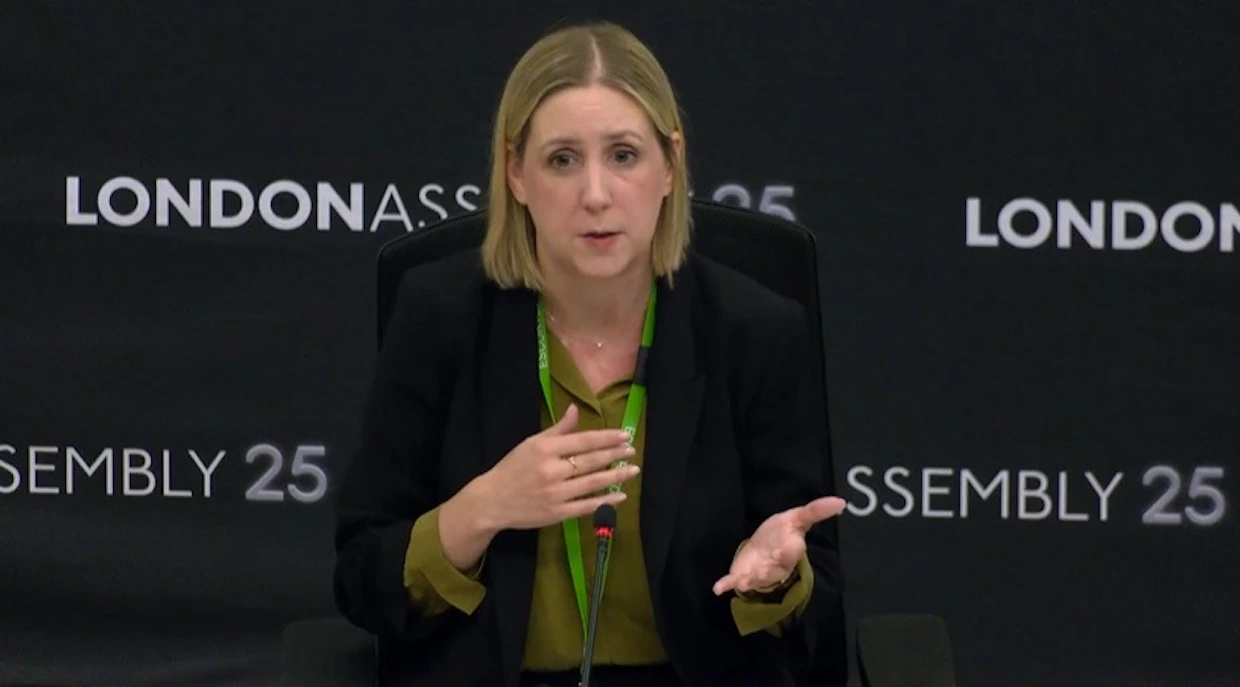
Helen Dickens, Chief Support Officer at Breast Cancer Now. Photograph: London Assembly
National polling conducted by her organisation shows that 19 per cent of women didn’t feel comfortable with the NHS screening part of their body, while another tenth were concerned with “pain or harm” as a result.
“We know that for some groups of women, these fears and issues around trust and accessibility are going to be even higher than others,” she added. “And obviously with the diversity of our population in London, we know there will be a number of women who would experience even higher levels of fear, levels of accessibility issues.
“Some of that is around cultural understanding and awareness, but some of it is also physical barriers. So again, in our national polling, we found that 16% of women who didn’t attend screening, it was because they couldn’t get to a screening centre.
“And while in London, obviously we have amazing public transport and we feel that we’ve got great accessibility, we also know that we don’t have screening centres in every borough. And we know that for some women that barrier of transport and access will still be a really big reason why they’re not attending screening.
“All of those reasons together really do compound the issue of uptake of screening in London”.
Zara Gross of the South East London Cancer Alliance said in areas of high deprivation, potential invitees were not being allowed time off work to attend screenings, especially those on zero-hour contracts.
The low take-up rates prompted concern among all panellists, who said early diagnosis was key to boosting survival rates with breast cancer and that low screening rates would lead to more unnecessary deaths.
“If you’re diagnosed at stage one, your five-year survival outcome rate is 98 per cent”, Dickens said.
“You know that that’s where we want people to be. Obviously, if you’re diagnosed at a later stage, we know the treatment can be much more brutal. If we can drive more people into screening, we will save more lives”.
Dr Will Teh, a Consultant Radiologist at the North London Breast Screening Service, added: “The non-attenders, the ones who never attend the screening, as well as the lapse attenders, those who do not attend regularly, do end up having a later stage of cancer detection, and therefore, yes, there is a knock-on effect on upcoming prognosis”.
The government’s new national cancer plan will be announced on 4 February, which is also World Cancer Day.
Details unveiled last week suggest the strategy will direct more resources to hospitals in rural and coastal parts of England in a bid to tackle inequalities.
If having a mammogram weren’t so extremely unpleasant, then more women would accept more invitations. The process involves having first one breast, then the other, flattened between two heavy perspex screens – horizontally and then vertically – which takes no account of the body’s natural curvature.
Men aren’t expected to have their genitals repeatedly squashed in order to check whether there’s an unnatural lump there, so why should women have to have their breasts mistreated like this?
The screening process needs to be as non-invasive as possible for everyone, rather than discriminating against women like this.