
Hackney residents stand up to council over ‘unlawful’ plans for Marian Court
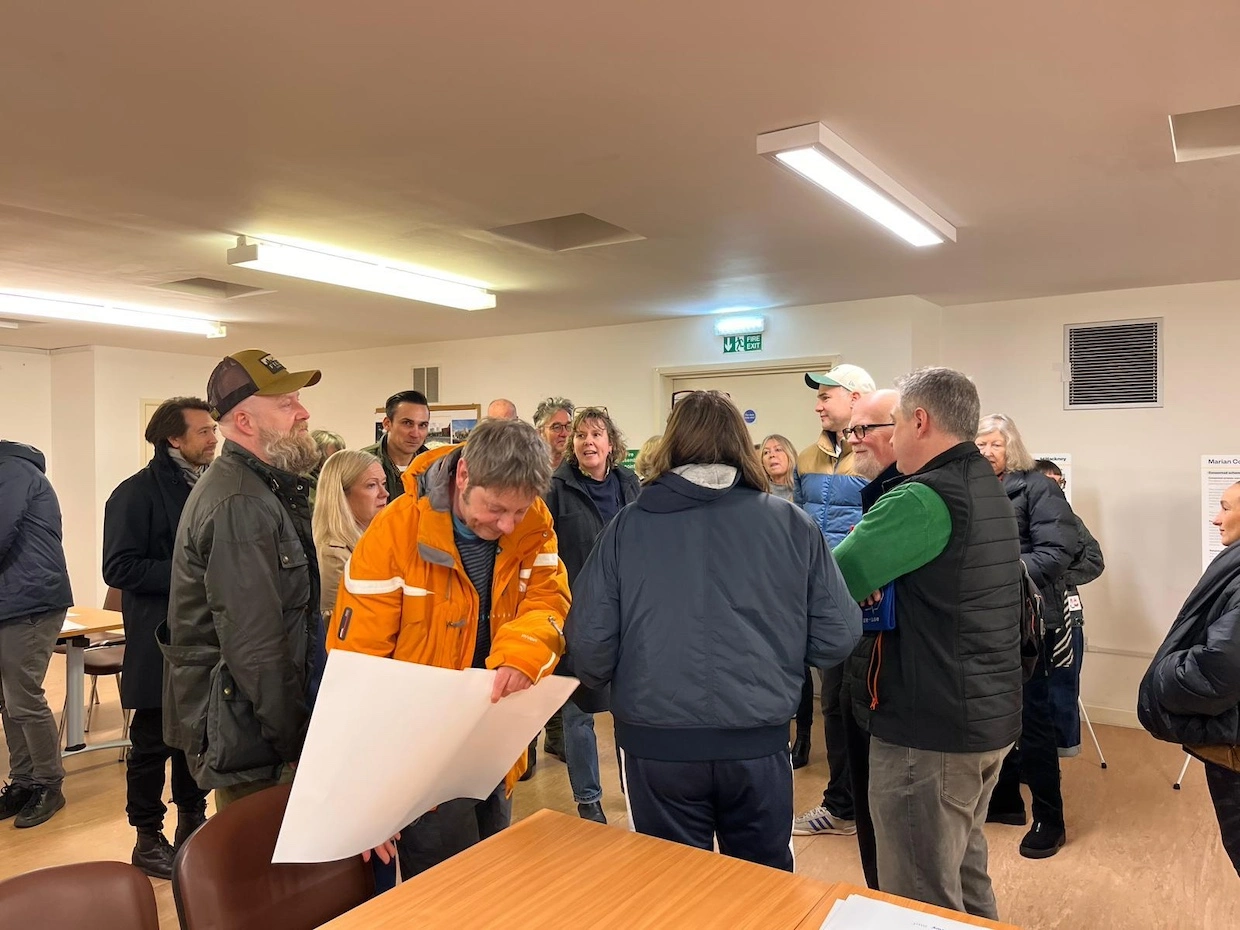
Residents at the council meeting last week. Photograph: LDRS
Hackney residents last week took control of a community meeting to accuse their council of “riding roughshod” over concerns about the redevelopment of a nearby housing estate.
On Thursday (January 22) Homerton locals came to the Hackney Council’s public showcase of updated regeneration plans for the crumbling Marian Court estate.
First mooted in 2017, the redevelopment is set to build 163 houses, replacing the 75 homes at Marian Court demolished in 2022 – though reducing the number of social rent homes by roughly 40%.
The project has stalled amid changing safety regulations and increasing financial pressure, but plans were revived in late November last year.
However, changes to the design – and the timing of the council’s announcement – caused alarm that they were being rushed through despite the “extraordinary” delays.
Speaking to the Local Democracy Reporting Service (LDRS), resident Lawrence Leason said the council gave locals “very little time to respond” to the updated plans before they put them before Hackney’s Planning Committee. For years many residents have raised a litany of concerns about the scheme, including a lack of affordable homes, a loss of light and privacy.
“After a lot of pressure they agreed not to submit and were persuaded to hold a follow up meeting to hear our concerns”, he said.
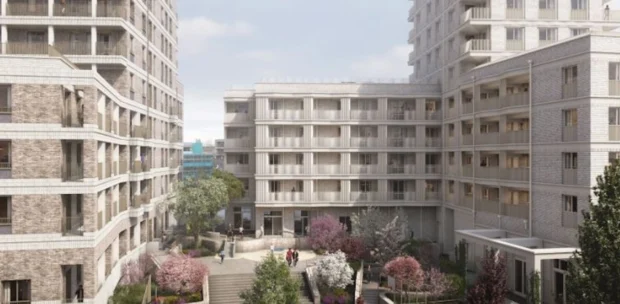
Plans for the changes to Marian Court. Photograph: Hackney Council / Levitt Bernstein / MUF Architecture/Art
As residents arrived at the meeting, a few came prepared to force the spotlight on their concerns that “substantial” changes were being “shoehorned” into the designs, resulting in “the worst of all possible worlds”.
“We’re not just NIMBY neighbours who are p***d off”, said Dr Hannah White, a resident. “We’re actually trying to give you really solid insights”. She told the LDRS the group “really had to fight” for the meeting, while 80 people wrote a letter to the council demanding the chance to be heard.
The law permits “minor material amendments” to be made to developments already greenlit by planning authorities.
Updates to the Marian Court designs included converting a series of townhouses into higher-density flats, and increasing the height of a tower by two and a half storeys. This led to fears of overshadowing, along with the addition of twelve balconies leading some to fear a loss of privacy. The amount of green space and new commercial units have also been cut.
At one point, a local architect ended up giving an impromptu presentation to officers which highlighted the changes over the course of the council’s development – arguing they were too significant to be considered “minor”.
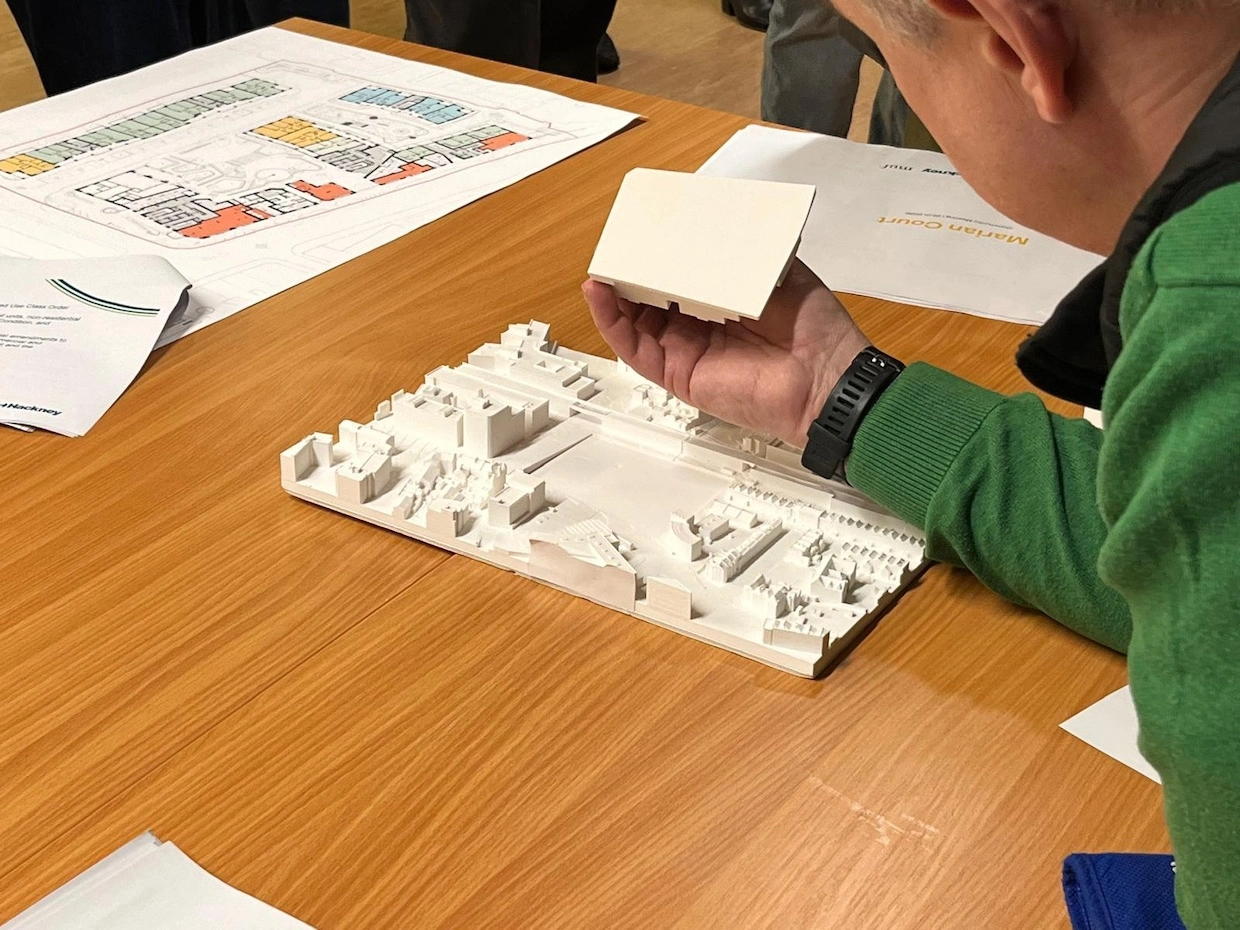
Model of the proposals for Marian Court. Photograph: LDRS
Several residents thus accused the council of breaking planning law, while also warning the changes risked a rise in anti-social behaviour due to “blind corners” and limited employment opportunities.
The council said these changes were made out of financial necessity. A spokesperson added that three workshops were held with police about ensuring the designs would prevent crime as much as possible.
The presentation – followed by a fiery debate – took place after a back-and-forth between Dr White and council officers. The LDRS understands residents told the council in advance they would bring a projector with the hopes of presenting their slideshow.
After officers resisted, Dr White asked everyone in the room to show hands if they wanted to see the presentation. An overwhelming majority said yes.
The council told the LDRS it had to change the designs so it could retain a similar number of homes while meeting new regulations which mandate second staircases in buildings over 18m tall. The Town Hall insisted that the changes were minor, and that since the original planning permission granted in 2020 was still active the local authority could adjust the designs without having to restart the planning approval process.
At the meeting, officers said the project had to change to survive amid “money stress” from inflation and spiralling construction costs, while trying to meet “strict” City Hall funding deadlines.
Also present was Hackney’s Deputy Mayor and regeneration chief, Cllr Guy Nicholson (Labour), who said the “political emphasis” in the borough was on housebuilding.
He said: “The reason is tonight there’ll be a couple of thousand kids in temporary accommodation who are Hackney residents. Over 700 people have registered an interest to actually take on one of the shared ownership homes that are in this scheme. That is 2,700 people”.
Defending the changes as “appropriate”, he added: “I appreciate that we’ve got to really reflect hard on height, massing and density. But I think what we’ve got to try and do here is not lose sight and come back. My weight is with the architects being able to respond to those challenges both for all of us who live around a site as well as for those of us who end up living in it”.
One resident fired back: “But isn’t it important to get it right?”, invoking the doomed Hackney Walk regeneration scheme.
If completed, the final phase of the regeneration of Bridge House and Marian Court will deliver 270 council homes, of which 84 will be for social rent, 120 for shared ownership and 66 for outright sale.
The estate made national headlines in 2021 after the council began knocking down the old housing blocks while a single mother and her four children remained living there.
The current scheme also includes a 187sqm community centre. The updated estate designs are set to go before a planning sub-committee at a later date.
Hackney’s social housing wait list comprises roughly 8,500 households.
Note: this article was amended on 28 January at 11.34am to include corrections by the LDRS.
Based on my experience with the RSG Meetings for the Welshpool House and Orwell Court garage “improvement”, Hackney Coucil are using the roughshod approach to quickly find a perceived solution to housing problems and financial woes. Since the Council can’t balance the books, might as well create more housing that puts current residents safety & health at risk, then tax the residents in an already densely populated area, in the hopes the Council will balance their books in 30 years. It’s a demonstrably poor approach the Council have taken.