
LTNs and bus lanes increase congestion in parts of London, TfL bosses admit
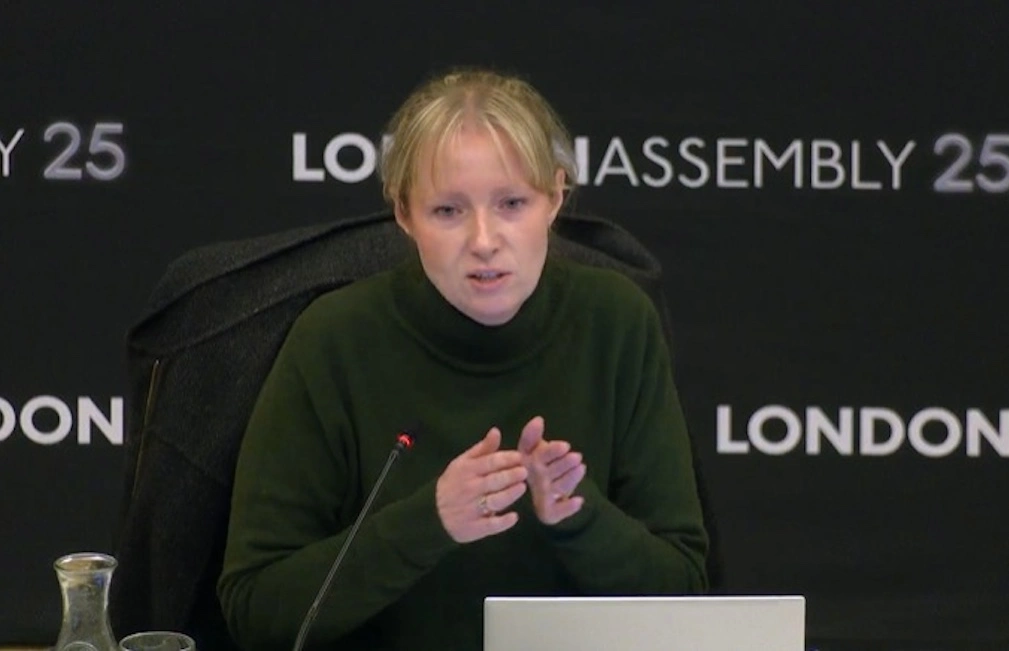
Christina Calderato, Director of Transport Strategy and Policy at TfL. Photograph: London Assembly
Extra bus lanes and Low Traffic Neighbourhoods (LTNs) have increased congestion for private cars on some of London’s streets, Transport for London (TfL) officials have admitted.
The transport body has been shifting policy away from accommodating private vehicle use as part of an overall aim to ensure 80 per cent of journeys made in the capital by 2041 are by walking, cycling or public transport.
This has involved carving off some road space for extra bus lanes and implementing around 100 LTNs across London, including 19 in Hackney.
Measures such as the Ultra Low Emission Zone (ULEZ) levy and the Congestion Charge Zone (CCZ) are also part of City Hall’s drive to reduce reliance on cars within the capital.
The mayor’s pathway to achieving Net Zero emissions by 2030 relies on a 27 per cent reduction in kilometres travelled by car.
Officials say that increased use of buses, trains and cycle lanes are far more efficient than private cars and will, overall, lead to less congestion and more importantly, faster journeys for those who rely on a private vehicle for business or accessibility reasons.
However, with bus speeds falling and London today topping the list of the world’s slowest driving capitals, the effectiveness of the measures have been questioned.
Earlier today (Wednesday 21 January) TfL officials admitted to the London Assembly Transport Committee that the implementation of LTNs has increased congestions in some areas.
Carl Eddleston, Director of Streets and Network Operations, said: “There are around 100 LTNs, mostly installed during the Covid period.

Carl Eddleston, Director of Streets and Network Operations at TfL. Photograph: London Assembly
“They provide significant safety and active travel benefits. Most of them are on borough roads, so they’re not a TfL decision.
“In some locations they have added congestion to the local area, but nearly all of them have been huge successes.
“We do need to continue to actively review them – there’s been a huge amount of listening to communities and tweaks to LTNs.”
He also suggested that some instances where cycleways have been installed have ended up reducing bus speeds, however, forcing TfL to “claw that back” through imposing further bus priority lanes elsewhere.
However, officials insisted that various policy decisions taken to shift the balance towards active travel and public transport would, in the long term, reduce congestion.
Christina Calderato, Director of Transport Strategy and Policy at TfL, acknowledged that one in every five trips made in London will still need to be made in a car, van or lorry, and that the network was working to ensure those journeys remained as efficient as possible.
“Everything we’re doing in shifting people towards more sustainable modes is aimed at traffic reduction,” she told Assembly Members.
“We need a functioning and effective road network for freights, taxis, private car trips – but we need to make sure that most of the time for most people, there is an attractive alternative.”
Ms Calderato also said London’s growing population meant that every bit of road space, especially towards the centre of the capital, needed to be used efficiently.
“We have seen car use and traffic continuing to decrease, but a change in the types vehicles used on the network. In a growing city, to accommodate more people and move them efficiently, we need to consider how best we use that road space.
“Some of that means reallocating that space towards more space-efficient modes such as buses. That does reduce the amount of space for general traffic in some locations where appropriate.
“You are still managing to move many more people through that corridor in the same amount of time.
“If it means we can accommodate greater people moving through the area, we’re for more people having a smoother, more reliable journey.”
She referred to TfL reallocating road space so that the maximum number of “switchable trips” that could be taken by car or public transport are done via the latter mode.
“There are trips that weren’t switchable before but there are now – our job is to keep doing that, if we create a new bus service, put a new Superloop in, we can reach that 80 per cent target,” she added.
the anti-LTN and anti public transport bias of Hackney Citizen is really tedious…
@Suzy the pro-LTN bias is inhertently anti public transport, that is one of the reasons long term residents of the borough and the city do not appreciate the parochial villiage attitudes of the policy proponents.
Hackney is in London, a great city of the world. It is not somewhere that appreciates manufactured standstill pollution, journeys and burning of hydrocarbons for optics or manufacture of disparate health, economic and equality outcomes.
Regards.
@suzy because Hackney Citizen doesn’t fit with your anti-motorist logic.. they must be biased, right? that makes no sense.
ltns have ruined hackney.
signed,
an actual working class hackney resident
This report highlights a necessary transition, not a policy failure. Yes, in the short term, reallocating road space can cause congestion in some areas — but that’s partly the point. If we want people to switch to walking, cycling, and public transport, we must make those options safe, direct, and attractive, even if it means making car use less convenient for shorter trips.
I really don’t understand why the Hackney Citizen is so pro-driver and pro-car. Given that 65% of the households of the borough have no access to a vehicle it’s very odd.
The headline on this story simply doesn’t match the actual content. “nearly all of them (LTNs) have been huge successes.”
@suleyman’s attempts to make this a class issue is ridiculous and unnecessarily divisive.
@sam there are many many long term residents who are 100% in favour of LTNs and reduced traffic