
Education expert condemns ‘worrying’ lack of response by Mossbourne after damning safeguarding report
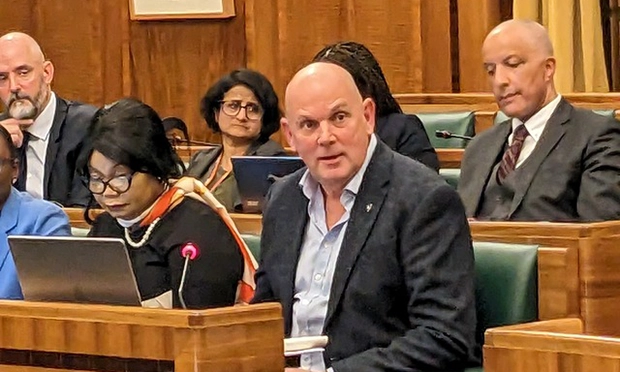
Independent safeguarding commissioner Jim Gamble. Photograph: Julia Gregory
A children’s safeguarding leader has urged trustees and governors to act on the findings of a damning report into safeguarding practices at one of Hackney’s top-performing secondary schools.
A Local Child Safeguarding Practice Review (LCSPR) into Mossbourne Victoria Park Academy (MVPA) – carried out by Hackney’s Director of Children’s Services, Sir Alan Wood, and published earlier this month – highlighted concerns about the school’s ‘punishment no matter what’ and ‘no excuses’ policies.
These, it found, disproportionately affect children with Special Educational Needs and Disabilities (SEND) and children from certain ethnic backgrounds, in particular Black boys, who are more likely to receive harsh sanctions.
In an interview with Tom Rogers of Teachers Talk Radio (TTR) on 20 December, Independent Safeguarding Children’s Commissioner for the City of London and Hackney, Jim Gamble, spoke of the methodology behind the review and encouraged school leaders to take its findings on board.
Gamble said there had been a “growing concern about the number of issues that were being raised by a range of parents, but also by some present and former teachers” in the lead-up to the review, prompting him to visit.
“I was impressed by the school, by the demeanour of the pupils,” he continued. “Within a couple of hours of leaving the school, I began getting more emails from parents who realised that I’d been there, and more and more concerns were being unpacked.
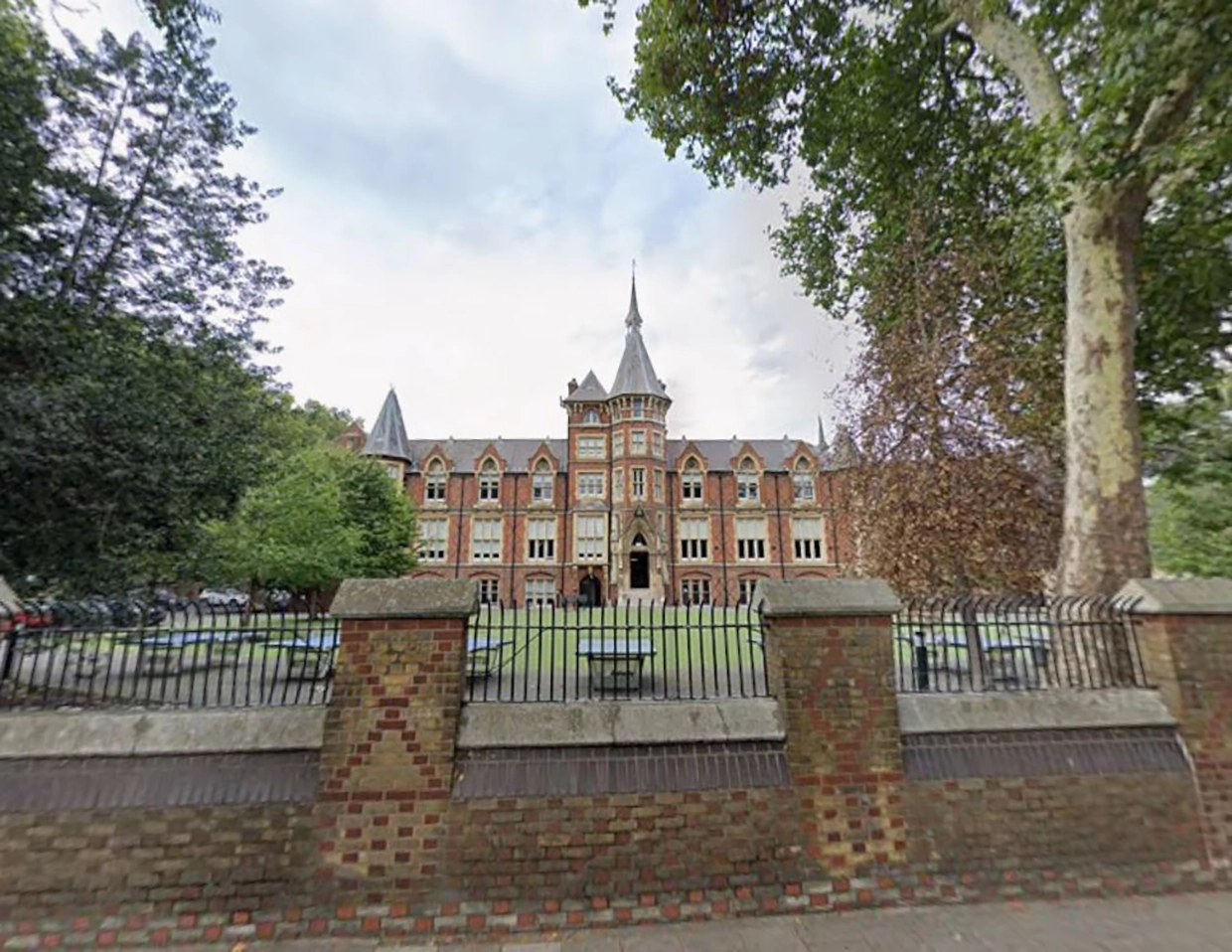
Mossbourne Victoria Park Academy. Photograph: Google
“Within a couple of days, a teacher reached out to me, explaining their concern and sharing an email with me that basically demonstrated that the day before I went in, teachers received an email telling them to remove children from the desks in the corridors.”
“Desking” at MVPA is the practice of ordering pupils to sit at desks in corridors as a sanction for what Sir Alan’s review described as “minor infractions”, or to restore order to the classroom.
One former MVPA student previously told the Citizen she had been ‘desked’ when she was having a panic attack. “It wasn’t punishment,” she explained. “It was in a hidden corridor, sort of away from people, but anyone could come by at any point.
“I was sitting there crying for a very long time, and I remember the general vibe being, ‘Oh, can you just be done with this now and go to class, and get back to learning?’”
Gamble continued: ”The concern for me was that when I went in that day, there was no mention of [desking], that there was an email prior to me going in that instructed staff to bring those children back into the back of the classroom so that they weren’t in the corridors.
“There could be 101 different reasons for that, but if you put it in the context of the efforts that have been made to address some of the consistent and persistent concerns that were being raised about the school, that too triggered an additional level of concern.”
These concerns, it was determined, “met the threshold” to warrant a review. “I went and met with the Chair of the Federation, Henry Colthurst,” Gamble continued. “I met Henry face to face with a number of other people. In fact, at the time, I didn’t realise he had the school lawyers in the room.
“I went in and said, ‘Look, let’s use this opportunity to collaborate. Let the school embrace the learning opportunity in this, so that we can work together to identify those areas where you’ve got strengths, and those areas where you could be even better by strengthening how you do what you do.’
“I left that meeting thinking we had achieved some agreement. […] And of course, that wasn’t the case.”
Gamble said the school instead hired solicitors to “act as the intermediary” in the investigation. “That was a real surprise, and I think it set a tone,” Gamble added.
“I’ve never seen that happen before, because at the end of the day, working with a statutory-based review like a CSP (Child Safeguarding Practice) is something that you’re required to do.
“To me, working together is about ensuring good use of public money […] and let’s face it, there isn’t enough money to support what teachers are doing across the board at the moment.
“So of course, I don’t want schools having to spend additional funds that might better be spent on their SEND cohort, on their teachers, or for educational purposes. So I don’t understand why they did that.”
Sir Alan’s review acknowledged the school’s “strong academic results”. However, the “climate of fear” some parents, pupils and teachers complained of needed to be addressed.
“Academic excellence that traumatises some pupils is not true excellence,” he wrote. “Discipline through fear is not preparing young people for life as confident, independent adults.”
According to one teacher Sir Alan spoke to, students’ mental health was treated as “secondary to their academic outcomes”, with some pupils terrified of speaking to staff and two claiming they had resorted to self-harm as a result of their treatment by certain teachers. One even said they felt they “didn’t deserve to live” because of their grades.

The report’s author, Sir Alan Wood CBE. Photograph: Supplied
Sir Alan added that certain students, including children with SEND or from some ethnic groups, were “disproportionately impacted by sanctions”, with Black boys in particular subjected to “racialised language and microaggressions”.
Sir Alan’s review also examined claims that teachers shouted at children inappropriately, to the point of humiliating them. It said the practice had become “so routine” it was “no longer recognised as harmful”.
One teacher, quoted in the review, told Sir Alan: “It was frequently made clear to teachers by the SLT (Senior Leadership Team) that empathy was considered a weakness, and that raising your voice was a requirement.
“The ‘tough love’ message was reinforced in assemblies and in person by imagery of a red fist and heart.”
“Of course, you have to raise your voice,” said Gamble. “But there’s a difference between raising your voice and shouting in a performative manner.”
He added: “One of the senior leaders said, ‘Well, yes, we do […] have this approach where we will shout in this performative manner at a child in front of other children, to make the point that this type of behaviour won’t be tolerated.’ What does that teach anyone? […] To some children, that type of shouting will be perceived as aggression.”
The review made a number of recommendations, including that the school’s “no excuses” attitude to behaviour should be replaced with “high expectations combined with genuine care, flexibility, and individualisation”.
“Senior leaders must acknowledge their defensive posture has prevented change,” Sir Alan wrote, adding that “mandatory reasonable adjustments for SEND” students should be introduced. He also encouraged trustees to become “active interrogators” of data regarding the disproportionality of punishments.
“Without transparency, there can be no accountability,” Sir Alan said.
However, Gamble said he has yet to see a response to the review’s recommendations from school leaders. “I haven’t seen the response from their governors [or] trustees, who are responsible for oversight, to say, ‘We accept these recommendations. We’re now moving at pace to address them.’
“I haven’t seen that, and that’s worrying when you get this type of learning.”
He added: “This isn’t an attack on schools. It’s not an attack on Mossbourne. They achieve fantastic academic outcomes. This is a concern about that school because of the weight, consistency and persistence of the concerns that are being raised against them.”
In a letter to parents and carers seen by the Citizen, sent out before the publication of the Local Child Safeguarding Practice Review, the principal of Mossbourne Victoria Park Academy, Matthew Toothe, said he wished to “reiterate the seriousness with which we take any concerns that are shared with us relating to the safety and wellbeing of our students”.
“I personally do not believe you will agree with the review’s conclusions because if you do you would not entrust your children to our care on a daily basis,” he added.
“The publication of the LCSPR is going to be challenging for our community. I continue to be extremely proud of the academy we have created together over the past 11 years; I feel privileged every day to lead and work with a wonderful group of colleagues; and my commitment to support and care for your children in the way you have trusted me to do is unwavering.”
The Citizen has contacted MVPA for comment.