
Hunger strikers ‘likely to die if David Lammy doesn’t agree to meeting’ say lawyers
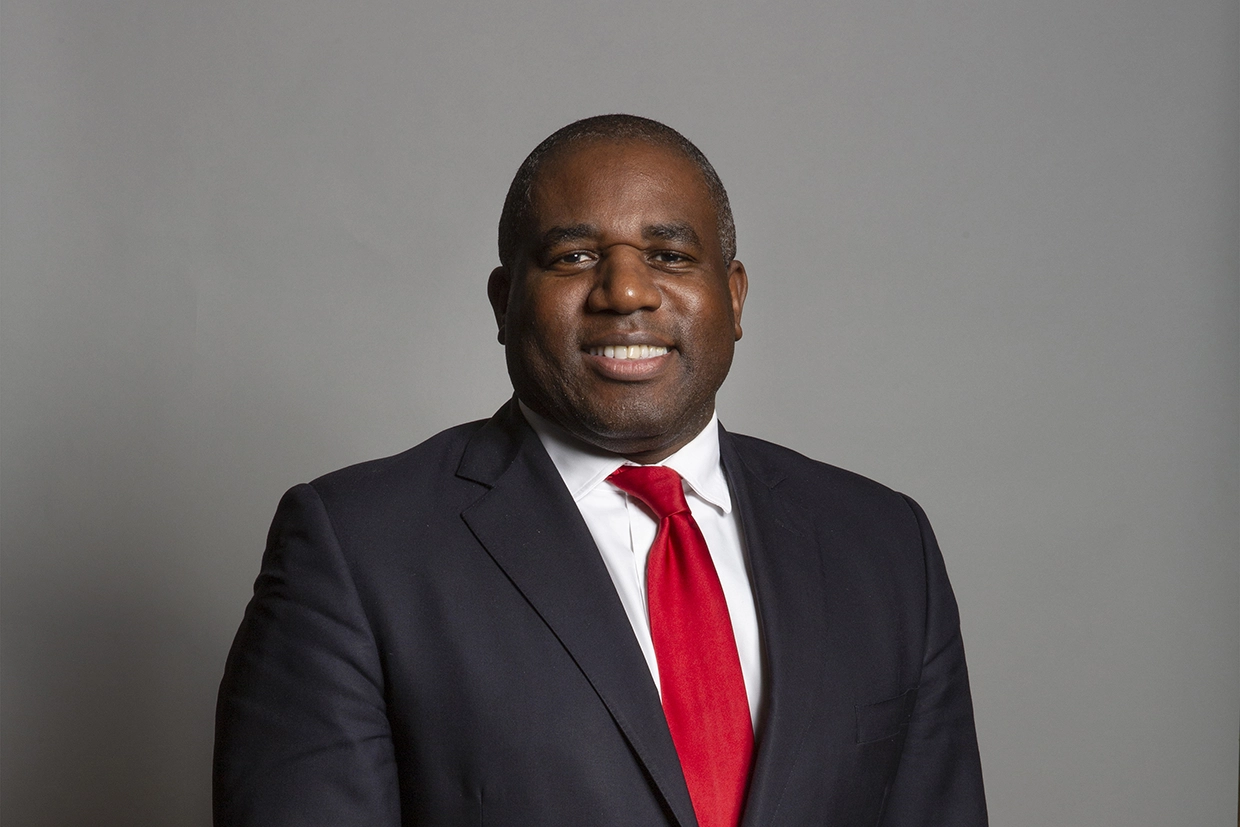
Lawyers representing the hunger strikers have urged justice secretary David Lammy to meet with them. Photograph: UK Parliament
Hunger strikers linked to Palestine Action are ‘likely to die’ if justice secretary David Lammy fails to intervene, their lawyers have said.
Six people jailed over alleged offences relating to the group – which was proscribed as a terrorist organisation by the UK government in July 2025 – are currently on hunger strike.
Solicitors representing the protesters wrote to the deputy prime minister last week urging him to agree to a meeting before their clients’ health reaches a point that is “beyond any possible recovery”.
Lammy – who is also MP for Tottenham, including, since the boundary change, parts of the Hackney wards of Brownswood and Woodberry Down – has so far refused the meeting.
The solicitors said in a second letter, dated Tuesday 16 December, that his reply the previous day “does not directly address our request”.
Two of the hunger strikers are on the 45th day of their protest. One of them is Qesser Zuhrah, currently awaiting trial at HMP Bronzefield in Surrey. According to the most recent letter, she suffered uncontrollable leg shaking several nights ago.
At one point she collapsed on the floor and went in and out of consciousness. She was also sick in an ambulance, which was only called after she begged for an entire night to be taken to hospital, the letter adds. Coventry South MP, Zarah Sultana, said Zuhrah was “critically ill” and at an “immediate” risk of dying.
Amy Gardiner-Gibson, also being held at HMP Bronzefield, is also on day 45 of her protest. Blood tests reveal she has low white and red blood cell counts and she is showing signs of cognitive decline.
The lawyers’ letter to Lammy, seen by the Guardian, says their clients’ death “is increasingly more than a mere possibility.” “It is a likelihood, particularly if the situation remains unresolved,” it reads.
“Given the context of our clients’ rapidly deteriorating health and the increasing likelihood that they might die as a result of this strike, this is highly concerning.”
The letter adds: “You are uniquely placed in that as a senior government minister with oversight of His Majesty’s prison service, you can bring about a resolution of the situation, such that the increasing deterioration of our clients’ health does not lead to their death.
“We make clear that our request for a meeting is in an effort to seek to resolve the immediate situation and prevent the loss of life. Unless you tell us, we cannot see any reason why you would not want to engage in this process.”
Two hunger strikers – Jon Cink and Umer Khalid – are understood to have ended their protest, one in hospital. Zuhrah and Gardiner-Gibson are among the six remaining – the others are Heba Muraisi, on day 44; Teuta Hoxha, on day 38; Kamran Ahmed, on day 37; and Lewie Chiaramello, who has diabetes, on day 12.
The protesters, who will have been imprisoned for more than a year before facing trial, are demanding immediate bail, an end to the proscription of Palestine Action and an end to alleged restrictions on their communications while in prison.
More than 50 MPs and peers have written to Lammy urging him to “act to prevent a catastrophe”.
One of these is Labour MP John McDonnell, who encouraged the justice secretary to meet with MPs to discuss the issue. Lammy’s lack of reply at the time was described by the speaker of the House of Commons, Lindsay Hoyle, as “totally unacceptable”.
Campaign groups have also called on Lammy to act. Activists from Shut The System today (Wednesday, 17 December) spray-painted the strikers’ demands on the Labour Hornsey and Friern Barnet offices in North London.
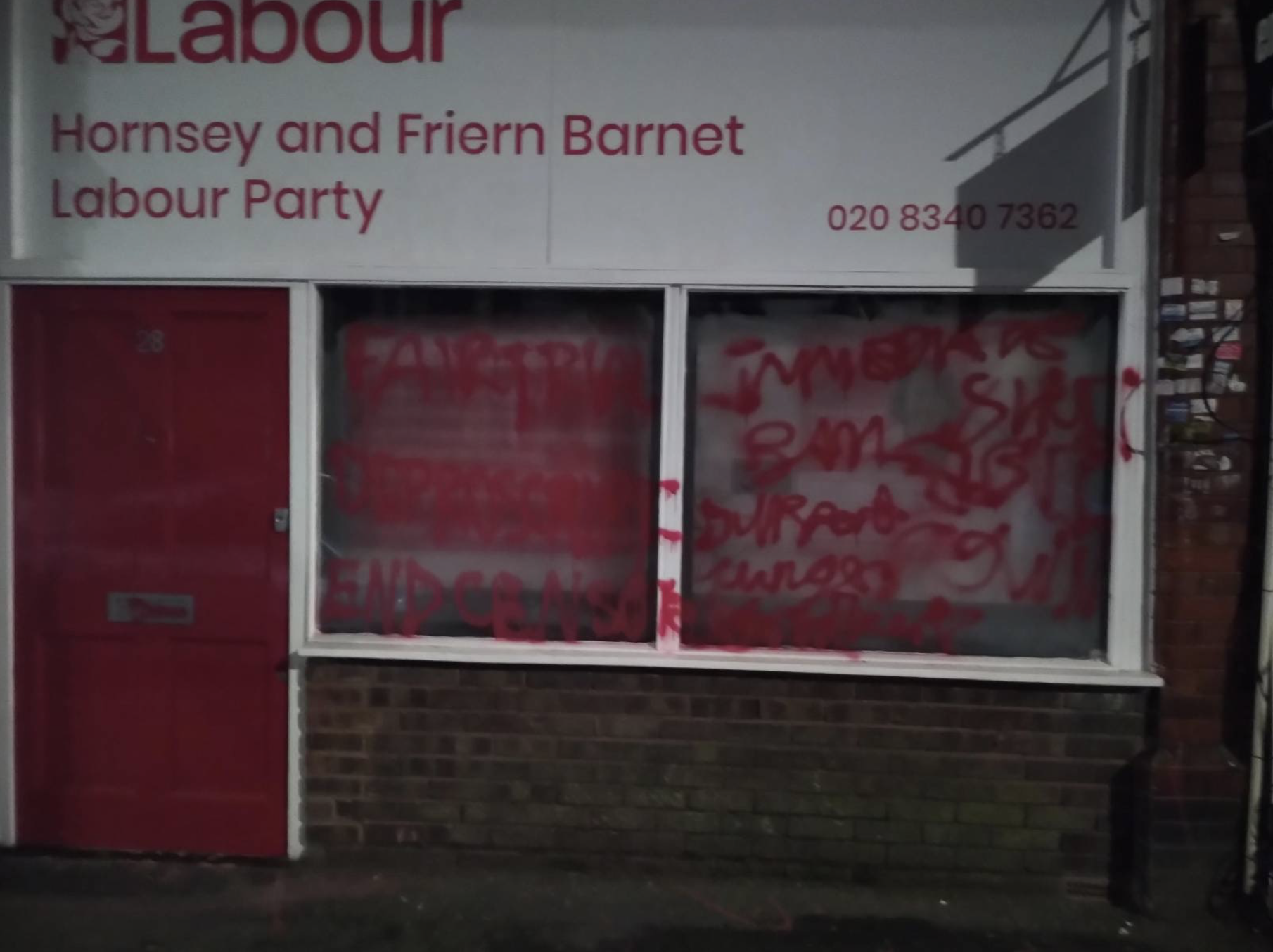
Activist graffiti on the Labour offices in Haringey. Photograph: Shut The System
A spokesperson from Shut The System said: “These blood-red words will forever be a stain on Labour for valuing imperialist profits above life. Labour’s refusal to engage with hunger strikers critically close to death yet again exposes the extreme lengths our leaders will go to – unless we stop them.”
Under the Terrorism Act 2000, it is now a criminal offence to be a member of Palestine Action, express support for the group, or wear an item of clothing that could arouse “reasonable suspicion” that a person is a member of or supports it.
The group was proscribed after several members broke into a military airfield in June and reportedly spray-painted two military aircraft. The group has been accused of other instances of property damage.
Supporters of the group have been campaigning to have the decision overturned. In addition, United Nations Human Rights Chief Volker Türk warned earlier this year the decision was a ‘misuse’ of counter-terrorism legislation.
“UK domestic counter-terrorism legislation defines terrorist acts broadly to include ‘serious damage to property,'” he said.
“But, according to international standards, terrorist acts should be confined to criminal acts intended to cause death or serious injury or to the taking of hostages, for purpose of intimidating a population or to compel a government to take a certain action or not.
“It misuses the gravity and impact of terrorism to expand it beyond those clear boundaries, to encompass further conduct that is already criminal under the law.”
A Ministry of Justice spokesperson said: “We continually assess prisoners’ wellbeing and will always take the appropriate action, including taking prisoners to hospital if they are assessed as needing treatment by a medical professional.
“His Majesty’s Prison and Probation Service has assured ministers that all cases of prisoner food refusal are being managed in accordance with the relevant policy and with appropriate medical assessment and support, consistent with prisoner rights.”
An HMP Bronzefield spokesperson said: “We cannot provide information about specific individuals however, we can confirm that all prisoners have full access to healthcare, including attendance at external medical facilities if needed.
“Any prisoner refusing food receives regular medical assessment and support from clinicians, as well as being offered mental health support. In addition, all prisoners are managed in line with the policies and procedures governing the entire UK prison estate.
“This includes specialist multi-agency processes, led by the government, to assess individual risks and security status. However, if any prisoner has specific complaints, we encourage them to raise them directly with the prison, as there are numerous channels available for addressing such concerns.”
The Citizen has contacted David Lammy for comment.
I live in Woodberry Down and am a lifelong Labour voter but I will never vote for Lammy or any of the Starmerite zionists on Hackney Council.