
Hackney children among most deprived in England as working parents ‘struggling to feed kids’
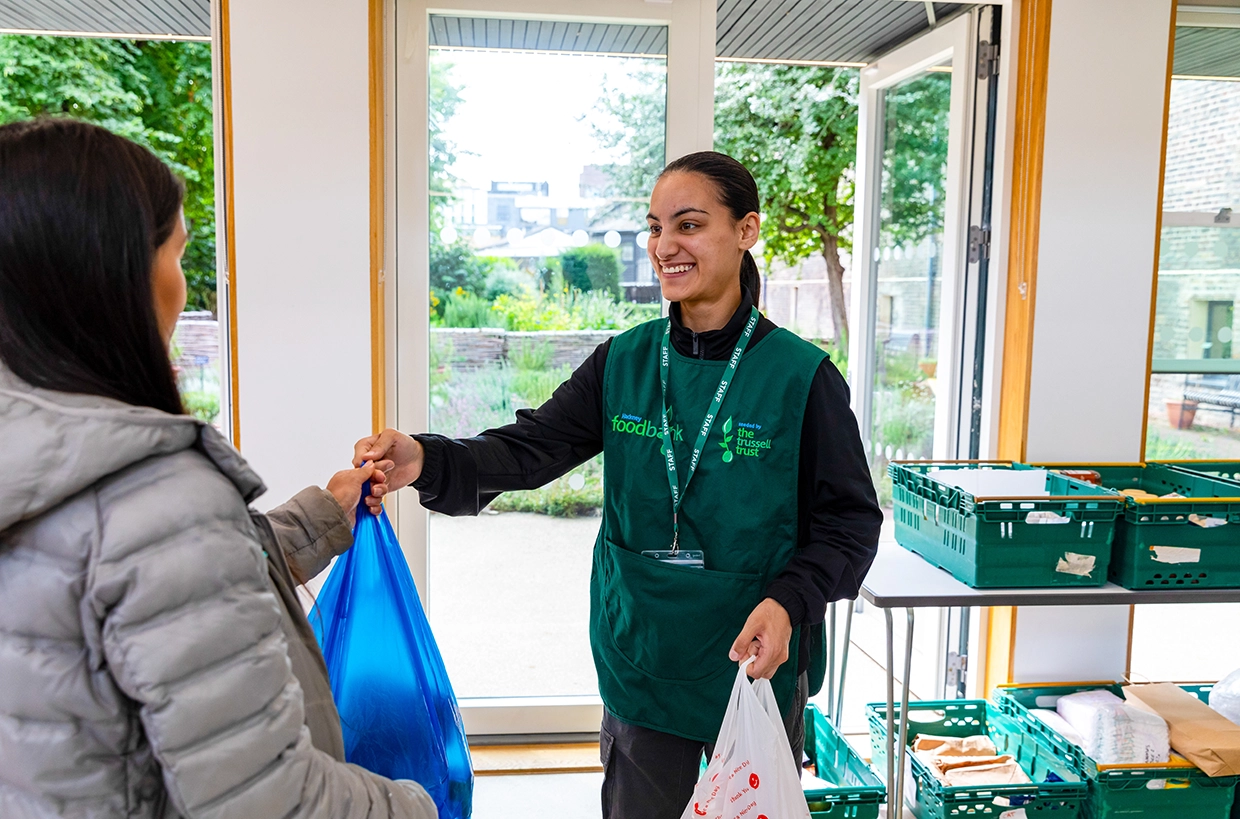
Bosses at Hackney Foodbank fear demand for their services will rise over Christmas. Photograph: Chris Lacey
Hackney children are among the most deprived in England, concerning government data has shown.
The English Indices of Deprivation Report 2025 found a staggering 64 per cent of children in Hackney are living in income-deprived households, making it the second-worst area for child deprivation in England – up from 22nd in 2019, when the last report was published.
The report by the Ministry of Housing, Communities & Local Government found only neighbouring Tower Hamlets had higher levels of child deprivation (71 per cent).
In some areas in the borough, including parts of Stamford Hill, the child deprivation rate is as high as 99 per cent.
Pat Fitzsimons, CEO of Hackney Foodbank, said: “This report makes for grim reading – it reveals levels of deprivation among children have worsened considerably in Hackney in recent years.
“We see first-hand here at the food bank what the impact of child poverty is. It’s children living in damp, cramped, unsuitable housing, it’s malnutrition, parents going hungry so their children can eat, and we believe it’s having an enormous detrimental impact on child health and mental health.”
Hackney also placed second for income deprivation among older people, with just shy of 55 per cent of the borough’s residents over 60 living in income-deprived households.
Overall, 40 per cent of the borough’s population are living in income-deprived households – the third-highest rate in England.
Fitzsimons said demand at the food bank has risen 450 per cent since the government’s last Indices of Deprivation report six years ago. She said high rents are a “major factor” contributing towards deprivation across the borough, where a two-bed flat costs £2,400 per month to rent on average.
Jenna Fansa, head of communications and fundraising at Hackney Foodbank, added that a lot of the parents using the service are working but still can’t afford what they need. “Because rents are so high here in Hackney, people [are] living in unfit accommodation where there’s not really enough room for the children,” she said.
“It’s upsetting to see parents who are struggling to feed their children. Often it’s parents who go without food so that their children can eat, they’ll always put their kids first.
“We want to make sure everyone in the household has enough to eat.”
To combat the crisis, the food bank operates from Monday to Saturday from multiple locations around the borough and even runs a mobile food bank – the Hackney Giving Van.
The service currently feeds around 750 people a week – a 20 per cent increase on last year and up from just 164 in 2019. The ever-increasing demand led food bank bosses in September to make the difficult decision to stop helping vulnerable people living outside of Hackney.
With temperatures dropping and Christmas approaching, Fansa anticipates the number of people using the service could increase further. Staff predict up to 1,000 people a week could make use of the food bank during the winter peak.
“The numbers have skyrocketed,” Fansa added. “Especially with winter coming up, I think there will be a lot of families who are struggling with the cost of heating their homes. That’s quite a worry.”
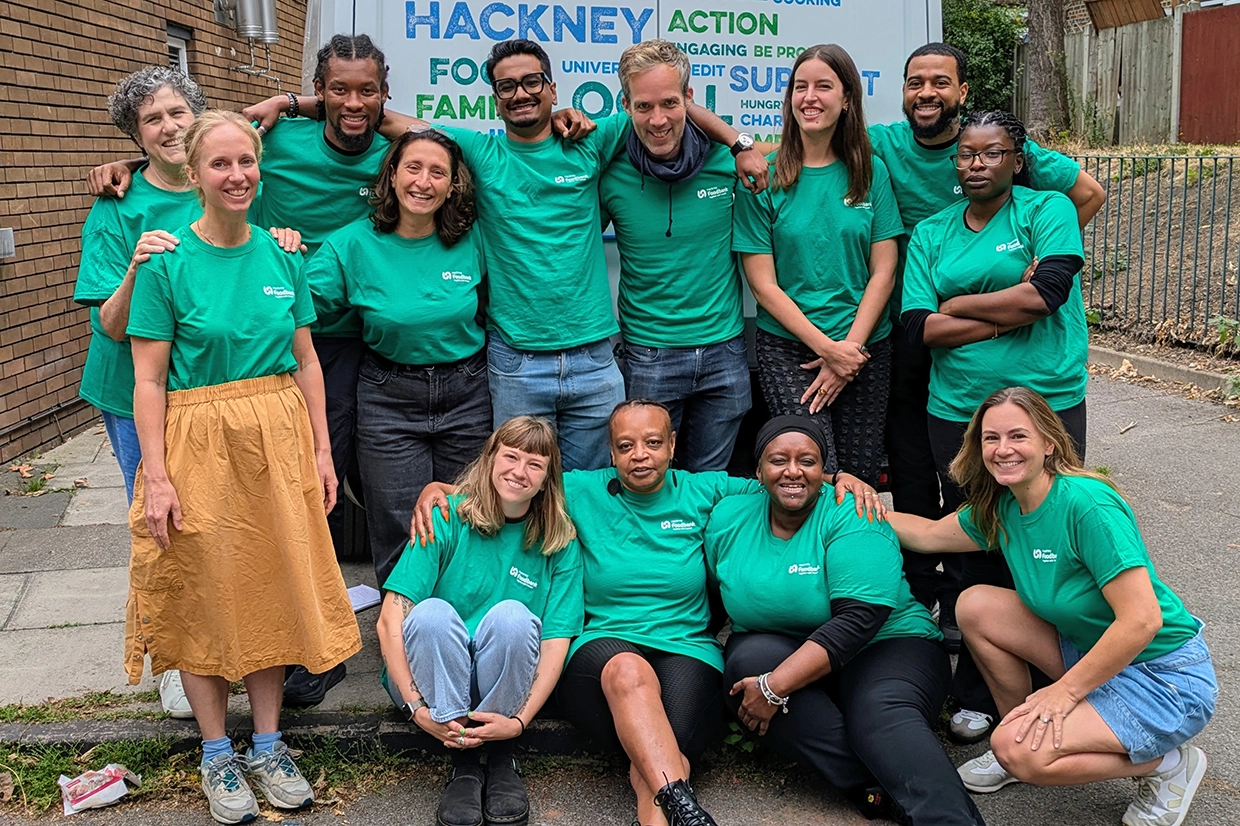
The team at Hackney Foodbank. Photograph: Hackney Foodbank
Struggling parents who celebrate Christmas will be wondering how they will be able to afford presents for their children, while those with primary school-aged children or secondary-aged children eligible for free school meals will also have to foot the bill for lunch during the school holidays.
“What we see in the school holidays is that parents really struggle with the cost of providing that extra meal for their children,” Fansa said.
To combat the rising costs families face at this time of year, the food bank runs a school holiday lunch support scheme, giving parents supermarket vouchers so they can choose their own food.
Christmas hampers will be available to those who use the service – the food bank also provides hampers for Ramadan and Passover – and parents can also access gift vouchers so they can buy their children a present.
But with demand set to increase over the winter months, Fansa said the food bank “always needs more donations” – especially now.
“We welcome the food donations that we get, but the best way people can support a food bank is to give them money,” she added.
“We’re able to buy what we need when we need it, and we can buy [food] at wholesale prices, so we can buy it much, much cheaper than people can buy it at the supermarket.
“With winter coming, it’s really tough.”
The charity has now launched a fundraising campaign in a bid to meet the anticipated increased demand. You can donate here.
Hackney Foodbank isn’t the only organisation offering relief to families in need.
Across the borough, free and pay-what-you-can hot meal services run on different days throughout the week, many of which are listed by the Shoreditch Trust on its website.
Humdingers is one such business, running a soup kitchen Mondays to Wednesdays and Fridays from 5pm to 7pm.
Founder Robert Hunnigher told the Citizen the soup kitchen was initially open just one day a week. “Suddenly, lockdown happened and I thought, ‘we’re going to have to take this four days a week,’” he added.
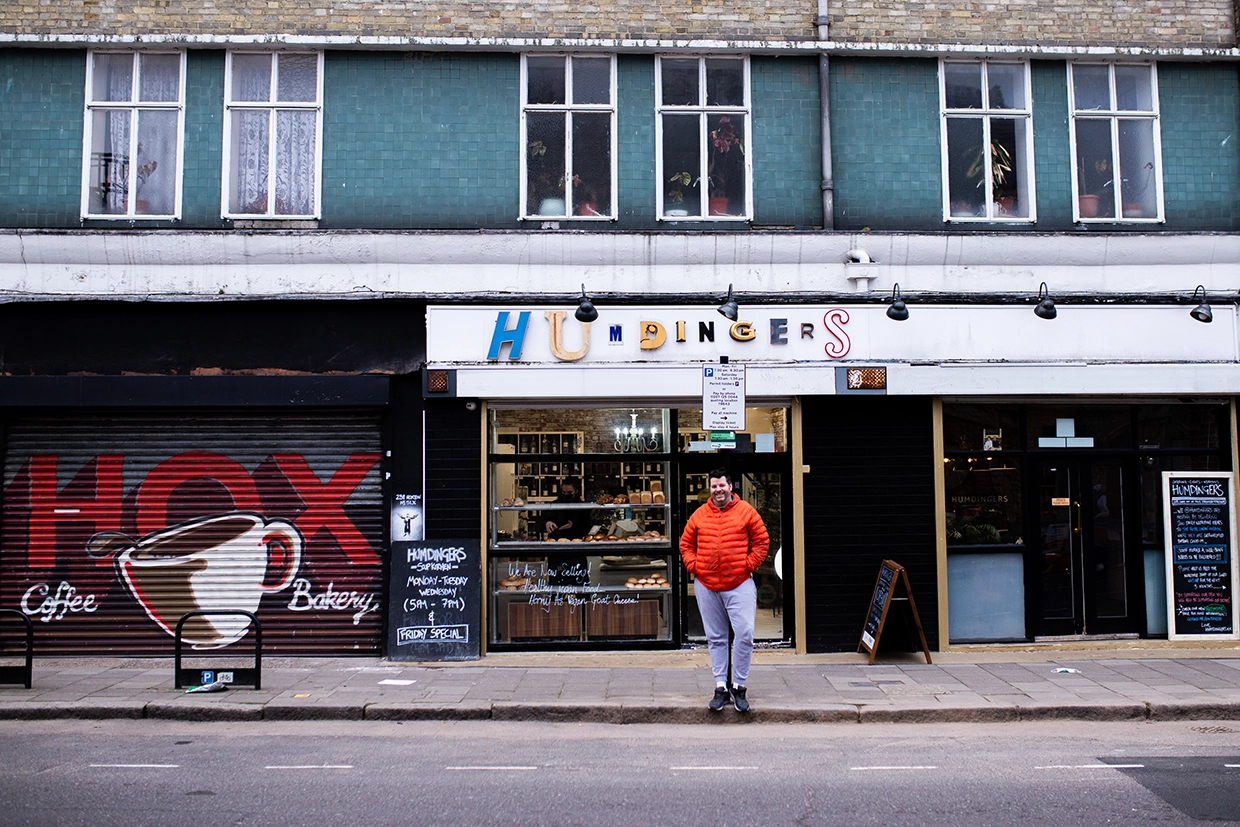
Robert Hunnigher, founder of Humdinger’s which runs a soup kitchen four times a week. Photograph: Katarina Nichol
This year, the company has launched a scheme that will see them donate one Christmas meal for every one they sell. Hunningher estimates they gave away more than 1000 meals last Christmas.
“On the 23rd and 24th we’ll be delivering the whole Christmas meal, so all you have to do is heat it up on the morning,” he explained.
“The more of those we sell, the more Christmas meals we can give away.”
For young families in need, the Hackney Children & Baby Bank provides essential items to those with children up to the age of twelve.
These include clothes, shoes, toys, toiletries, nappies and buggies, as well as formula and feeding items.
Founded in 2020, the charity was set up in response to the strain put on vulnerable families during the pandemic.
“We started life as the E5 Baby & Family Bank, a small group of volunteers offering clothing packs and baby equipment to families in need,” its website states.
Since then, the service has helped more than 5,000 children in need and their families.
The website adds: “Our families face a wide range of challenges; many are single parents, have fled domestic violence or faced homelessness.
“Other families are refugees or asylum seekers, facing the challenge of rebuilding their lives with limited support.”
The NHS’ Healthy Start scheme is available to people over 10 weeks pregnant or who have at least one child under four and receive qualifying benefits including Universal Credit, Income Support, or Child Tax Credit.
If you are under 18 and more than 10 weeks pregnant you are eligible for the scheme regardless of whether you receive benefits.
Those who are approved receive a Healthy Start card which they can use to buy healthy food and milk and to collect free vitamins. The card is topped up every four weeks.
Minister for Local Government and Homelessness, Alison McGovern, said her department is investing £500 million into children’s development, which will include extending free school meals and “ensuring the poorest don’t go hungry in the holidays.”
In addition, a £1 billion crisis support package will “restore prosperity across the UK.”
She said: “These statistics are a damning indictment of a system that has left some communities broken, councils pushed to a financial cliff edge and residents facing the brunt of service cuts.”
“They tell us that in some of the most deprived areas, previous policies had barely begun to break the cycle of deprivation, health inequality, stagnant local growth and, most importantly, loss of hope.
“But we are restoring that hope – our devolution revolution is putting communities back in control – no political power plays or dictates from Whitehall. Instead, real people that live and breathe their region will drive our decade of national renewal.”
What is income deprivation and how is it measured?
According to the UK Data Service, the Indices of Deprivation Report measures deprivation on a “relative rather than an absolute scale.” This means “a neighbourhood ranked 100th is more deprived then a neighbourhood ranked 200th, but this does not mean it is twice as deprived.”
Income deprivation measures the ‘proportion of the population experiencing deprivation relating to low income.’ The definition of low income used includes both people who are out of work and those who are in work but have low earnings.
It is one of seven ‘domains of deprivation’ which can be used to compile an overall picture of deprivation in an area or nation. The other six are employment, education, health, crime, barriers to housing and services, and living environment.
Hackney residents can find out more and access support from Hackney Foodbank here and Hackney Children & Baby Bank here.
Learn more about the NHS Healthy Start scheme here.