
Hackney’s once-famous forgotten family to be rediscovered as book republished with a twist
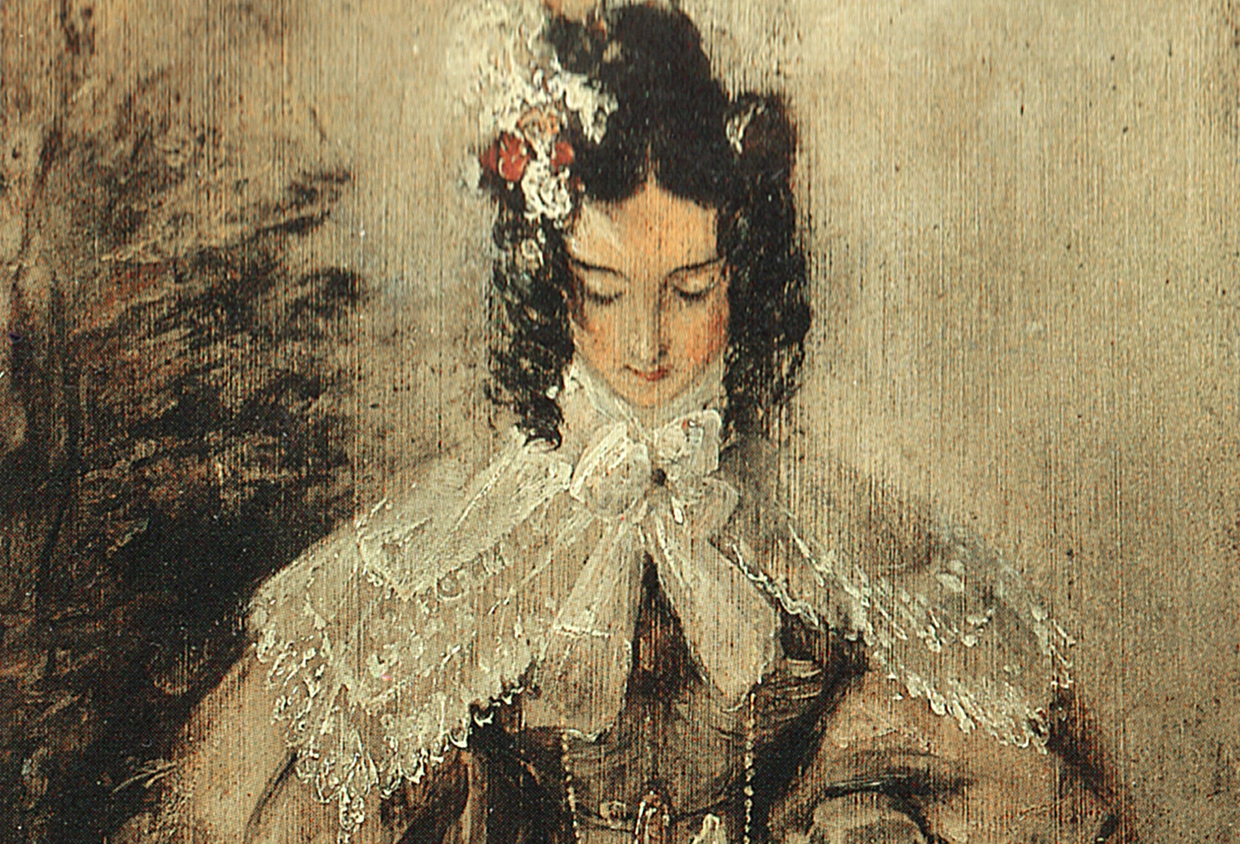
Jane Loddiges’ grandfather was one of Hackney’s most famous businessmen, but her story is all but forgotten. Photograph: E.W.Cooke 1811-1880 by John Munday, 1996
Hackney is known for its lush, green spaces – from London Fields and Haggerston Park in the south, to the Hackney Marshes in the east, and Clissold Park and Woodberry Wetlands to the northwest.
But the borough’s horticultural history goes beyond its parks. Suggestions of Hackney’s botanical links can be found outside the town hall, where two large palm trees stand seemingly out of place.
Walk five minutes south along Mare Street and you’ll come to Loddiges Road, another clue about this lesser-known history.
Joachim Conrad Loddiges was “London’s leading nurseryman for the first four decades of the 19th century.” Born in Lower Saxony, Germany, in 1738, he relocated to Hackney – then a village outside of London – at the age of 19.
He and his family set up a plant nursery on Mare Street and it soon spanned multiple acres, covering the current site of the town hall and Urswick School on Paragon Road. There, they grew palms and ferns and, it is believed, became the first British company to cultivate orchids commercially.
“There was a period in the 18th century when everyone was obsessed with plants, particularly orchids and also ferns – people went nuts,” Jan Fuscoe, who has been involved in the project, told the Citizen.
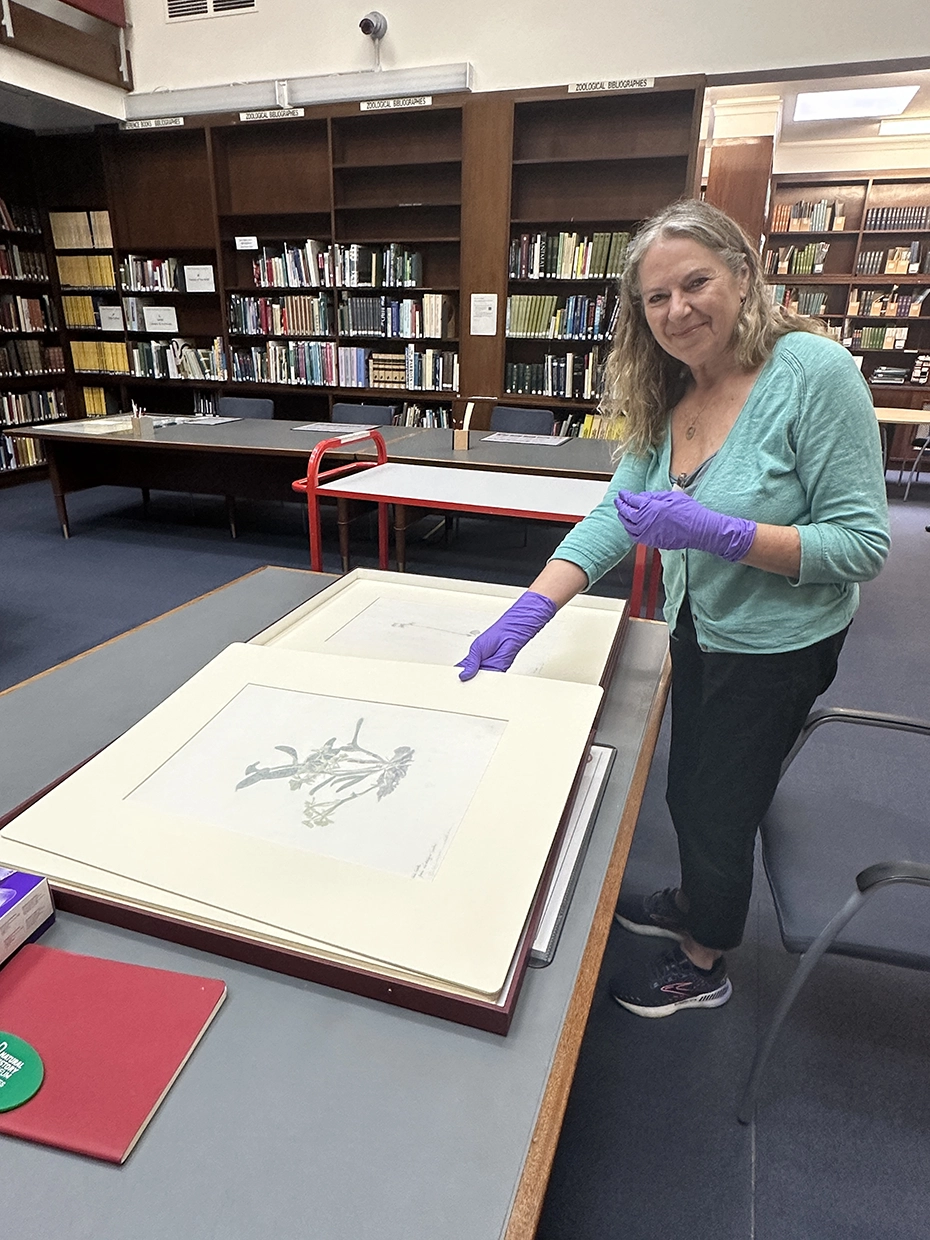
Jan Fuscoe at the Natural History Museum. Photograph: Marcia Teusink
His son, George Loddiges, later introduced steam-heated hothouses with a revolutionary artificial rain system, recreating the tropical environment needed for their plants to thrive.
George also launched The Botanical Cabinet, a regular magazine which provided information about the plants on offer, including cultivation tips and detailed illustrations.
The Loddiges’ work was documented in the book Loddiges of Hackney, the Largest Hothouse in the World by David Solman, published by the Hackney Society in 1995. To this day, it is one of the society’s most popular books.
Now, the book is set to be republished with a twist – it will spotlight the work of the family’s women, including George’s daughter, Jane Loddiges.
While many of the magazine’s illustrations were drawn by George and Jane’s husband, Edward Cooke – a botanist and artist – it is now known Jane also contributed to the publication.
Fuscoe added: “I started looking and discovered there were paintings at the Natural History Museum that were attributed to Miss E Cooke, and I thought, ‘That’s probably Jane Loddiges.’
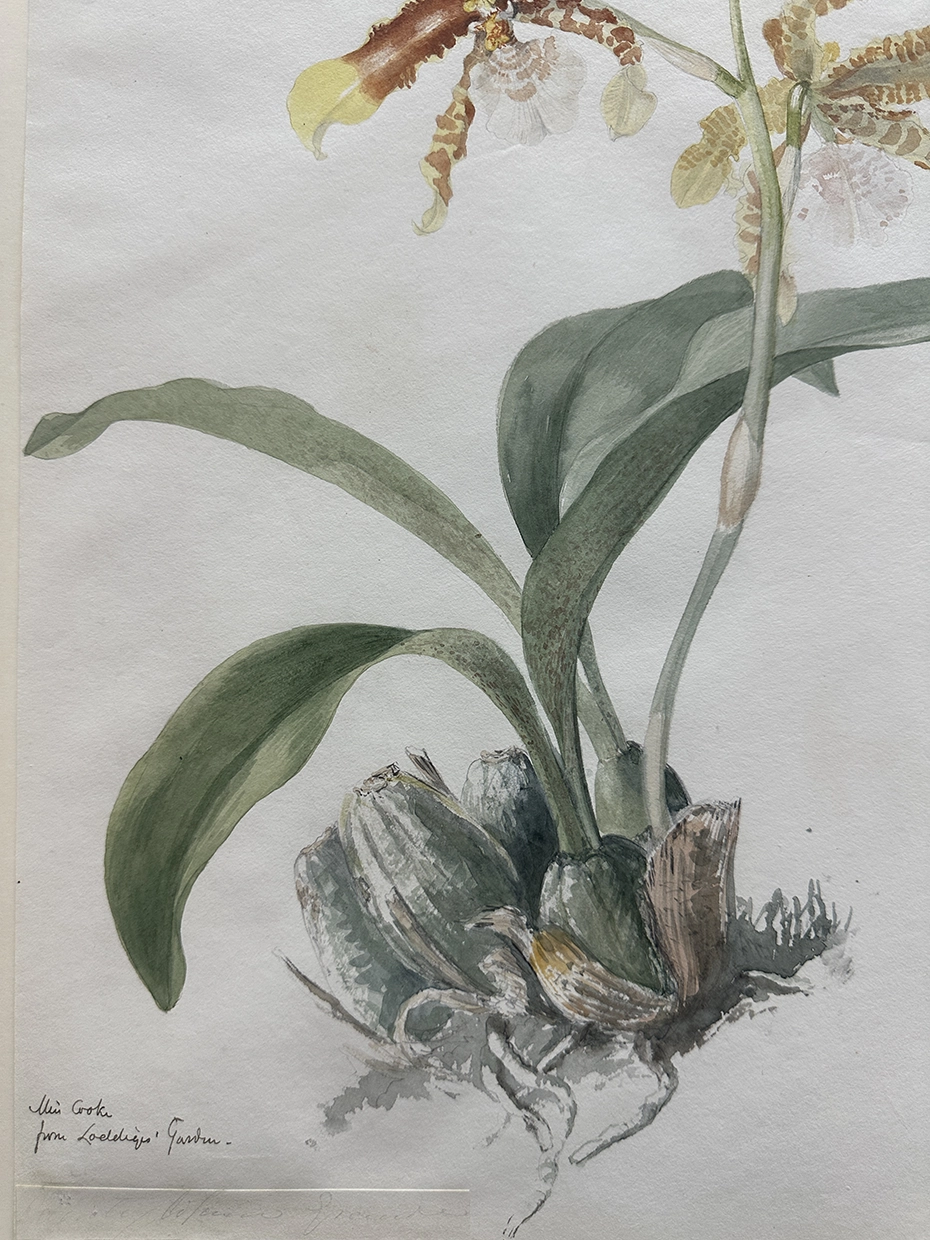
Illustration of an orchid on display at the Natural History Museum, which Fuscoe believes is bu Jane Loddiges. Photograph: Marcia Teusink
“I think many of those paintings [are from] the magazine that the Loddiges used to print.”
Another revelation about the family’s history was made by Tricia O’Connell nearly 20 years ago.
During her studies at the Byam Shaw School of Art, Ms O’Connell discovered her mother – née Cooke – was Jane and Edward’s great-great-granddaughter.
Ms O’Connell wrote about her heritage for the Hackney Society’s magazine in 2006, but they “didn’t have any way of contacting her” after the piece was published, according to Fuscoe.
It is hoped that by republishing the book, the society will preserve the Loddiges’ history, something Fuscoe says is already disappearing in Hackney – save for the road named after them.
Researchers still believe there are more family secrets left to uncover. “One of the people working on this project believes Jane Loddiges kept some diaries,” Fuscoe added.
“We haven’t actually discovered where they are yet. We’re just trying to discover more about the women.
“The idea with the book is to link Hackney with its horticultural past, but also to give a shout-out to some of the women who were involved.”
One of the Loddiges ‘family secrets’ is connected to some of the sources from which they obtained their stock and it is curious to me that very few people mention it despite how obviously out of place tropical plants were in an 18th and 19th century East London climate.
It is documented fact that botanic gardens “have contributed significantly to the
colonial expansion of the West through active participation in the transfer of protected plants and their scientific development as plantation crops for the tropical colonies of the ‘mother country’.” (Baber & Weber, 2016). The Loddiges family both traded in and introduced exotic plants, trees, shrubs, ferns, palms and orchids to the UK, and furthered the documentation of botanical knowledge.
From 1818 to 1833 Conrad Loddiges and Sons published 20 issues of The Botanical Cabinet, a magazine consisting of over 1000 coloured plates of rare plants that were introduced from around the world into the nursery’s gardens and hothouses.
George Loddiges also connected the nursery into the scientific circles of the day, becoming a Fellow of the Microscopical Society, Fellow of the Linnean Society, Fellow of the Horticultural Society, and Fellow of the Zoological Society in London. Institutions which played a critical role in generating and disseminating scientific knowledge, which facilitated transfers of energy, manpower and capital on a worldwide basis and at an unprecedented scale.
Given the timeframe, it should not be a surprise to learn then that botanic gardens in general underwent a period of intense activity allied to Western colonial expansion (Brockway, 1979). The practice of transporting seeds and plants was also, at least in part, connected to the transatlantic trafficking of enslaved Africans. British naturalists such as James Petiver and Dru Drury employed surgeons, most of whom were trained in botany, on ships transporting the enslaved as proxy collectors (https://www.noemamag.com/the-long-shadow-of-colonial-science/). Training enslaved people as collectors also became a practice in some parts. “Brutes are botanists by instinct,” the British planter in Jamaica Edward Long wrote in 1774 (Long, 1774)
As far as is known, the Loddiges as a family were not directly connected to the enslavement and trafficking of Africans, but their seed supply was in part reliant on a series of individuals that were either owners of ships transporting the enslaved, fierce imperialists or participants in colonial expeditions.
For example, a plant titled ‘Erica Blanda’ was gifted to Loddiges by a man named George Hibbert. Hibbert was both a ship owner and enslaver, a leading figure in the pro-slavery lobby and the chairman of the Society for West Indian Merchants (https://en.wikipedia.org/wiki/George_Hibbert). He had a passion for botany, funding
scientific expeditions around the world to collect plant specimens. Similarly, the plant called ‘Banksia Marginata’ was gifted by Joseph Banks, president of the Royal Society. Banks firmly
advocated the strategic use of colonisation and enslavement in the collection of plant specimens. He also promoted the use of “Botany Bay” as a penal colony.
Alongside these uncomfortably close connections between 19th century botany and the horrors of enslavement and colonisation, it is also important to acknowledge the Eurocentric erasure of indigenous and enslaved knowledges that accompanied these collecting and transporting activities.
John Conrad Loddiges was described in the ‘Botanical Magazine’ as responsible for introducing ‘many rare exotics into our gardens’ and for ‘the preservation and propagation of more that would have otherwise been lost’ (Moss, 2018). Alongside this, many of the illustrations in the botanical magazine were drawn from Loddiges’ nursery. So valuable were his contributions that when he allowed a newly discovered flower to be illustrated in the magazine, John Sims decided to name the flower in his honour (the Oxalis-Leaved Loddigesia Oxalidifolia). This is a prime, but sadly not isolated example of a process of erasure and replacement which characterised the European colonial endeavour.
Choosing to use Latin names rather than those given to the plants in their native territories forms part of a process in which the histories and knowledges of the enslaved and indigenous people who were sometimes instrumental in inspiring and enabling the development of Western scientific botanical knowledges were systematically erased. Loddiges as a leader in his field can and should be considered an architect of this process of erasure and recontextualisation of botanical knowledge within an exclusively European frame.
So what am I really saying?
Whilst there is no doubt that the Loddiges family made a notable contribution to botanical knowledge in Britain (and beyond), when we remember and report this history, let’s not disconnect this from the brutal and extractive realities of key aspects of the family’s business, especially as the connections to Britain’s colonial endeavours are so obvious. After all, how many tropical plants do we think were native to Hackney at the time?
(Note: Much of this post is basically an abridged version of the section on Loddiges I found in a preliminary research document written by Researcher Danielle Vaughan for Hackney Archives. Whilst some links to references are sadly broken, its a useful read as an entry into this aspect of Loddiges’ history – https://drive.google.com/file/d/1iM7FvwbGSZQCNRHJaK7WBjgWmmF3b2CE/view?usp=drive_link)
I asked Google AI a couple of history questions. George and William Loddiges, who ran the nursery in its heyday both married into the family of a Wesleyan Methodist (the Rev. Creighton). I asked AI “Did the early C19th Rev James Creighton of Hackney support the abolition of slavery ?” and its answer was: “Yes, Rev. James Creighton of Hackney was known to be an advocate for the abolition of slavery, actively supporting the movement during the early 19th century. His efforts contributed to the broader campaign against slavery in Britain.” Since another Loddiges family member also married into a Wesleyan Methodist family, I asked a more general question of AI: “Did the early C19th methodist community of Hackney support the abolition of slavery ?” and Google AI answered: “Yes, the early 19th-century Methodist community in Hackney was involved in the abolition movement, with leaders like John Wesley advocating against slavery and promoting its abolition. The church’s commitment to social justice and the moral imperative to oppose slavery were significant aspects of its mission during that time.” I then posed a third question to Google AI to ask whether some early C19th botanists were against slavery; it answered: “Yes, some early 19th-century botanists were against slavery. Notably, many abolitionists, including botanists, were motivated by moral and ethical beliefs, often influenced by the Enlightenment and religious convictions, which led them to oppose the slave trade and advocate for abolition”, its examples were (i) Joseph Banks (advocated for the abolition of slavery; suppported the rights of indiginous peoples); (ii) William Hooker (opposed slavery and supported ablitionist movements); and (iii) John Lindley (actively campaigned against slavery and wrote about its moral implications): the AI answer continued “Many botanists were influenced by the moral arguments against slavery, which were gaining traction during this period. The enlightenment ideals emphasised human rights and dignity, leaading some botanists to align their scientific prsuits with social justice”. These AI answers trawl a lot of historical data, and seem to paint a fairly clued-up picture of a very progressive Hackney community, of which the Loddiges family were an integral part… food for thought ?
Food for thought definitely – multiple things can be true at the same time!
Whilst it is true that Hackney was home to a ‘progressive community’ that maybe included botanists, it is simultaneously true that the business of an 18th century botanist was also to some degree reliant on British imperialism and the power relationships inherent to that situation. My point was to acknowledge this so someone reading the main piece could also consider these connections if they hadn’t already. Now the connections between botany and abolition can also form a part of readers’ thinking – collaborative history is a beautiful thing 🙂
We can maybe leave debates about AI and biases for another day – my purpose here is not to argue or sow seeds of division but rather to encourage exposure to a range of different perspectives and I therefore welcome your very useful contribution.
Thank you (sincerely) for adding more ‘food’ for us all to take into account.
Many thanks for both comments. The Hackney Society is planning to include some information on the subject of slavery, and its connection to the import of exotic plants, in the next edition of David Solman’s book. We hope to bring Hackney’s horticultural history right up to today. We are also hoping that one of HC’s readers might be able to help us track down Tricia O’Connell as her connection to the family could make for a very interesting personal take on the Loddiges story.
Do you have any information connecting the Loddiges lads or their father with Queen Charlotte, wife of George111, who also came over from Hanover? The family story is that one of this family was a lady in waiting to the then queen….
Angela Medlycott
( descendant of Ann Creighton)