
Council’s £51 million budget gap likely to increase if ‘Fair Funding Review’ left unchanged
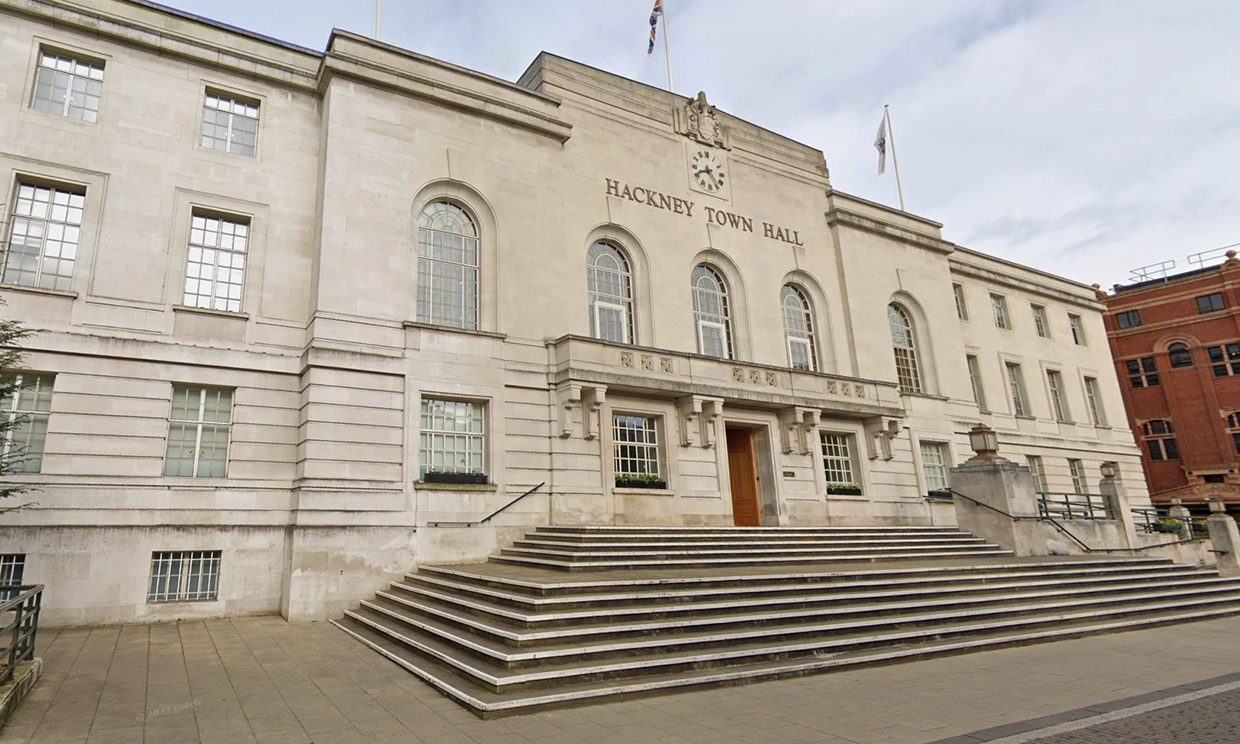
‘Facing severe financial challenges’: Hackney Town Hall. Photograph: Google.
Hackney Council’s £51 million budget gap is likely to increase as a result of government funding cuts, the Town Hall has warned.
At a recent scrutiny panel meeting Naeem Ahmed, group director finance and corporate resources, discussed the “detrimental” impact the Fair Funding Review (FFR) would have on council finances.
The council said: “Like all councils, Hackney faces severe financial challenges.
“While we have not been forced to seek additional financial support from the government or asked to raise council tax beyond standard increases, we have seen our reserves significantly reduced by a dramatic increase in the cost of temporary accommodation and demand for social care that led to a £27 million overspend last financial year.”
Hackney council is currently using £10 million in reserves to balance its budget, with a further £9 million draw-down projected.
Through the FFR, the government has promised a funding shake-up that will redistribute cash away from wealthy areas.
However, due to the way this has been calculated, central London councils with high levels of poverty and homelessness could lose more than 10 per cent of their funding under the current proposals.
During the meeting, Ahmed said: “The financial challenges beyond the £51 million aren’t going away, and actually FFR funding will have a detrimental impact on us.
“And it’s difficult at this point to specifically say what that impact will be.”
Analysis published by the Institute for Fiscal Studies (IFS) in August shows how big “winners” and “losers” will emerge from the process set to begin in April 2026.
According to the thinktank, inner London borough councils are lined up to be the biggest losers – potentially facing real-terms cuts in funding of up to 12 per cent over the next three years.
The IFS said: “Despite … an expectation that deprived and urban areas would win at the expense of more affluent and rural areas, the government’s baseline funding reform proposals are not particularly redistributive to poor, urban areas of England.”
A key issue noted in the IFS report relates to how the “relative needs” assessment has been calculated to decide which councils will be more generously funded.
The government proposes separate spending needs formulas for certain services – adult social care, children’s services, home-to-school transport, temporary accommodation, highways maintenance and fire services.
However, housing costs were not factored in.
In a separate report, London Councils identified this as a key oversight because housing costs push Londoners whose incomes might be quite good into the “poverty” category.
In Hackney, once housing costs are factored in, data shows almost 45 per cent of children are living in poverty.
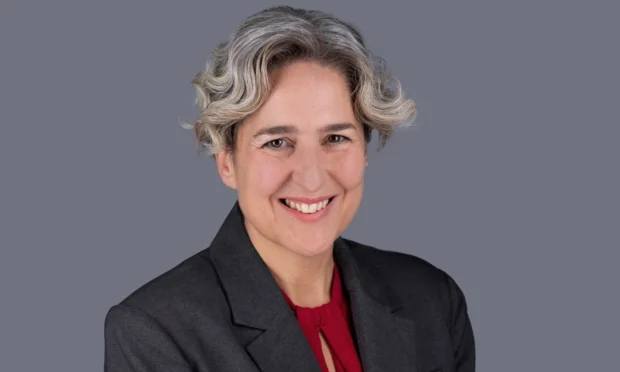
‘I will always fight Hackney’s corner’ – Mayor Caroline Woodley. Photograph: Hackney Council
Caroline Woodley, mayor of Hackney, said: “It is crucial that the fair funding formula takes into account the high cost of housing in inner city London and the risk of poverty that a lack of access to affordable housing brings.
“I’d also like to see the children’s services formula more accurately reflect the high level of need we see in boroughs like Hackney.”
The current children’s services formula has also caused concern with the IFS estimating this would see £1.5 billion go out of London.
The FFR also includes a general formula for other services based on population and deprivation figures – a lot of which is drawn from the government’s indices of deprivation, which have not been revised since 2019 and were based on the results of the 2011 Census.
This means the FFR in its current model does not factor in demographic changes and gentrification over the past 14 years.
In Hackney, house prices have increased more than seven fold in the past 20 years, whilst there are currently 8,500 households on the council’s social housing waiting list.
During the council meeting in September, Ahmed explained that the exact impact of the FFR is still uncertain, but the council is working with various bodies to assess the potential ramifications and lobby the government.
Mayor Caroline Woodley added that London boroughs are working with Central London Forward – a partnership of the 12 central London local authorities – to make the case around housing and children’s services funding.
She told the Citizen: “I will always fight Hackney’s corner and – alongside other London councils in our situation and our MPs – will continue making a strong case for the funding we need that reflects the reality of the challenges we face, especially the rising cost of housing and the impact it has on families in our borough.”
No final decisions on the new funding formula have been made with the government currently considering responses to the consultation.
A final proposal alongside the local government policy statement is expected in Autumn with allocations being set out in the provisional local government finance settlement later in the year.
Mayor Woodley said: “Following more than a decade of austerity from the former government, every council faces huge funding pressures and requires a fair deal for the future.
“We have made progress in bridging the budget gap we currently face over the next three years – all while tackling the housing crisis head on, addressing poverty and inequality in Hackney, leading the way in fighting climate change, and protecting vital frontline services.”