
Inside a record store’s fight for survival in Hackney
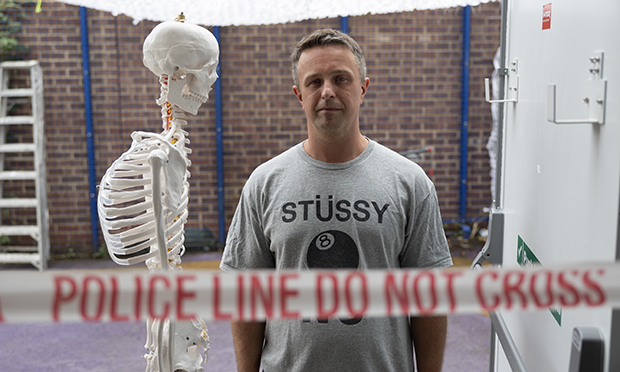
Rob Smith at Recycle Vinyl with ‘Rave Yard’ props. Photograph: Facundo Arrizabalaga / MyLondon/ free for use by LDRS partners
Hackney record store owner Robert Smith started selling used vinyl during the pandemic.
What began with 400 discs bought on eBay and listed online – along with Lego and other bric-a-brac from his parent’s loft – soon saw “ridiculous” growth.
In a matter of months, Smith found himself on the phone to global music marketplace, Discogs, who had called to let him know he was now one of the UK’s top 30 sellers.
After many long days of packing shipments in the morning and listing more vinyl in the evening, the work became more fluid.
“I was like a machine,” he says.
By 2023, Smith had opened up a record store, Recycle Vinyl in Elland, West Yorkshire – 15 years after he left London.
The following year he moved back to Hackney to realise his dream of an “adaptable, multi-use space” where people could shop for records and dance to DJs spinning only vinyl.
In opening his spacious second store just off Dalston’s Kingsland Road, this looked set to become reality.
Yet when we meet in the store on a rainy Thursday in July, the music appears to be slowing.
An unseasonably dry and warm April meant more potential customers were in beer gardens and not thumbing through stacks of secondhand 12-inch dance tracks.
To get more foot traffic, Smith has been angling to use the building’s backyard for a string of day parties, bringing more people through the doors and increasing exposure.
But he has run into opposition from both unhappy neighbours and the authorities.
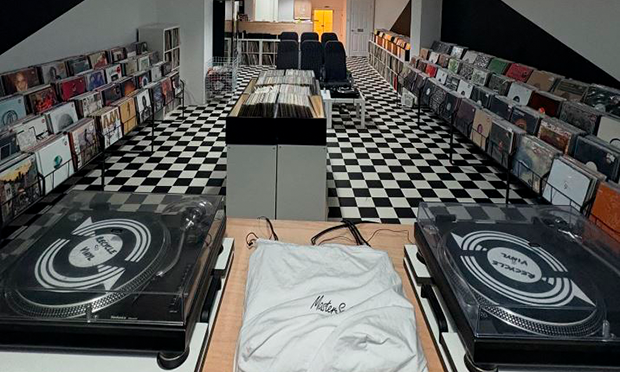
Recycle Vinyl indoors. Photograph: Robert Smith
“The summer looks bleak,” said Smith, having just had his plans for a silent disco quashed by the Metropolitan Police and Hackney Council.
Concerns about noise complaints were the stated reason – noise, that is, from the silent disco.
Despite being initially granted Temporary Event Notices (TENs) for music events ending at 9pm, the Met and the Town Hall’s environmental health team later blocked the second party, ‘Rave Yard’, after several noise complaints linked to the previous event.
“The whole theme was to have a graveyard, showing what’s happening to clubs in London. So it’s ironic that it happened to us too,” he says.
Though Smith “completely understands” the needs of his neighbours, he alleges that the main thrust of the complaints are not being made in good faith and have been encouraged mainly by one individual.
“On the day of the first event we started getting people coming into the shop complaining.
“It was all the same rhetoric, regurgitating the things said by a lady who originally opposed us getting our alcohol licence after we first opened,” he claims.
Later on, three civil enforcement officers turned up after receiving complaints, but since there was no legal limit on the volume before 10pm they left shortly after.
“There was nothing we needed to do, we were fully compliant,” he says, though he had told neighbours he was open to suggestions on how to manage noise over the coming weekends.
Days later, a more sympathetic local showed him what appeared to have instigated the raft of complaints to the council.
In the image, the same resident Smith says was against the store’s premises licence to begin with can be seen urging others in a WhatsApp group chat to complain about the event, five days before it took place.
To try and find a way forward, Smith proposed hosting a silent disco, capping the number of guests or limiting the rave to the indoor space and simply using the yard as a beer garden.
These suggestions were denied and he was forced to cancel the second event.
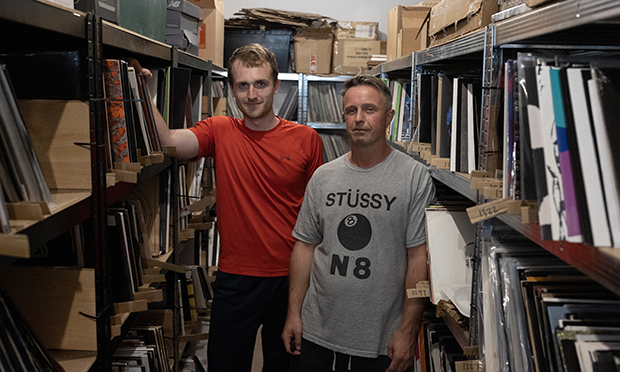
Conor Murphy and Rob Smith at Recycle Vinyl. Photograph: Facundo Arrizabalaga / MyLondon/ free for use by LDRS partners
On the silent disco option, the Met said patrons wearing headphones in the back garden would still make too much noise.
Recycle Vinyl still plans to host late-night events later in the year, but the summer is now in disarray.
Smith said: “August was going to be one of the stronger months. It might have pulled back some of the investment.
“But it’s just guaranteed we can’t do anything in the outdoor space, so it’s not even worth the headache or the paperwork.”
Alongside the loss in potential revenue, Smith estimates he has spent £5,000 on equipment, leasing the yard and promotion for the scuttled events.
“I’m not here to make big bucks,” he adds. “If I was, I’d probably be better selling records back in Yorkshire but I’d be bored.
“Here I’m frustrated because there’s so much potential yet I’m dealing with the police, environmental health and professional complainers.
“It’s really upsetting. We are just trying to do something nice here.”
Thankfully for Smith, his enterprise is a magnetic one.
When we visit Recycle Vinyl in its monochrome glory, we meet Conor Murphy, an aspiring young DJ studying part-time to become a chartered accountant.
He first encountered Smith when he came by to shift some of his own records, and now helps out here and there with the day-to-day running of the shop, to “get it off the ground”.
In the absence of wages, Murphy and other volunteers may get records in exchange, but Smith’s hopes of hiring even temporary staff for the events have been dashed by the cancellations.
Smith said: “People want to work here. I had so many job applications before we’d even opened. It’s a positive for everyone.
“Even at the first licensing hearing in January the officer said it would be great for Dalston and the community.”