
Plans afoot for new Hackney secondary free school
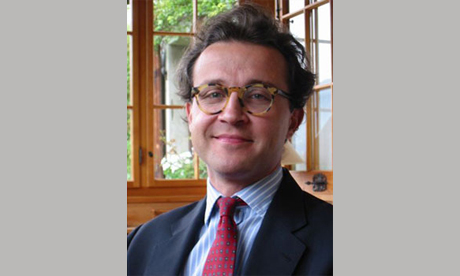
Andreas Wesemann
With almost 18% of the borough’s secondary-age students educated outside the borough, the need for a new secondary school in Hackney is palpable. Hackney is home to some of the most heated education debate in the country, with groups around the borough campaigning energetically, some in favour of a new locally-controlled secondary school, and others for the expansion of central government-controlled academies and free schools.
Although Hackney plays host to both academies and local authority-controlled secondaries, it has yet to open a free school under Secretary of State Michael Gove’s new Education Bill.
Free schools are central government-funded state schools that can be opened by anyone, but not until they’ve passed an application process. Once passed, they are given more freedom than state schools to set their curriculum, teacher pay and timetable.
Some critics believe the new provisions undermine local authorities and lack transparency in their administration, while supporters claim they represent an opportunity for innovation and experimentation.
Dalston resident Andreas Wesemann is leading a group of local residents preparing a bid for a free school in Hackney, which would follow in the footsteps of the 24 free schools that opened in the UK this autumn.
The campaign for a Hackney New School (HNS) has gained momentum relatively quickly since the idea first occurred to Wesemann back in August. Since then, a core group of supporters has formed around the idea; in mid-November a website was launched outlining the initial plans for the school and appealing for parent support (since 16 November, 50 residents have registered their interest); and in February 2012 the application for the Hackney New School will be submitted to the Department for Education. If approved, the school would aim to open in September 2013.
Plans for the school are a work in progress, but its central principles are based on core academic subjects taught to a high standard, and“instilling self-belief, intellectual curiosity and responsibility towards others.”
Hackney New School plans to offer Latin and Greek in addition to other modern languages, and wants to place a strong emphasis on music education.
Extended schools hours would be put in place to allow students to complete homework and participate in activities before or after school, and the school would teach a compulsory inter-disciplinary course, called The Core, to “focus on the central questions that have occupied humanity since its beginning.”
The HNS team also hope to develop an innovative system for evaluating students that fills the gaps in the exams-driven model dominating England’s schools. Not an entirely radical departure from existing curricula, then, but Wesemann asserts that this is not the intention of the project. He believes that the ingredients of a good education are easy to grasp: high standards at the core to engage students of all abilities, talented students challenged and less academic students ‘dragged up’.
HNS is a long way from being opened, but its steering committee envisages it being in the centre of a deprived area. They hope to convince the parents in the area to send their children there, and convince them also that achieving a high standard of education is possible regardless of a child’s background. This is sure to prove more challenging than ever with the cuts to EMA allowance drawing more and more poor students away from post-compulsory education.
Wesemann has embraced the free school idea in part because he doesn’t believe the local authority is necessarily the most democratic way to measure popular will. “Where is it written that only the local authority is the legitimate purveyor of public opinion? You can have a wonderful idea, but if Councillor John Smith is useless, you still end up with a really bad outcome, it doesn’t matter if he’s democratically elected or sits on the local authority.”
Wesemann, in other words, has taken the approach he believes will maximise public consultation.
“It’s liberating” Wesemann says of the project. “But it’s really important to us that we are not pitching this as a project to eliminate the atrociously bad educational provision in Hackney. We’re not saying Hackney schools are awful.”
Wesemann explains that his inspiration lies not in digging up the existing education system, but with the principle that a strong education system calls for “a certain flexibility in terms of how you can consider delivering a certain objective — in this case good education…Managing a school is ultimately about delivering the core curriculum … That’s really, really hard. So my starting position is ‘why not explore different ways of trying to do that?’”
While Wesemann and the Hackney New School steering committee have seized an opportunity to shape the curriculum of their own school, Wesemann believes that fundamentally, the project’s fate lies with the popular will, which is both a comfort and a challenge.
Leading up to the February deadline, Wesemann and his colleagues aim to work with primary school heads in the area to generate interest and feedback, and arrange a town-hall meeting early next year.
Behind all this energy is a certain degree is stoicism. “If the people don’t vote for us”, says Wesemann, “then we’ve got the answer about whether there is popular will … By the end of February … if we don’t have the demand, we are dead. End of.”
interesting article on outcomes from Sweden’s freeschools at http://www.guardian.co.uk/world/2011/sep/10/sweden-free-schools-experiment
And possibly the best education system in the world based on academic results?
Finland with 100% of schools state funded comprehensive …and the lowest pupil school hours in a developed country
http://news.bbc.co.uk/1/hi/8601207.stm
http://www.thejournal.ie/16-surprising-facts-about-finlands-unorthodox-education-system-305352-Dec2011/#slide-slideshow16
References to outcomes for certain education policies in other countries are interesting from an anthropological point of view – ie how does it work in other societies – but that’s about it: it’s really irrelevant as far as policy design in the UK is concerned. You can’t export (or, as the case may be, import) a culture to/from somewhere else and so whatever we are trying to do in the UK reflects and is influenced by local conditions here. As far as HNS is concerned, we can – and, I hope, will – be phenomonally successful as a free school even if somewhere else in the world there are X free schools that aren’t successful. It really doesn’t mean anything. And we’ll be free and open to everyone like any comprehensive school in England (we can take up to 10% though based on their musical aptitude – again, same rules as for comprehensives).
“interesting from an anthropological view but that’s about it” really Andreas – is that the depth of your analysis of educational models of best practice?
Your response suggests an ideological rather than an evidence based approach.
That’s exactly what we are doing: analysing best practice and implement it. To say that some free schools in Sweden or the US haven’t performed well is just not good enough when arguing the merits of setting up a school here – the question is why haven’t they performed well? We have spent an enormeous amount of time thinking about that – i.e. about the managerial issues as well as curriculum design & scheduling, behaviour management, teaching policies and teacher training, etc. that are important for a successful school. That’s the lessons we need to draw, and this analysis is what’s relevant to the UK.
To say some Swedish school hasn’t performed well really doesn’t allow you to say much about how a free school may perform in the UK. If you drew such simplistic conclusions you would have to do so as well for any comprehensive school in Sweden or the US – that would sound a bit like “there are bad schools in Sweden, and hence it’s doubtful that schools can be good in the UK”. You wouldn’t seriously make this argument in general, so why make it specifically about free schools?
So you are quite wrong about ideology vs evidence. Precisely wrong in fact.